A History of Indian Philosophy, Volume 1
1922
A History of Indian Philosophy, Volume 1
1922
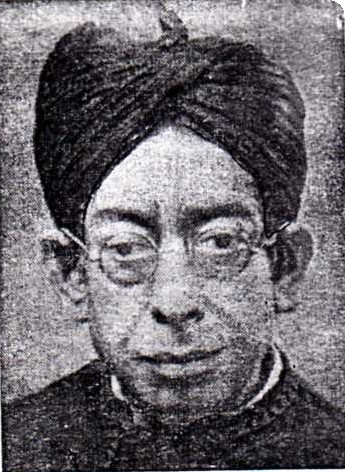
Before Dasgupta, Western scholars often dismissed Indian thought as mysticism or spiritual speculation. This landmark volume, first published in 1922, demanded something radical: that Indian philosophy be taken seriously as rigorous intellectual tradition, not as a curiosity. Dasgupta traces the vast landscape of Indian philosophical thought from Vedic foundations through Buddhism, Jainism, and the six orthodox schools of Hindu philosophy, arguing that philosophical discourse holds the key to understanding India's civilizational unity and depth. He confronts head-on the challenges of translation and technical terminology, insisting readers engage with original sources rather than secondhand summaries. Now approaching its centennial, this volume remains a foundational text for anyone serious about comparative philosophy, South Asian studies, or the intellectual history of how Eastern and Western thought encountered each other in the twentieth century.
Editions
X-Ray
“produced was killed by Indra. But if the sacrifice could be duly performed down to the minutest detail, there was no power which could arrest or delay the fruition of the object. Thus the objects of a sacrifice were fulfilled not by the grace of the gods, but as a natural result of the sacrifice. The performance of the rituals invariably produced certain mystic or magical results by virtue of which the object desired ___________________________________________________________________ [Footnote 1: See S.B.E. XLIII. pp.59,60,400 and XLIV. p.409.] [Footnote 2: See Ibid., XLIV, p. 418.] [Footnote 3: R.V.x.90, Puru@sa Sûkta.] 22 by the sacrificer was fulfilled in due course like the fulfilment of a natural law in the physical world. The sacrifice was believed to have existed from eternity like the Vedas. The creation of the world itself was even regarded as the fruit of a sacrifice performed by the supreme Being. It exists as Haug says "as an invisible thing at all times and is like the latent power of electricity in an electrifying machine, requiring only the operation of a suitable apparatus in order to be elicited." The sacrifice is not offered to a god with a view””
— Surendranath Dasgupta
“The sacrifice taken as a whole is conceived as Haug notes "to be a kind of machinery in which every piece must tally with the other," the slightest discrepancy in the performance of even a minute ritualistic detail, say in the pouring of the melted butter on the fire, or the proper placing of utensils employed in the sacrifice, or even the misplacing of a mere straw contrary to the injunctions was sufficient to spoil the whole sacrifice with whatsoever earnestness it might be performed. Even if a word was mispronounced the most dreadful results might follow. Thus when Tva@s@t@r performed a sacrifice for the production of a demon who would be able to kill his enemy Indra, owing to the mistaken accent of a single word the object was reversed and the demon produced was killed by Indra. But if the sacrifice could be duly performed down to the minutest detail, there was no power which could arrest or delay the fruition of the object. Thus the objects of a sacrifice were fulfilled not by the grace of the gods, but as a natural result of the sacrifice. The performance of the rituals invariably””
— Surendranath Dasgupta
“entailing difficult technical philosophical terms are so different from those of European thought, that they can hardly ever be accurately translated.””
— Surendranath Dasgupta
“it is said that whatever a man desires he wills, and whatever he wills he acts. Thus””
— Surendranath Dasgupta
“No special emphasis is given in the Upani@sads to the sex-desire or the desire for a son; for, being called kâma, whatever was the desire for a son was the same as the desire for money and the desire for money was the same as any other worldly desire (B@rh. IV. iv. 22), and hence sex-desires stand on the same plane as any other desire. _____________________________________________________________________ [Footnote””
— Surendranath Dasgupta
“Dâra Shiko the eldest son of the Emperor Shah Jahan heard of the Upani@sads during his stay in Kashmir in 1640. He invited several Pandits from Benares to Delhi, who undertook the work of translating them into Persian.””
— Surendranath Dasgupta
“The conception of the supreme man (Puru@sa) in the @Rg-Veda also supposes that the supreme man pervades the world with only a fourth part of Himself, whereas the remaining three parts transcend to a region beyond.””
— Surendranath Dasgupta
Link to this book
Add a free, dofollow link to Lex on your blog, forum, syllabus, or reading list.

<a href="https://lex-books.com/book/a-history-of-indian-philosophy-volume-1-e5b349ad-7980-431d-8be5-f7630653cc53"><img src="https://lex-books.com/badges/read-on-lex.svg" alt="Read A History of Indian Philosophy, Volume 1 by Surendranath Dasgupta free on Lex" width="160" height="40"></a>[](https://lex-books.com/book/a-history-of-indian-philosophy-volume-1-e5b349ad-7980-431d-8be5-f7630653cc53)[url=https://lex-books.com/book/a-history-of-indian-philosophy-volume-1-e5b349ad-7980-431d-8be5-f7630653cc53][img]https://lex-books.com/badges/read-on-lex.svg[/img][/url]Read A History of Indian Philosophy, Volume 1 by Surendranath Dasgupta free on Lex: https://lex-books.com/book/a-history-of-indian-philosophy-volume-1-e5b349ad-7980-431d-8be5-f7630653cc53Cite this book
Reading this edition for a paper or guide? Copy a citation.
Dasgupta, Surendranath. A History of Indian Philosophy, Volume 1. Lex, lex-books.com/book/a-history-of-indian-philosophy-volume-1-e5b349ad-7980-431d-8be5-f7630653cc53.Dasgupta, S. (1922). A History of Indian Philosophy, Volume 1. Lex. https://lex-books.com/book/a-history-of-indian-philosophy-volume-1-e5b349ad-7980-431d-8be5-f7630653cc53Dasgupta, Surendranath. A History of Indian Philosophy, Volume 1. Lex. https://lex-books.com/book/a-history-of-indian-philosophy-volume-1-e5b349ad-7980-431d-8be5-f7630653cc53.