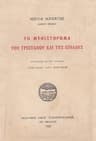
Το Μυθιστόρημα Του Τριστάνου Και Της Ιζόλδης
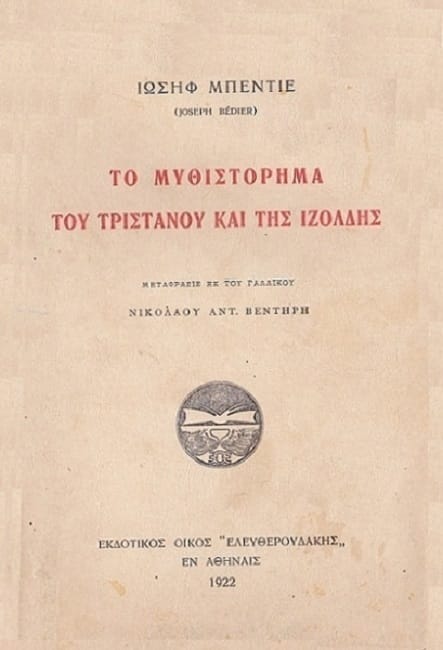
Το Μυθιστόρημα Του Τριστάνου Και Της Ιζόλδης
Translated by Nikolaos Ventiris
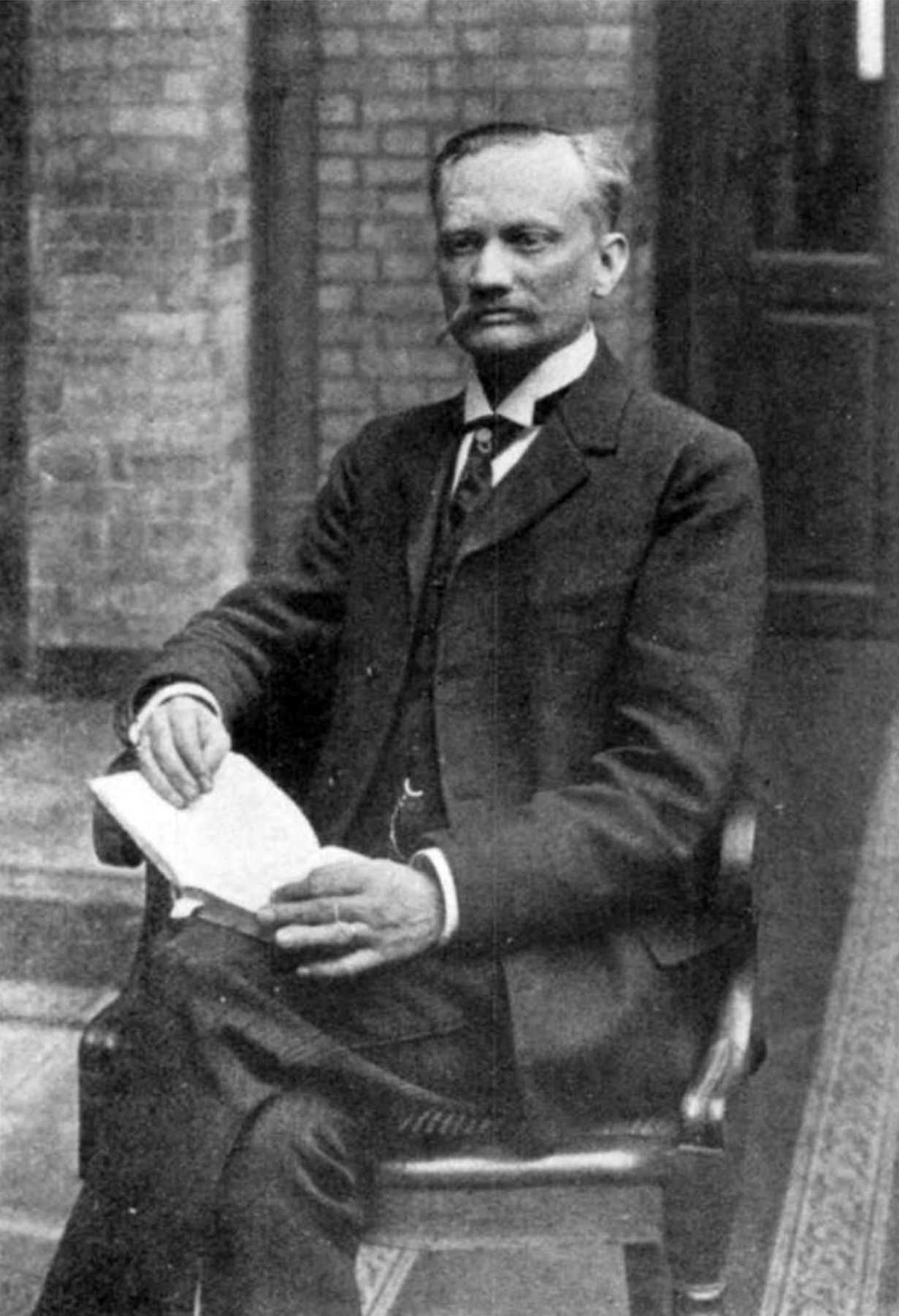
Δύο πλύνονται από ένα μαγικό φίλτρο, και ο κόσμος τους καταρρέει. Ο Τριστάνος, ο παραμελημένος γιος ενός προδομένου δούκα, ενηλικιώνεται στην αυλή του βασιλιά Μαρκ της Κορνουάλης, εξαιρετικός στο κυνήγι και τις τέχνες, χωρίς να γνωρίζει την καταγωγή του. Η Ιζόλδη, η ιρλανδή πριγκίπισσα με τα χρυσαφένια μαλλιά, προορίζεται για νύφη του βασιλιά. Αλλά όταν οι δύο νέοι συναντιούνται, ένα φίλτρο που προοριζόταν για τον βασιλιά και την νύφη του πίνεται από λάθος. Από εκείνη τη στιγμή, η αγάπη τους γίνεται μοίρα: αδύνατη, καταδικασμένη, αναπόφευκτη. Ο Ζοζέφ Μπεντιέ, ο Γάλλος μεσαιωνιστής, ανασυνθέτει εδώ τον αρχέτυπο μύθο συνδυάζοντας τις μεσαιωνικές εκδοχές σε μια συνεκτική αφήγηση που χτυπά στην καρδιά του ρομαντισμού. Είναι η ιστορία του πώς η επιθυμία γίνεται καταστροφή, η τιμή παραίτηση, και η αγάπη πέρα από κάθε λογική και νόμο.
Editions
X-Ray
“Fold your arms round me close and strain me so that our hearts may break and our souls go free at last. Take me to that happy place of which you told me long ago. The fields whence none return, but where great singers sing their songs forever.””
— Joseph Bédier
“...for most men are unaware that what is in the power of magicians to accomplish, that the heart can also accomplish by dint of love and bravery.””
— Joseph Bédier
“they greet those who are cast down, and those in heart, those troubled adn those filled with desire, those who are overjoyed and those disconsolate, all lovers. may all herein find strength against inconstancy, against unfairness and despite and loss and pain and all the bitterness of loving.””
— Joseph Bédier
“Apart the lovers could neither live nor die, for it was life and death together;””
— Joseph Bédier
“Little son, I have longed a while to see you, and now I see you the fairest thing ever a woman bore. In sadness came I hither, in sadness did I bring forth, and in sadness has your first feast day gone. And as by sadness you came into the world, your name shall be called Tristan; that is the child of sadness.”After she had said these words she kissed him, and immediately when she had kissed him she died.””
— Joseph Bédier
“Two days she watched them, seeing them refuse all food or comfort and seeking each other as blind men seek, wretched apart and together more wretched still, for then they trembled each for the first avowal.””
— Joseph Bédier
“When King Mark heard of the death of these two lovers, he crossed the sea and came into Brittany; and he had two coffins hewn, for Tristan and Iseult, one of chalcedony for Iseult, and one of beryl for Tristan. And he took their beloved bodies away with him upon his ship to Tintagel, and by a chantry to the left and right of the apse he had their tombs built round. But in one night there sprang from the tomb of Tristan a green leafy briar, strong in branches and in the scent of its flowers. It climbed the chantry and fell to root again by Iseult's tomb. Thrice did the peasants cut it down, but thrice it grew again as flowered and as strong. They told the marvel to King Mark, and he forbade them to cut the briar any more.””
— Joseph Bédier
“And truly he did well to trust in God, for though the felons mocked him when he said he had loved loyally, yet I call you to witness, my lords who read this, and who know of the philtre drunk upon the high seas, and who, understand whether his love were disloyalty indeed. For men see this and that outward thing, but God alone the heart, and in the heart alone is crime and the sole final judge is God.””
— Joseph Bédier
“Not Brangien who was faithful, not Brangien, but themselves had these lovers to fear, for hearts so stricken will lose their vigilance. Love pressed them hard, as thirst presses the dying stag to the stream; love dropped upon them from high heaven, as a hawk slipped after long hunger falls right upon the bird. And love will not be hidden.””
— Joseph Bédier
Link to this book
Add a free, dofollow link to Lex on your blog, forum, syllabus, or reading list.

<a href="https://lex-books.com/book/-52199b26-1bc4-4eb4-a384-6fda0931eb1c"><img src="https://lex-books.com/badges/read-on-lex.svg" alt="Read Το Μυθιστόρημα Του Τριστάνου Και Της Ιζόλδης by Joseph Bédier free on Lex" width="160" height="40"></a>[](https://lex-books.com/book/-52199b26-1bc4-4eb4-a384-6fda0931eb1c)[url=https://lex-books.com/book/-52199b26-1bc4-4eb4-a384-6fda0931eb1c][img]https://lex-books.com/badges/read-on-lex.svg[/img][/url]Read Το Μυθιστόρημα Του Τριστάνου Και Της Ιζόλδης by Joseph Bédier free on Lex: https://lex-books.com/book/-52199b26-1bc4-4eb4-a384-6fda0931eb1cCite this book
Reading this edition for a paper or guide? Copy a citation.
Bédier, Joseph. Το Μυθιστόρημα Του Τριστάνου Και Της Ιζόλδης. Lex, lex-books.com/book/-52199b26-1bc4-4eb4-a384-6fda0931eb1c.Bédier, J. (n.d.). Το Μυθιστόρημα Του Τριστάνου Και Της Ιζόλδης. Lex. https://lex-books.com/book/-52199b26-1bc4-4eb4-a384-6fda0931eb1cBédier, Joseph. Το Μυθιστόρημα Του Τριστάνου Και Της Ιζόλδης. Lex. https://lex-books.com/book/-52199b26-1bc4-4eb4-a384-6fda0931eb1c.