
William Ramsay
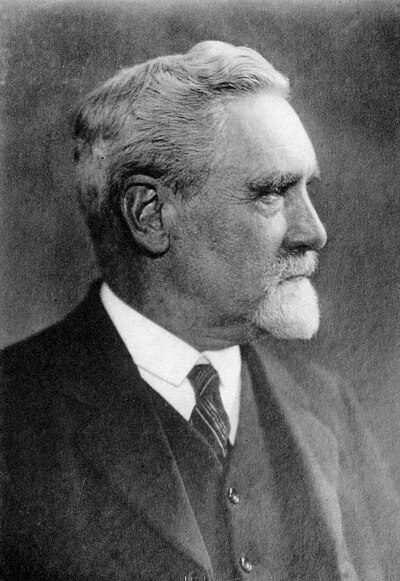
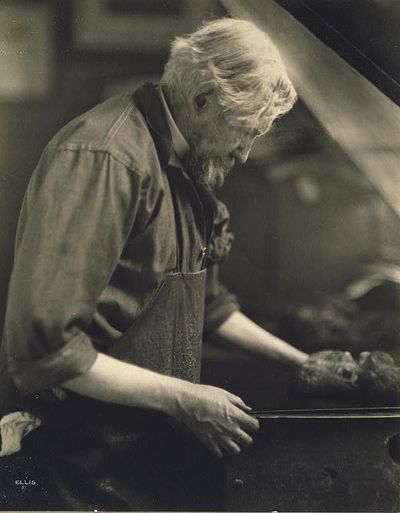
Sir William Ramsay was a pioneering Scottish chemist renowned for his groundbreaking work in the field of noble gases. His most significant achievement came in 1894 when he, alongside John William Strutt, 3rd Baron Rayleigh, discovered argon, a finding that would ultimately earn them the Nobel Prize in Chemistry in 1904. Ramsay's meticulous investigations did not stop with argon; he went on to isolate several other inert gases, including helium, neon, krypton, and xenon. These discoveries not only expanded the understanding of atmospheric composition but also led to the establishment of a new section in the periodic table, fundamentally altering the landscape of chemistry. Ramsay's contributions to the scientific community extended beyond his discoveries. He was a member of several prestigious scientific societies and served as a professor at University College London, where he influenced a generation of chemists. His work laid the groundwork for future research in noble gases and their applications, solidifying his legacy as a key figure in the advancement of modern chemistry. Ramsay's dedication to his craft and his innovative spirit continue to be celebrated in the scientific world, marking him as one of the foremost chemists of his time.
Famous Quotes
View all 2 quotes“It cannot, of course, be stated with absolute certainty that no elements can combine with argon; but it appears at least improbable that any compounds will be formed. [ This held true for a century, until in Aug 2000, the first argon compound was formed, argon fluorohydride, HArF, but stable only below 40 K (−233 °C) .]”
“because they were more receptive”
Books from the author


Link to this page
Add a free, dofollow link to Lex on your blog, forum, syllabus, or reading list.

<a href="https://lex-books.com/author/william-ramsay"><img src="https://lex-books.com/badges/read-on-lex.svg" alt="William Ramsay on Lex" width="160" height="40"></a>[](https://lex-books.com/author/william-ramsay)[url=https://lex-books.com/author/william-ramsay][img]https://lex-books.com/badges/read-on-lex.svg[/img][/url]William Ramsay on Lex: https://lex-books.com/author/william-ramsay