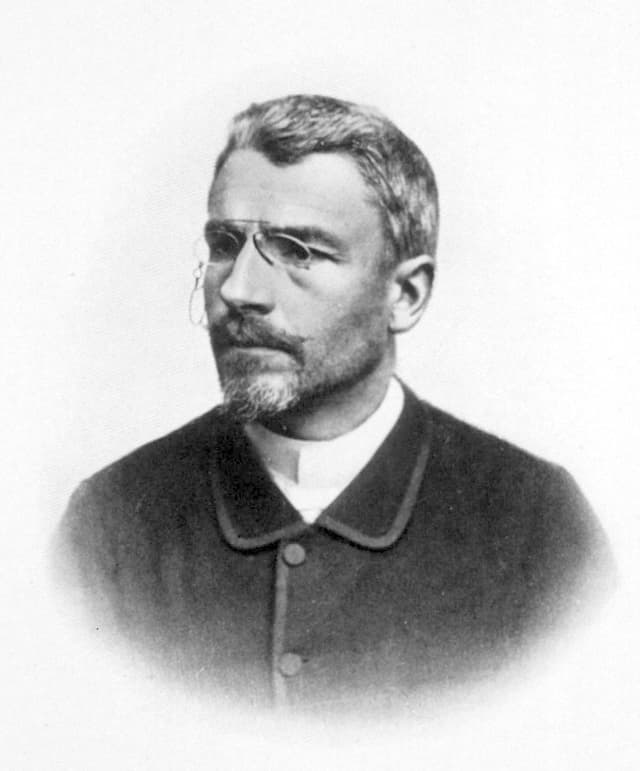
Stéphane Leduc
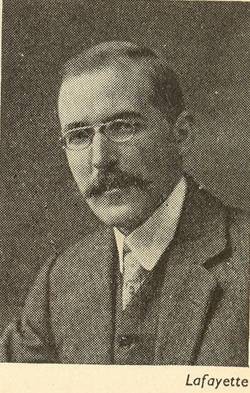
Stéphane Leduc was a French biologist and philosopher known for his innovative ideas on the mechanisms of life and the interplay between biology and philosophy. His most notable work, 'The Mechanism of Life,' published in 1911, explored the complex processes underlying biological phenomena, proposing that life could be understood through the lens of physical and chemical mechanisms. Leduc's interdisciplinary approach combined insights from biology, physics, and philosophy, making significant contributions to the early discussions on the nature of life and the principles of organization in living systems. Leduc's work was ahead of its time, as he anticipated many concepts that would later be central to molecular biology and biochemistry. His emphasis on the mechanistic aspects of life challenged traditional vitalist views that dominated the scientific discourse of his era. Although not widely recognized in mainstream biology today, Leduc's ideas influenced subsequent generations of scientists and thinkers, particularly in the fields of systems biology and biophysics. His legacy lies in his pioneering efforts to bridge the gap between the sciences and the humanities, advocating for a holistic understanding of life processes.
Books from the author










Link to this page
Add a free, dofollow link to Lex on your blog, forum, syllabus, or reading list.

<a href="https://lex-books.com/author/stéphane-leduc"><img src="https://lex-books.com/badges/read-on-lex.svg" alt="Stéphane Leduc on Lex" width="160" height="40"></a>[](https://lex-books.com/author/stéphane-leduc)[url=https://lex-books.com/author/stéphane-leduc][img]https://lex-books.com/badges/read-on-lex.svg[/img][/url]Stéphane Leduc on Lex: https://lex-books.com/author/stéphane-leduc