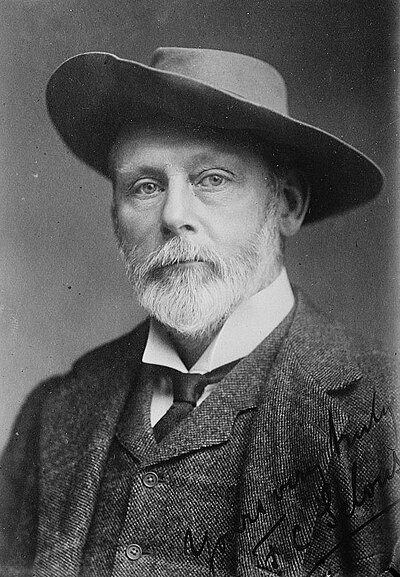
Oskar Pfungst
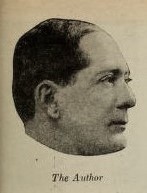
Oskar Pfungst was a German comparative biologist and psychologist renowned for his groundbreaking investigation into the phenomenon of Clever Hans, a horse that appeared to perform arithmetic tasks. While serving as a volunteer assistant in Carl Stumpf's laboratory in Berlin, Pfungst conducted a formal study in 1907 that revealed the horse's apparent abilities were not due to intelligence but rather to its sensitivity to involuntary cues from its human observers. This pivotal discovery led to the identification of the Clever Hans effect, which highlights the influence of observer expectations on the behavior of subjects in psychological experiments. Pfungst's work significantly contributed to the understanding of the observer effect and laid foundational insights into animal cognition. Despite never obtaining an advanced academic degree, Pfungst's contributions to psychology were recognized through an honorary MD from the University of Frankfurt, where he later lectured. Throughout his career, he published approximately fifteen works, focusing on the intersection of psychology and biology. Pfungst's legacy endures in the fields of psychology and animal behavior, as his findings continue to inform contemporary research methodologies and discussions about the complexities of human-animal interactions.
Books from the author





Link to this page
Add a free, dofollow link to Lex on your blog, forum, syllabus, or reading list.

<a href="https://lex-books.com/author/oskar-pfungst"><img src="https://lex-books.com/badges/read-on-lex.svg" alt="Oskar Pfungst on Lex" width="160" height="40"></a>[](https://lex-books.com/author/oskar-pfungst)[url=https://lex-books.com/author/oskar-pfungst][img]https://lex-books.com/badges/read-on-lex.svg[/img][/url]Oskar Pfungst on Lex: https://lex-books.com/author/oskar-pfungst