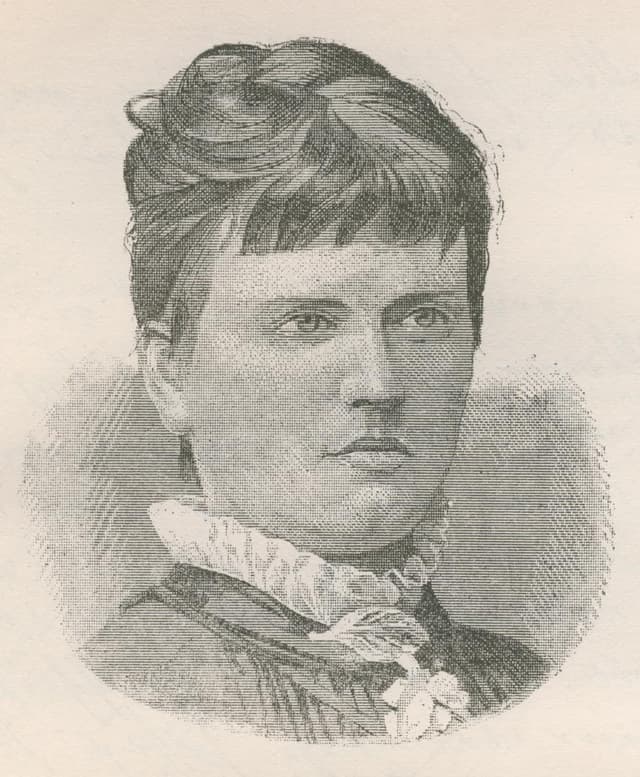
Marie Bernhard
Marie A. Bernard, M.D. is an American doctor. She was the Chief Officer for Scientific Workforce Diversity at the National Institutes of Health (NIH). Prior to this, she was the deputy director of the National Institute on Aging at the NIH, as well as the institutes senior geriatrician, where she oversaw approximately $3.1 billion in research focused on aging and Alzheimer's disease. Bernard served as a co-chair of the Advisory Committee to the NIH Director Working Group on Diversity, the NIH Steering Committee Working Group on DEIA, and the NIH UNITE initiative launched in 2021 to identify and address any structural racism that may exist within NIH and throughout the biomedical and behavioral workforce. She also co-led the development of the Fiscal Years 2023 – 2027 NIH-wide Strategic Plan for Diversity, Equity, Inclusion, and Accessibility (DEIA) and worked on its implementation. She has co-chaired the Inclusion Governance Committee, which promotes inclusion in clinical research by sex/gender, race/ethnicity, and age. She also co-chaired two of the Department of Health and Human Services Healthy People 2020 objectives: 1) Older Adults, and 2) Dementias, including Alzheimer's disease. Prior to arriving at NIH in 2008, Bernard served as Donald W. Reynolds Chair in Geriatric Medicine and founding chairperson of the Donald W. Reynolds Department of Geriatric Medicine at the University of Oklahoma College of Medicine, and Associate Chief of Staff for Geriatrics and Extended Care at the Oklahoma City Veterans Affairs Medical Center. Bernard's research interests include nutrition and function in aging populations, with particular emphasis upon ethnic minorities.
Famous Quotes
View all 2 quotes“I am one of those who think, like , that humanity will draw more good than evil from new discoveries.””
“It is well known that geometry presupposes not only the concept of space but also the first fundamental notions for constructions in space as given in advance. It only gives nominal definitions for them, while the essential means of determining them appear in the form of axioms. The relationship of these presumptions is left in the dark; one sees neither whether and in how far their connection is necessary, nor a priori whether it is possible. From to , to name the most renowned of modern writers on geometry, this darkness has been lifted neither by the mathematicians nor the philosophers who have laboured upon it.””
Books from the author




Link to this page
Add a free, dofollow link to Lex on your blog, forum, syllabus, or reading list.

<a href="https://lex-books.com/author/marie-bernhard"><img src="https://lex-books.com/badges/read-on-lex.svg" alt="Marie Bernhard on Lex" width="160" height="40"></a>[](https://lex-books.com/author/marie-bernhard)[url=https://lex-books.com/author/marie-bernhard][img]https://lex-books.com/badges/read-on-lex.svg[/img][/url]Marie Bernhard on Lex: https://lex-books.com/author/marie-bernhard