Jules Archer
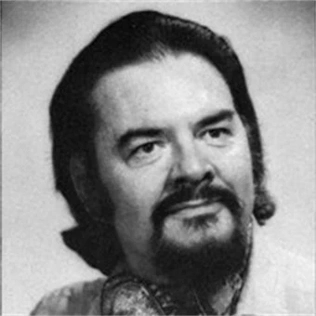
Jules Archer was an influential American author known for his extensive contributions to non-fiction history, particularly aimed at young adults. Born in New York City, he pursued a degree in advertising at the College of the City of New York and later served in the Army Air Forces during World War II, where he gained firsthand experience in the Pacific theater. This military background informed much of his writing, which often focused on significant historical events and figures in American history. Archer authored numerous books that explored U.S. history and political intrigue, with notable works including 'The Plot to Seize the White House: The Shocking True Story of the Conspiracy to Overthrow FDR' and 'Jungle Fighters: A G.I. War Correspondent's Experiences in the New Guinea Campaign.' His ability to present complex historical narratives in an engaging manner made his works accessible to a broader audience, particularly young readers. Archer's legacy lies in his commitment to educating the public about pivotal moments in history, fostering a deeper understanding of the past through his compelling storytelling.
Famous Quotes
View all 3 quotes“Navy Secretary Adams, a wealthy, polo-playing yachtsman, sent for Butler and delivered a blistering reprimand, declaring that he was doing so at the direct personal order of the President of the United States. Butler saw red. “This is the first time in my service of thirty-two years,” he snapped back, “that I’ve ever been hauled on the carpet and treated like an unruly schoolboy. I haven’t always approved of the actions of the administration, but I’ve always faithfully carried out my instructions. If I’m not behaving well it is because I’m not accustomed to reprimands, and you can’t expect me to turn my cheek meekly for official slaps!” “I think this will be all,” Adams said icily. “I don’t ever want to see you here again!” “You never will if I can help it!” Butler rasped, storming out of his office livid with anger. Just two days after his attack on the government’s gunboat diplomacy, which provoked a great public commotion, Undersecretary of State J. Reuben Clark privately submitted to Secretary of State Stimson the draft of a pledge that the United States would never again claim the right to intervene in the affairs of any Latin American country as an “international policeman.” The Clark Memorandum, which later became official policy—for a while at least—repudiated the (Theodore) Roosevelt Corollary to the Monroe Doctrine that Smedley Butler had unmasked as raw gunboat diplomacy.”
“On August 21, 1931, invited to address an American Legion convention in Connecticut, he made the first no-holds-barred antiwar speech of his career. It stunned all who heard it or read it in the few papers that dared report it in part: I spent 33 years . . . being a high-class muscle man for Big Business, for Wall Street and the bankers. In short, I was a racketeer for capitalism. . . . I helped purify Nicaragua for the international banking house of Brown Brothers in 1909-1912. I helped make Mexico and especially Tampico safe for American oil interests in 1916. I brought light to the Dominican Republic for American sugar interests in 1916. I helped make Haiti and Cuba a decent place for the National City [Bank] boys to collect revenue in. I helped in the rape of half a dozen Central American republics for the benefit of Wall Street. . . . In China in 1927 I helped see to it that Standard Oil went its way unmolested. . . . I had . . . a swell racket. I was rewarded with honors, medals, promotions. . . . I might have given Al Capone a few hints. The best he could do was to operate a racket in three cities. The Marines operated on three continents. . . . We don’t want any more wars, but a man is a damn fool to think there won’t be any more of them. I am a peace-loving Quaker, but when war breaks out every damn man in my family goes. If we’re ready, nobody will tackle us. Give us a club and we will face them all. . . . There is no use talking about abolishing war; that’s damn foolishness. Take the guns away from men and they will fight just the same. . . . In the Spanish-American War we didn’t have any bullets to shoot, and if we had not had a war with a nation that was already licked and looking for an excuse to quit, we would have had hell licked out of us. . . . No pacifists or Communists are going to govern this country. If they try it there will be seven million men like you rise up and strangle them. Pacifists? Hell, I’m a pacifist, but I always have a club behind my back!”
“A veteran Washington correspondent told Spivak that he had heard the deletions had been made at the request of a member of the President’s Cabinet. The implication was that release of certain names could embarrass the Democratic party, because two had been unsuccessful Democratic candidates for the Presidency”
Books from the author




Link to this page
Add a free, dofollow link to Lex on your blog, forum, syllabus, or reading list.

<a href="https://lex-books.com/author/jules-archer"><img src="https://lex-books.com/badges/read-on-lex.svg" alt="Jules Archer on Lex" width="160" height="40"></a>[](https://lex-books.com/author/jules-archer)[url=https://lex-books.com/author/jules-archer][img]https://lex-books.com/badges/read-on-lex.svg[/img][/url]Jules Archer on Lex: https://lex-books.com/author/jules-archer