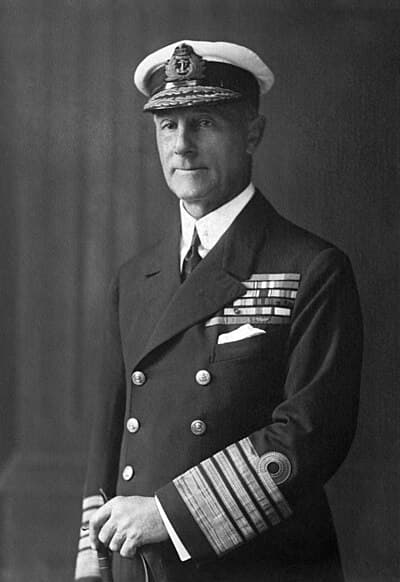
John Rushworth Jellicoe
Admiral of the Fleet John Rushworth Jellicoe was a prominent Royal Navy officer known for his pivotal role during World War I. He distinguished himself in earlier conflicts such as the Anglo-Egyptian War and the Boxer Rebellion, but it was his command of the Grand Fleet at the Battle of Jutland in May 1916 that marked his career. Although his strategic handling of the fleet ensured that the German High Seas Fleet retreated, the battle was met with public disappointment due to the lack of a decisive victory, despite the Royal Navy's numerical superiority. This controversy surrounding his leadership at Jutland would shape his legacy as a naval commander. Following the war, Jellicoe served as First Sea Lord, where he oversaw significant developments in naval operations, including the expansion of the Naval Staff and the introduction of convoy systems to enhance maritime security. However, his tenure ended in 1917 amid shifting naval strategies. In the early 1920s, he took on the role of governor-general of New Zealand, further contributing to his legacy as a leader both in military and colonial contexts. Jellicoe's career reflects the complexities of naval warfare and the challenges of public expectation during a transformative period in maritime history.
Books from the author



Link to this page
Add a free, dofollow link to Lex on your blog, forum, syllabus, or reading list.

<a href="https://lex-books.com/author/john-rushworth-jellicoe"><img src="https://lex-books.com/badges/read-on-lex.svg" alt="John Rushworth Jellicoe on Lex" width="160" height="40"></a>[](https://lex-books.com/author/john-rushworth-jellicoe)[url=https://lex-books.com/author/john-rushworth-jellicoe][img]https://lex-books.com/badges/read-on-lex.svg[/img][/url]John Rushworth Jellicoe on Lex: https://lex-books.com/author/john-rushworth-jellicoe