
John Playfair
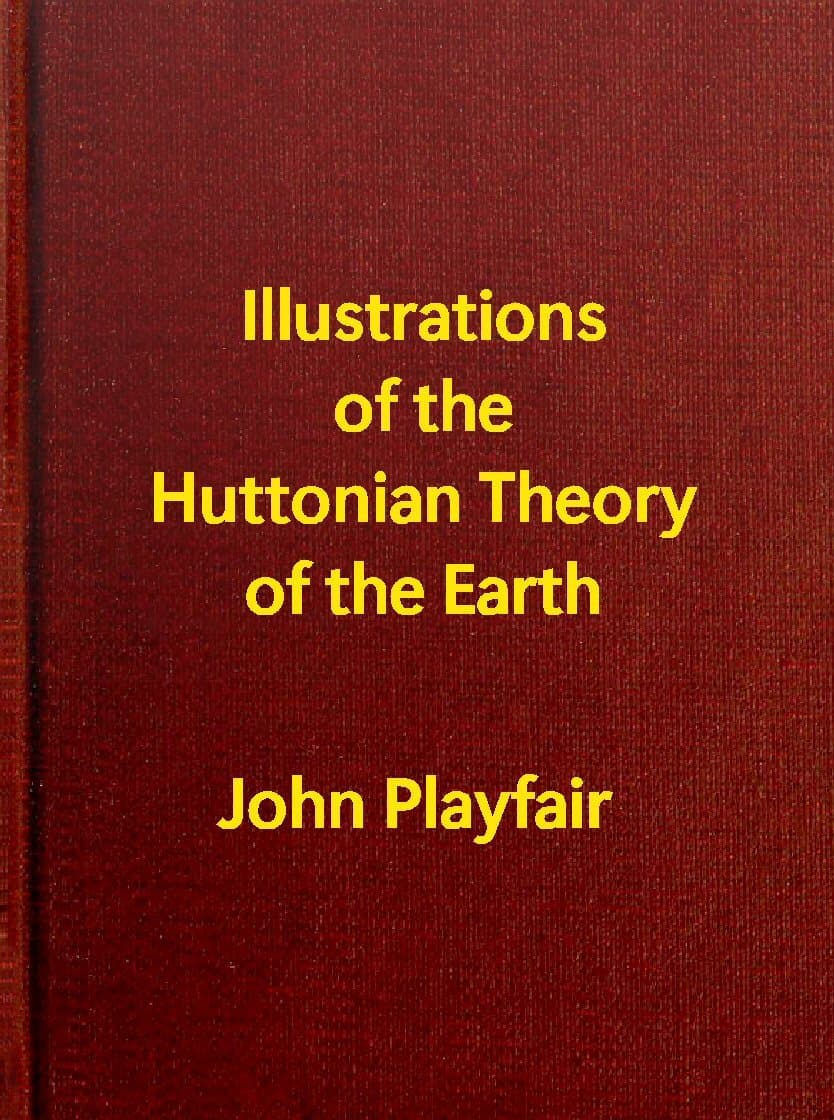
John Playfair was a prominent Church of Scotland minister, scientist, and mathematician, who made significant contributions to the fields of natural philosophy and geology. He served as a professor at the University of Edinburgh, where he became known for his ability to communicate complex scientific ideas. His most notable work, 'Illustrations of the Huttonian Theory of the Earth' (1802), played a crucial role in popularizing the theories of James Hutton, particularly the principle of uniformitarianism, which posited that the Earth's geological processes are consistent over time. This principle would later influence the work of Charles Lyell and the development of modern geology. In addition to his geological contributions, Playfair authored 'Elements of Geometry,' which included a concise formulation of Euclid's parallel postulate, now referred to as Playfair's axiom. His efforts in education and science were recognized when he co-founded the Royal Society of Edinburgh in 1783, where he served as General Secretary from 1798 until his death in 1819. Playfair's legacy lies in his ability to bridge the gap between scientific theory and public understanding, making complex ideas accessible and laying the groundwork for future advancements in geology and mathematics.
Famous Quotes
View all 3 quotes“It were unwise to be sanguine, and unphilosophical to despair.”
“To trace the series of these revolutions, to explain their causes, and thus to connect together all the indications of change that are found in the mineral kingdom, is the proper object of a THEORY OF THE EARTH.”
“The ridge of the Lammer-muir hills... consists of primary micaceous schistus, and extends from St Abb's head westward... The sea-coast affords a transverse section of this alpine tract at its eastern extremity, and exhibits the change from the primary to the secondary strata... Dr HUTTON wished particularly to examine the latter of these, and on this occasion Sir JAMES HALL and I had the pleasure to accompany him. We sailed in a boat from Dunglass ... We made for a high rocky point or head-land, the SICCAR ... On landing at this point, we found that we actually trode [sic] on the primeval rock... It is here a micaceous schistus, in beds nearly vertical, highly indurated, and stretching from S.E. to N. W. The surface of this rock... has thin covering of red horizontal sandstone laid over it, ... Here, therefore, the immediate contact of the two rocks is not only visible, but is curiously dissected and laid open by the action of the waves... On us who saw these phenomena for the first time, the impression will not easily be forgotten. The palpable evidence presented to us, of one of the most extraordinary and important facts in the natural history of the earth, gave a reality and substance to those theoretical speculations, which, however probable had never till now been directly authenticated by the testimony of the senses... What clearer evidence could we have had of the different formation of these rocks, and of the long interval which separated their formation, had we actually seen them emerging from the bosom of the deep? ... The mind seemed to grow giddy by looking so far into the abyss of time; and while we listened with earnestness and admiration to the philosopher who was now unfolding to us the order and series of these wonderful events, we became sensible how much farther reason may sometimes go than imagination can venture to follow.”
Books from the author






Link to this page
Add a free, dofollow link to Lex on your blog, forum, syllabus, or reading list.

<a href="https://lex-books.com/author/john-playfair"><img src="https://lex-books.com/badges/read-on-lex.svg" alt="John Playfair on Lex" width="160" height="40"></a>[](https://lex-books.com/author/john-playfair)[url=https://lex-books.com/author/john-playfair][img]https://lex-books.com/badges/read-on-lex.svg[/img][/url]John Playfair on Lex: https://lex-books.com/author/john-playfair