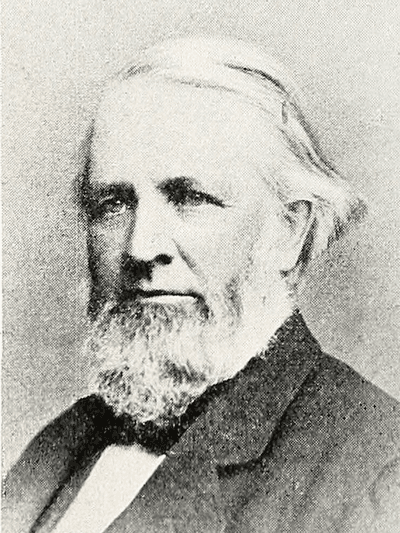
Henry F. French
Henry F. French was an influential American agricultural engineer and author, best known for his pioneering work in the field of land drainage. Born in 1813, he dedicated much of his life to improving agricultural practices, particularly in the northeastern United States. His seminal book, 'Farm Drainage: The Principles, Processes, and Effects of Draining Land with Stones, Wood, Plows, and Open Ditches, and Especially with Tiles,' published in 1859, provided comprehensive insights into the techniques and benefits of effective land drainage. French's work was instrumental in promoting tile drainage systems, which significantly enhanced crop yields and agricultural productivity during a time when farming was becoming increasingly important to the American economy. Beyond his contributions to agricultural literature, French was also a practical engineer who applied his theories in real-world settings, helping farmers implement drainage systems that transformed their land. His emphasis on scientific approaches to farming laid the groundwork for modern agricultural engineering. French's legacy endures in the principles of land management and drainage that continue to influence agricultural practices today, marking him as a key figure in the advancement of agricultural science in the 19th century.
Famous Quotes
View all 2 quotes“Pray that those who have more than enough would be satisfied with just enough so that those who don't have enough might have enough.””
“The crisis of word and truth is not, however, in all respects peculiar to contemporary technocratic civilization. Its backdrop is not to be found in the mass media per se, as if these sophisticated mechanical instruments of modern communication were uniquely and inherently evil. Not even the French Rèvolution, which some historians now isolate as the development that placed human history under the shadow of continual revolution, can adequately explain the ongoing plunge of man’s existence into endless crisis. Why is it that the magnificent civilizations fashioned by human endeavor throughout history have tumbled and collapsed one after another with apocalyptic suddenness? Is it not because, ever since man’s original fall and onward to the present, sin has plummeted human existence into an unbroken crisis of word and truth? A cosmic struggle between truth and falsehood, between good and evil, shadows the whole history of mankind. The Bible depicts it as a conflict between the authority of God and the claims of the Evil One. Measured by the yardstick of God’s holy purposes, all that man proudly designates as human culture is little but idolatry. God’s Word proffers no compliments whatever to man’s so-called historical progress; rather, it indicts man’s pseudoparadises as veritable towers of Babel that obscure and falsify God’s truth and Word.””
Books from the author






Link to this page
Add a free, dofollow link to Lex on your blog, forum, syllabus, or reading list.

<a href="https://lex-books.com/author/henry-f-french"><img src="https://lex-books.com/badges/read-on-lex.svg" alt="Henry F. French on Lex" width="160" height="40"></a>[](https://lex-books.com/author/henry-f-french)[url=https://lex-books.com/author/henry-f-french][img]https://lex-books.com/badges/read-on-lex.svg[/img][/url]Henry F. French on Lex: https://lex-books.com/author/henry-f-french