
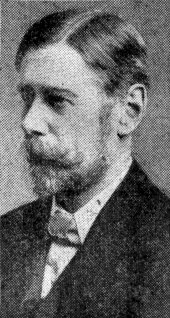
Hanns Heinz Ewers
Hanns Heinz Ewers was a multifaceted German artist, known for his contributions as an actor, poet, philosopher, and writer. Born in 1871, he explored a diverse array of themes throughout his career, but he gained particular recognition for his works in the horror genre. Ewers is best remembered for his trilogy of novels featuring the character Frank Braun, who served as a semi-autobiographical figure reflecting Ewers' own experiences and philosophies. Among these, 'Alraune' (1911) stands out as his most notable work, delving into themes of creation and monstrosity, and it has been influential in the development of horror literature in the early 20th century. Ewers' writing often blended elements of the macabre with philosophical inquiries, making him a unique voice in German literature. His exploration of the darker aspects of human nature and the supernatural not only captivated readers of his time but also paved the way for future writers in the genre. Despite his varied career, it is his horror fiction that has left a lasting legacy, marking him as a significant figure in the literary landscape of the early 1900s, particularly within the context of German expressionism and the evolution of modern horror narratives.
Famous Quotes
View all 3 quotes“When the Devil was a woman, When Lilith wound Her ebony hair in heavy braids, And framed Her pale features all 'round With Botticelli's tangled thoughts, When she, smiling softly, Ringed all her slim fingers In golden bands with brilliant stones, When she leafed through Villiers And loved Huysmans, When she fathomed Maeterlinck's silence And bathed her Soul In Gabriel d'Annunzio's colors, She even laughed And as she laughed, The little princess of serpents sprang Out of her mouth. Then the most beautiful of she-devils Sought after the serpent, She seized the Queen of Serpents With her ringed finger, So that she wound and hissed Hissed, hissed And spit venom. In a heavy copper vase; Damp earth, Black damp earth She scattered upon it. Lightly her great hands caressed This heavy copper vase All around, Her pale lips lightly sang Her ancient curse. Like a children's rhyme her curses chimed, Soft and languid Languid as the kisses, That the damp earth drank From her mouth, But life arose in the vase, And tempted by her languid kisses, And tempted by those sweet tones, From the black earth slowly there crept, Orchids - When the most beloved Adorns her pale features before the mirror All 'round with Botticelli's adders, There creep sideways from the copper vase, Orchids- Devil's blossoms which the ancient earth, Wed by Lilith's curse To serpent's venom, has borne to the light Orchids- The Devil's blossoms- "The Diary Of An Orange Tree”
“And in the livid night there creeps a basilisk, spawned by the moon after its strange fashion. The moon – eternally barren - is its father, but its mother is the sand, barren likewise: this is the mystery of the desert. Many say that it is an animal, but this is not so, it is a thought, growing there where there is no earth and no seed: a thought which sprang from that which is eternally barren, and now assumes strange forms which life does not know. This is the reason that no one can describe this being, because it is like nothingness, indescribable.”
“You cannot deny, my dear friend, that there are in existence creatures who are neither man nor beast, but strange unearthly creations, born of the nefarious passions that arise in distorted minds.”
Books from the author






Link to this page
Add a free, dofollow link to Lex on your blog, forum, syllabus, or reading list.

<a href="https://lex-books.com/author/hanns-heinz-ewers"><img src="https://lex-books.com/badges/read-on-lex.svg" alt="Hanns Heinz Ewers on Lex" width="160" height="40"></a>[](https://lex-books.com/author/hanns-heinz-ewers)[url=https://lex-books.com/author/hanns-heinz-ewers][img]https://lex-books.com/badges/read-on-lex.svg[/img][/url]Hanns Heinz Ewers on Lex: https://lex-books.com/author/hanns-heinz-ewers