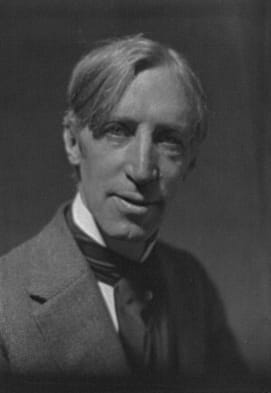
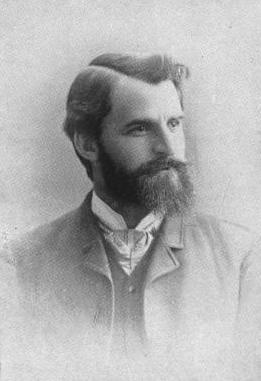
Gerald Stanley Lee
Gerald Stanley Lee was an American writer and minister known for his insightful commentary on contemporary cultural developments in the late 19th and early 20th centuries. Initially a clergyman in New England and the Midwest, he transitioned to full-time writing in 1896, where he explored the implications of mass media and technology on society. His notable works include 'Crowds' (1900), which examined the psychology of mass movements, and 'The Voice of the City' (1905), a collection of essays reflecting on urban life and its challenges. Lee's literary significance lies in his ability to articulate the complexities of modernity during a transformative period in American history. He was among the first to critically assess the impact of emerging technologies and mass communication on individual identity and social structures. His writings not only provided a lens through which to view the changing landscape of American culture but also contributed to the broader discourse on the relationship between society and technology. Lee's legacy endures as a precursor to later critiques of mass media and its effects on public consciousness.
Famous Quotes
View all 3 quotes“America is a tune. It must be sung together.”
“The third stage of education for which Dr. Thwing partitions off the human mind is the “stage in which a pupil becomes capable of original research, a discoverer of facts and relations” himself. In theory this means that when a man is thirty years old and all possible habits of originality have been trained out of him, he should be allowed to be original. In practice it means removing a man’s brain for thirty years and then telling him he can think. There never has been a live boy in a school as yet that would allow himself to be educated in this way if he could help it. All the daily habits of his mind resent it. It is a pessimistic, postponing way of educating him. It does not believe in him enough.”
“I am merely contending for the principle that the extraordinary or inspired man is the normal man (at the point where he is inspired) and that the ordinary or uninspired boy can be made like him, must be educated like him, led out through his self-delight to truth, that, if anything, the ordinary or uninspired boy needs to be educated like a genius more than a genius does.”
Books from the author









Link to this page
Add a free, dofollow link to Lex on your blog, forum, syllabus, or reading list.

<a href="https://lex-books.com/author/gerald-stanley-lee"><img src="https://lex-books.com/badges/read-on-lex.svg" alt="Gerald Stanley Lee on Lex" width="160" height="40"></a>[](https://lex-books.com/author/gerald-stanley-lee)[url=https://lex-books.com/author/gerald-stanley-lee][img]https://lex-books.com/badges/read-on-lex.svg[/img][/url]Gerald Stanley Lee on Lex: https://lex-books.com/author/gerald-stanley-lee