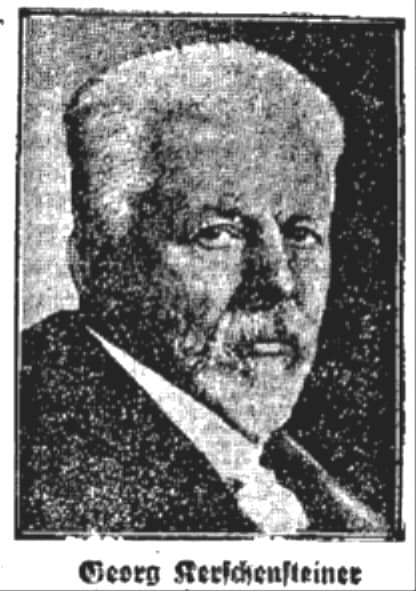
Georg Kerschensteiner
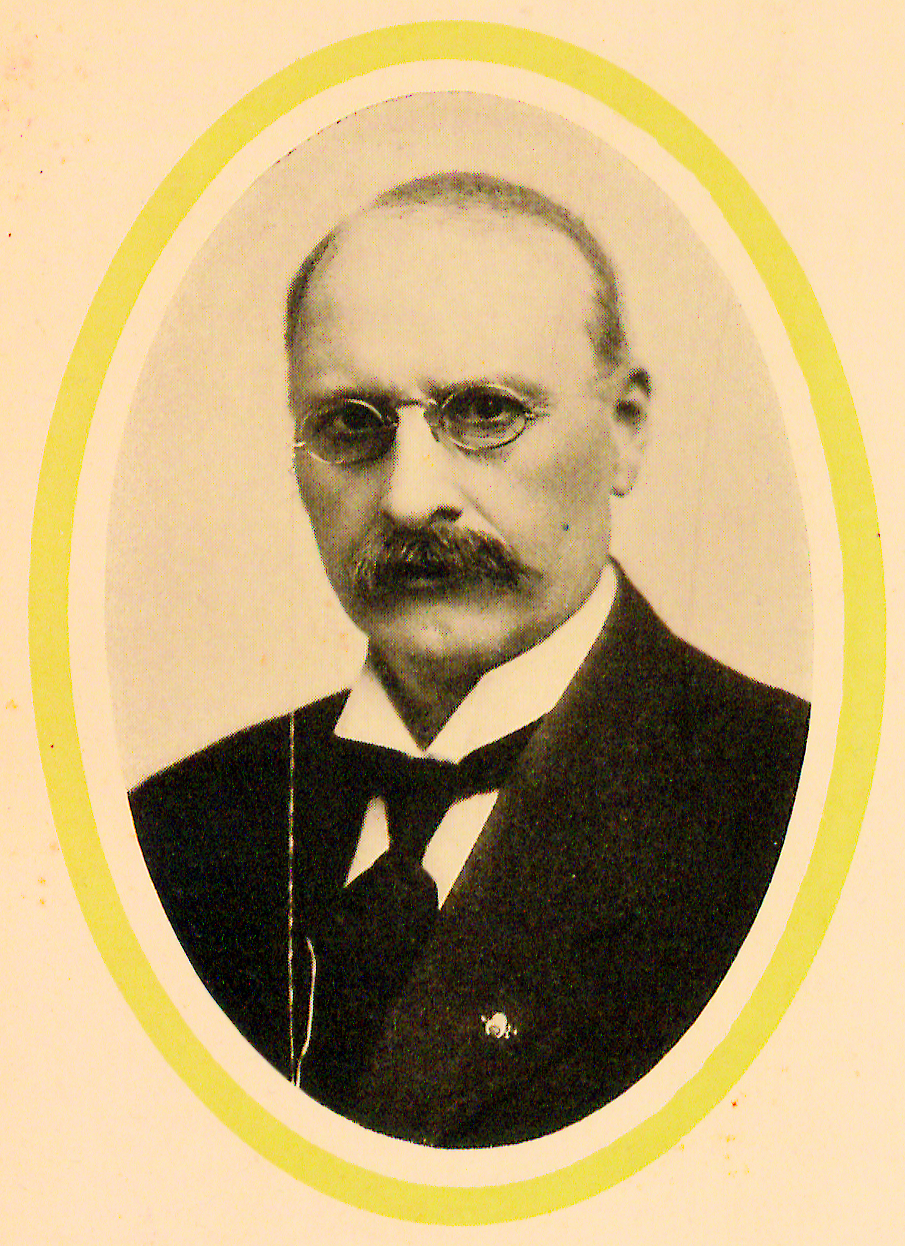
Georg Kerschensteiner was a prominent German educational theorist and professor, renowned for his innovative contributions to the field of education. Born in Munich, he served as the director of public schools in the city from 1895 until 1919, during which time he implemented significant reforms that emphasized a pragmatic approach to learning. Kerschensteiner believed in the integration of academic study with physical activity, advocating for a holistic educational experience that prepared students for both intellectual and practical challenges. His vision led to the establishment of a network of vocational schools, which aimed to bridge the gap between education and the workforce. In 1920, Kerschensteiner became a professor at the University of Munich, where he continued to influence educational practices and theories. His notable work, "Theorie der Bildungsorganisation," published posthumously in 1933, encapsulated his ideas on educational organization and reform. Kerschensteiner's legacy lies in his forward-thinking approach to education, which has had a lasting impact on pedagogical methods and the development of vocational training in Germany and beyond. His emphasis on practical education and the importance of preparing students for real-world applications remains relevant in contemporary discussions about educational reform.
Books from the author




Link to this page
Add a free, dofollow link to Lex on your blog, forum, syllabus, or reading list.

<a href="https://lex-books.com/author/georg-kerschensteiner"><img src="https://lex-books.com/badges/read-on-lex.svg" alt="Georg Kerschensteiner on Lex" width="160" height="40"></a>[](https://lex-books.com/author/georg-kerschensteiner)[url=https://lex-books.com/author/georg-kerschensteiner][img]https://lex-books.com/badges/read-on-lex.svg[/img][/url]Georg Kerschensteiner on Lex: https://lex-books.com/author/georg-kerschensteiner