
Friedrich Dannemann
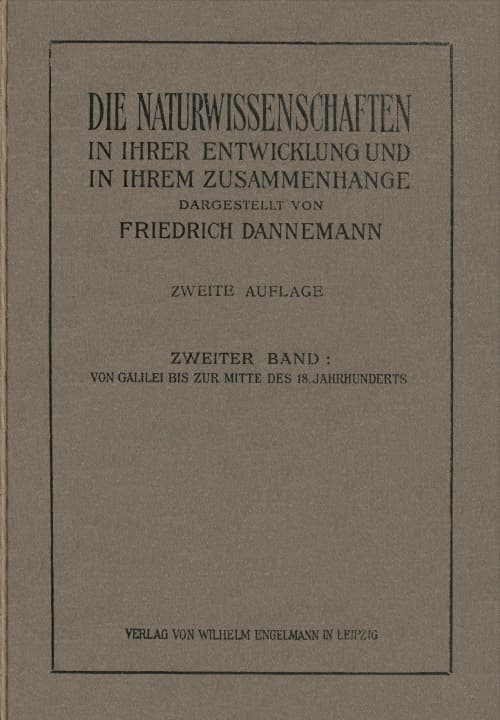
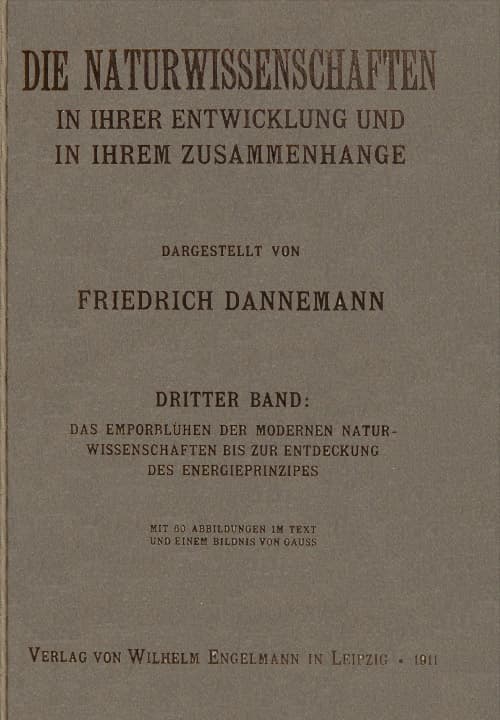
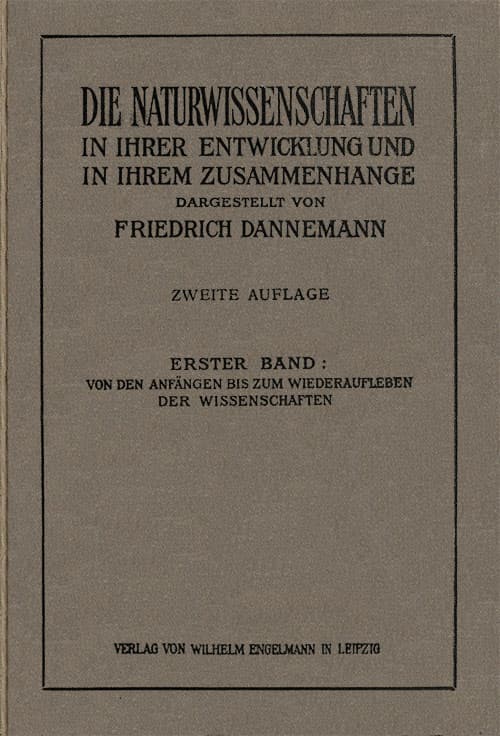
Friedrich Dannemann was a prominent German physicist and historian of science, recognized for his significant contributions to the understanding of the development of scientific thought. His most notable work, the four-volume 'Natural Sciences in Their Development and Context' (1910-1913), was hailed by historian George Sarton as the first comprehensive textbook that effectively addressed the history of science in its entirety. This ambitious work not only showcased Dannemann's scholarly depth but also set a precedent for future historians of science, establishing a framework for the analysis of scientific progress through historical context. In 1927, at the age of sixty-eight, Dannemann was appointed an unsalaried professor at the University of Bonn, where he continued to influence the field of science history. He also collaborated with Abraham Wolf on 'A History of Science, Technology, and Philosophy in the 16th and 17th Centuries,' further solidifying his role as a key figure in the historiography of science. Through his writings and teachings, Dannemann left a lasting legacy that shaped the study of science history, emphasizing the importance of contextual understanding in the evolution of scientific ideas.
Books from the author









Link to this page
Add a free, dofollow link to Lex on your blog, forum, syllabus, or reading list.

<a href="https://lex-books.com/author/friedrich-dannemann"><img src="https://lex-books.com/badges/read-on-lex.svg" alt="Friedrich Dannemann on Lex" width="160" height="40"></a>[](https://lex-books.com/author/friedrich-dannemann)[url=https://lex-books.com/author/friedrich-dannemann][img]https://lex-books.com/badges/read-on-lex.svg[/img][/url]Friedrich Dannemann on Lex: https://lex-books.com/author/friedrich-dannemann