
Euclid
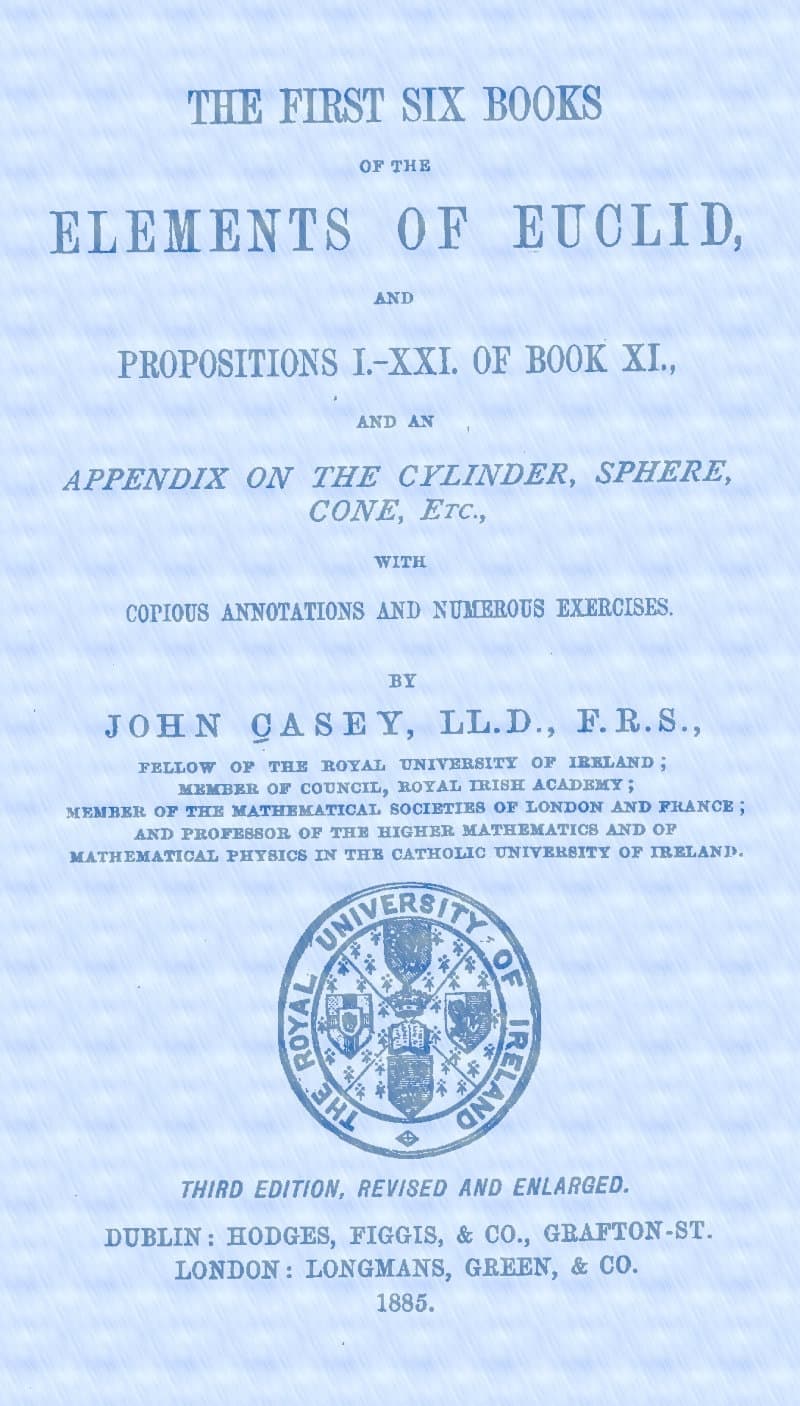
Euclid was a prominent Greek mathematician, often referred to as the 'Father of Geometry.' He is best known for his work 'Elements,' a comprehensive compilation of the knowledge of geometry of his time, which systematically presented the principles of geometry through definitions, postulates, propositions, and proofs. This work not only laid the groundwork for modern geometry but also influenced the teaching of mathematics for centuries, establishing a rigorous logical framework that is still in use today. Euclid's 'Elements' consists of thirteen books covering plane geometry, number theory, and solid geometry, and it introduced concepts such as the Euclidean algorithm for finding the greatest common divisor. His method of logical deduction from axioms and previously established theorems set a standard for mathematical proofs. The impact of Euclid's work extended beyond mathematics; it shaped the development of logical reasoning and scientific methodology in various fields. His legacy endures in the continued study of geometry and the foundational role his work plays in mathematics education worldwide.
Famous Quotes
View all 3 quotes“The laws of nature are but the mathematical thoughts of God.”
“What has been affirmed without proof can also be denied without proof.”
“There is no Royal Road to Geometry.”
Books from the author


Link to this page
Add a free, dofollow link to Lex on your blog, forum, syllabus, or reading list.

<a href="https://lex-books.com/author/euclid"><img src="https://lex-books.com/badges/read-on-lex.svg" alt="Euclid on Lex" width="160" height="40"></a>[](https://lex-books.com/author/euclid)[url=https://lex-books.com/author/euclid][img]https://lex-books.com/badges/read-on-lex.svg[/img][/url]Euclid on Lex: https://lex-books.com/author/euclid