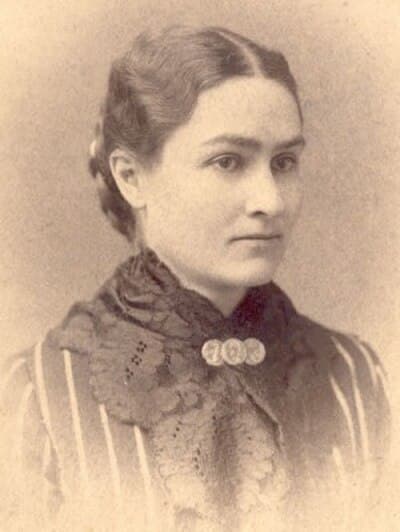
Eliza Calvert Hall
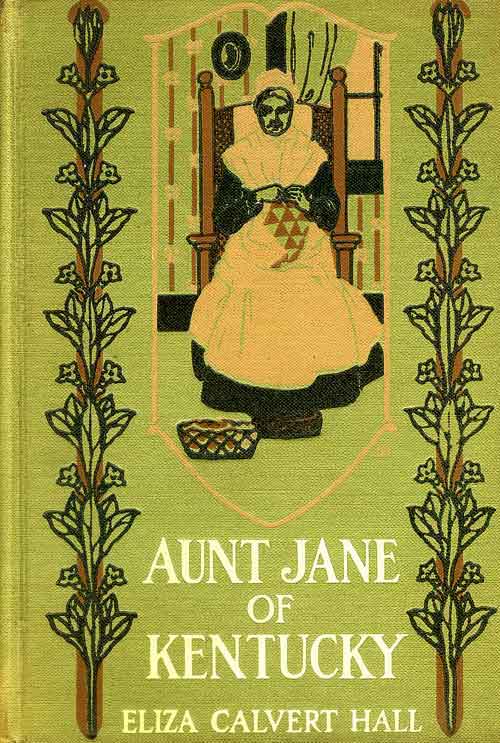
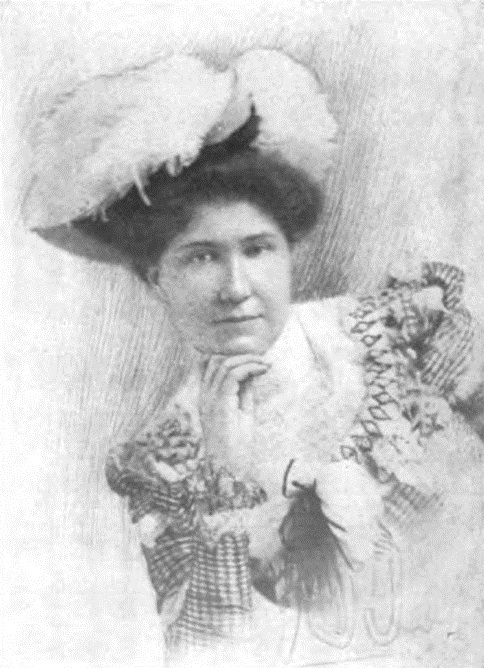
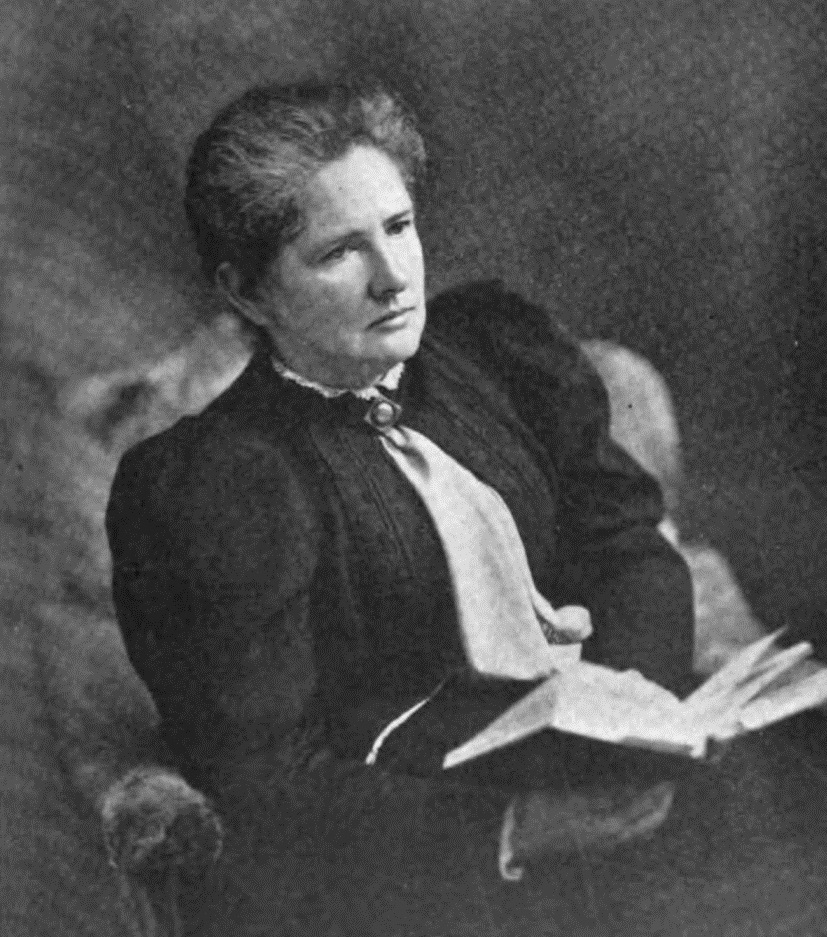
Eliza Calvert Hall, born Eliza Caroline Obenchain, was an influential American author and advocate for women's rights, hailing from Bowling Green, Kentucky. She gained prominence in the early 20th century through her poignant short stories, particularly those featuring the character 'Aunt Jane,' an elderly widowed woman whose candid reflections on life in the rural South resonated with many readers. Hall's most notable work, 'Aunt Jane of Kentucky,' not only showcased her storytelling prowess but also became a significant cultural touchstone when President Theodore Roosevelt endorsed it, recommending its first chapter as essential reading for families to foster respect for women's rights within the home. Hall's literary contributions extended beyond mere storytelling; she used her platform to address social issues and advocate for women's suffrage. Her works often highlighted the complexities of women's experiences and the societal constraints they faced. Through her writing, she played a vital role in the early feminist movement, influencing public discourse around women's rights. Eliza Calvert Hall's legacy endures as a testament to the power of literature in championing social change and the importance of women's voices in American literature.
Famous Quotes
View all 3 quotes“Each of us has his own way of classifying humanity. To me, as a child, men and women fell naturally into two great divisions: those who had gardens and those who had only houses. Brick walls and pavements hemmed me in and robbed me of one of my birthrights; and to the fancy of childhood a garden was a paradise, and the people who had gardens were happy Adams and Eves walking in a golden mist of sunshine and showers, with green leaves and blue sky overhead, and blossoms springing at their feet; while those others, dispossessed of life's springs, summers, and autumns, appeared darkly entombed in shops and parlors where the year might as well have been a perpetual winter.”
“Aunt Jane came around from the back of the house, her black silk cape fluttering from her shoulders, and a calico sunbonnet hiding her features in its cavernous depth. She walked briskly to the clothes-line and began patting and smoothing the quilts where the breeze had disarranged them. "Aunt Jane," I called out, "are you having a fair all by yourself?" She turned quickly, pushing back the sunbonnet from her eyes. "Why, child," she said, with a happy laugh, "you come pretty nigh skeerin' me. No, I ain't havin' any fair; I'm jest givin' my quilts their spring airin'. Twice a year I put 'em out in the sun and wind; and this mornin' the air smelt so sweet, I thought it was a good chance to freshen 'em up for the summer. It's about time to take 'em in now." She began to fold the quilts and lay them over her arm, and I did the same. Back and forth we went from the clothes-line to the house, and from the house to the clothes-line, until the quilts were safely housed from the coming dewfall and piled on every available chair in the front room. I looked at them in sheer amazement. There seemed to be every pattern that the ingenuity of woman could devise and the industry of woman put together, — "four-patches," "nine-patches," "log-cabins," "wild-goose chases," "rising suns," hexagons, diamonds, and only Aunt Jane knows what else. As for color, a Sandwich Islander would have danced with joy at the sight of those reds, purples, yellows, and greens. "Did you really make all these quilts, Aunt Jane?" I asked wondcringly. Aunt Jane's eyes sparkled with pride. "Every stitch of 'em, child," she said, "except the quiltin'. The neighbors used to come in and help some with that. I've heard folks say that piecin' quilts was nothin' but a waste o' time, but that ain't always so.”
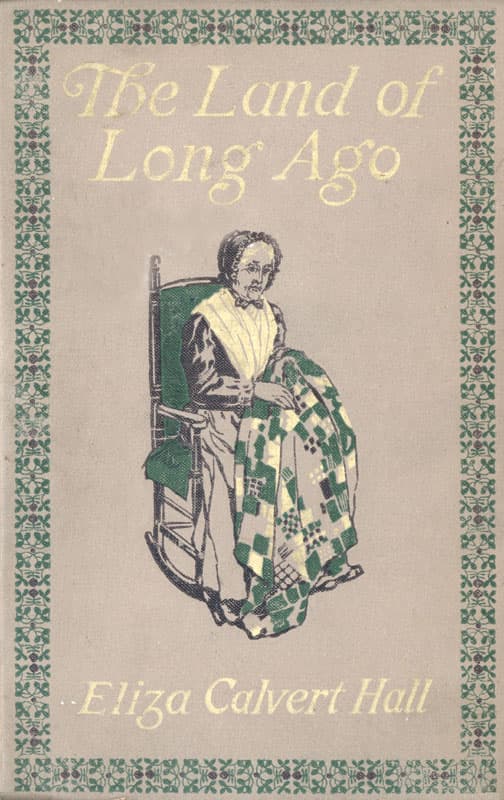
“I looked again at the heap of quilts. An hour ago they had been patchwork, and nothing more. But now! The old woman's words had wrought a trans formation in the homely mass of calico and silk and worsted. Patchwork? Ah, no! It was memory, imagination, history, biography, joy, sorrow, philosophy, religion, romance, realism, life, love, and death; and over all, like a halo, the love of the artist for his work and the soul's longing for earthly immortality.”
Books from the author





Link to this page
Add a free, dofollow link to Lex on your blog, forum, syllabus, or reading list.

<a href="https://lex-books.com/author/eliza-calvert-hall"><img src="https://lex-books.com/badges/read-on-lex.svg" alt="Eliza Calvert Hall on Lex" width="160" height="40"></a>[](https://lex-books.com/author/eliza-calvert-hall)[url=https://lex-books.com/author/eliza-calvert-hall][img]https://lex-books.com/badges/read-on-lex.svg[/img][/url]Eliza Calvert Hall on Lex: https://lex-books.com/author/eliza-calvert-hall