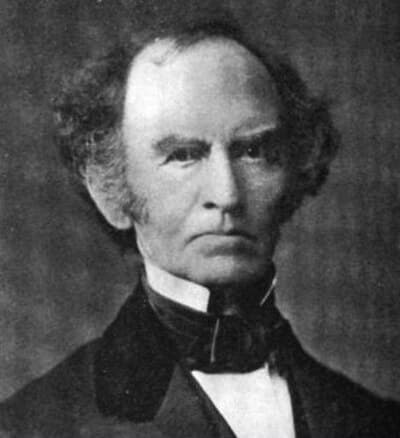
Edward Dickinson
Edward Dickinson was an American politician and prominent figure in Massachusetts during the 19th century, best known as the father of the renowned poet Emily Dickinson. He served as a state legislator and was deeply involved in local politics, holding various positions that reflected his commitment to public service. His influence extended beyond politics, as he played a significant role in shaping the intellectual environment of his family, fostering an atmosphere that encouraged creativity and literary pursuits. Though Edward Dickinson's own literary contributions were minimal compared to those of his daughter, his legacy is inextricably linked to Emily's development as a poet. The Dickinson family home in Amherst, Massachusetts, where Edward raised his children, has become a museum dedicated to Emily's life and work, highlighting the familial and cultural context that nurtured her genius. Edward's life and career exemplify the intersection of politics and literature in 19th-century America, marking him as a notable figure in the backdrop of one of the country's most celebrated poets.
Famous Quotes
View all 2 quotes“Michael A. Woodley makes the point that individuals who can properly be classified as geniuses necessarily have brains that are wired differently from normal; they are programmed to focus on their destined tasks and therefore may be unable to deal with the small details of day to day affairs.61 For instance, Einstein once got lost not far from his home in Princeton, New Jersey. He went into a shop and said, ‘Hi, I’m Einstein, can you take me home please?’ He could not drive a car, and many tasks and chores that most people take for granted were beyond him.62 Woodley’s conclusion flows from the idea of genius as a group-selected trait adapted to be an asset to other people. In sum, the potential genius needs to be looked after; because in terms of negotiating the complexities of human society he is likely to be vulnerable and fragile. The corollary of which is that when geniuses are not looked after, they are less likely to fulfil their potential, and everybody loses. For instance, the American reclusive poet Emily Dickinson (1830-1886) was ‘managed’ by Colonel T.W. Higginson; Jane Austen (1775-1817) flourished in the obscurity of her family and the critic and social philosopher John Ruskin (1819-1900) was sheltered and nurtured by his parents, then a cousin. Thomas Aquinas (1225-1274) was looked after by his brother Friars; Genetics-founder Johann Mendel (1822-1884) was secluded in a monastery; Pascal (1623-1662) was looked after by his aristocratic French family.63 Plus many another genius was sustained by a capable wife – Kurt Gödel (1906-1978) depended on his, older, wife Adele; and would only eat food prepared by her; so that when she was hospitalized, Gödel literally starved.””
“As it happened, Ramsey Elston had returned home two nights before. He told his wife that he didn’t know any Jebediah Dickinson, and if a Jebediah Dickinson didn’t exist for him, then surely a $500 debt couldn’t exist. Fern knew he was not telling her the truth.””
Books from the author
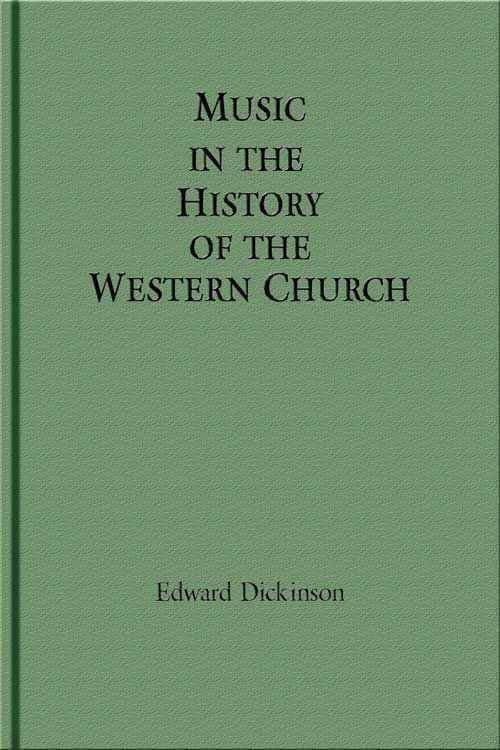




Link to this page
Add a free, dofollow link to Lex on your blog, forum, syllabus, or reading list.

<a href="https://lex-books.com/author/edward-dickinson"><img src="https://lex-books.com/badges/read-on-lex.svg" alt="Edward Dickinson on Lex" width="160" height="40"></a>[](https://lex-books.com/author/edward-dickinson)[url=https://lex-books.com/author/edward-dickinson][img]https://lex-books.com/badges/read-on-lex.svg[/img][/url]Edward Dickinson on Lex: https://lex-books.com/author/edward-dickinson