Edmund Michael
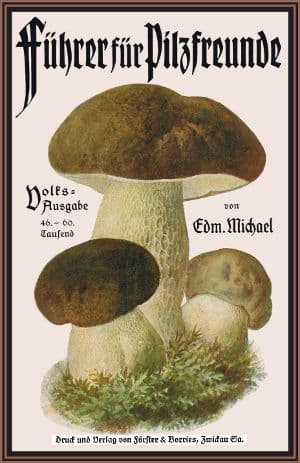
Edmund Michael was a notable figure in the late 19th and early 20th centuries, primarily recognized for his contributions to mycology, the study of fungi. His most significant work, 'Führer Für Pilzfreunde,' serves as a comprehensive guide for mushroom enthusiasts, blending scientific rigor with practical advice for foragers. This work not only reflects his deep understanding of fungi but also his passion for educating others about the natural world. Michael's writings contributed to the growing interest in mycology during his time, helping to lay the groundwork for future studies in the field. Michael's influence extended beyond his publications; he was part of a broader movement that sought to document and classify various species of fungi, which was crucial for both scientific research and culinary exploration. His dedication to mycology and the dissemination of knowledge about mushrooms has left a lasting legacy, inspiring generations of naturalists and amateur mycologists alike. Through his work, Michael helped elevate the status of fungi in the scientific community, emphasizing their ecological importance and culinary potential.
Famous Quotes
View all 13 quotes“She said, “My people of Oxford, you are suffering from the administration of Hugh le Despencer the Elder and his son called Hugh le Despencer the Younger! I have issued warrants for their arrest and bringing to trial for crimes of High Treason against both men and their partner in crime called Edmund Fitzalan! I urge all of you to inform my soldiers of the where-abouts of these men!””
“If ever we should find ourselves disposed not to admire those writers or artists, Livy and Virgil for instance, Raphael or Michael Angelo, whom all the learned had admired, [we ought] not to follow our own fancies, but to study them until we know how and what we ought to admire; and if we cannot arrive at this combination of admiration with knowledge, rather to believe that we are dull, than that the rest of the world has been imposed on.””
“I read a heap of books to prepare to write my own. Valuable works about art crime include The Rescue Artist by Edward Dolnick, Master Thieves by Stephen Kurkjian, The Gardner Heist by Ulrich Boser, Possession by Erin Thompson, Crimes of the Art World by Thomas D. Bazley, Stealing Rembrandts by Anthony M. Amore and Tom Mashberg, Crime and the Art Market by Riah Pryor, The Art Stealers by Milton Esterow, Rogues in the Gallery by Hugh McLeave, Art Crime by John E. Conklin, The Art Crisis by Bonnie Burnham, Museum of the Missing by Simon Houpt, The History of Loot and Stolen Art from Antiquity Until the Present Day by Ivan Lindsay, Vanished Smile by R. A. Scotti, Priceless by Robert K. Wittman with John Shiffman, and Hot Art by Joshua Knelman. Books on aesthetic theory that were most helpful to me include The Power of Images by David Freedberg, Art as Experience by John Dewey, The Aesthetic Brain by Anjan Chatterjee, Pictures & Tears by James Elkins, Experiencing Art by Arthur P. Shimamura, How Art Works by Ellen Winner, The Art Instinct by Denis Dutton, and Collecting: An Unruly Passion by Werner Muensterberger. Other fascinating art-related reads include So Much Longing in So Little Space by Karl Ove Knausgaard, What Is Art? by Leo Tolstoy, History of Beauty edited by Umberto Eco, On Ugliness also edited by Umberto Eco, A Month in Siena by Hisham Matar, Art as Therapy by Alain de Botton and John Armstrong, Art by Clive Bell, A Philosophical Enquiry into the Sublime and Beautiful by Edmund Burke, Seven Days in the Art World by Sarah Thornton, The Painted Word by Tom Wolfe, and Intentions by Oscar Wilde”
Books from the author





Link to this page
Add a free, dofollow link to Lex on your blog, forum, syllabus, or reading list.

<a href="https://lex-books.com/author/edmund-michael"><img src="https://lex-books.com/badges/read-on-lex.svg" alt="Edmund Michael on Lex" width="160" height="40"></a>[](https://lex-books.com/author/edmund-michael)[url=https://lex-books.com/author/edmund-michael][img]https://lex-books.com/badges/read-on-lex.svg[/img][/url]Edmund Michael on Lex: https://lex-books.com/author/edmund-michael