Donald Culross Peattie
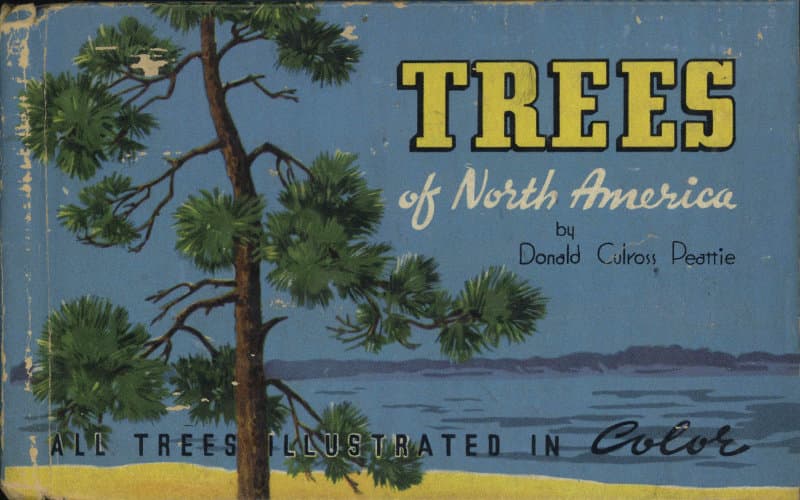
Donald Culross Peattie was an influential American botanist, naturalist, and author, celebrated for his contributions to nature writing in the 20th century. His literary career was marked by a deep appreciation for the natural world, which he conveyed through works such as 'A Natural History of Trees of Eastern and Central North America' and 'An Almanac for Moderns.' Peattie's writing combined scientific insight with lyrical prose, making complex botanical concepts accessible and engaging to a broad audience. His ability to blend personal reflection with natural history earned him recognition as one of the most widely read nature writers of his time, as noted by fellow author Joseph Wood Krutch. Despite his literary acclaim, Peattie’s legacy is not without controversy, particularly regarding his views on race, which have been described as regressive. However, these views were often expressed briefly and without malice, leading to a complex assessment of his character and beliefs. Peattie’s work remains significant for its artistic and educational value, influencing subsequent generations of nature writers and naturalists. His passion for the environment and dedication to understanding the intricacies of the natural world continue to resonate in contemporary discussions about ecology and conservation.
Famous Quotes
View all 3 quotes“Age, that brings a dwindling to most forms of life, is at its most majestic in the trees. I have seen living olives that were planted when Caesar was in Gaul. I remember, in Illinois woods, a burr oak which was bent over as a sapling a hundred years ago, to mark an Indian portage trail, and the thews in that flexed bough were still in the prime of life. Compared to that, the strongest human sinew is feeble and quick to decay. Yet structure in both cases is cellular; life in both is protoplasmic. A tree drinks water as I do, and breathes oxygen. There is the difference that it exhales more oxygen than it consumes, so that it sweetens the air where it grows. It lays the dust and tempers the wind. Even when it is felled, it but enters on a new kind of life. Sawn and seasoned and finished, it lays bare the hidden beauty of its heart, in figures and grains more lovely than the most premeditated design. It is stronger, now, than it was in the living tree, and may bear great strains and take many shapes.”
“Wood, if you stop to think of it, has been man’s best friend in the world. It held him in his cradle, went to war as the gunstock in his hand, was the frame of the bed he came to rejoicing, the log upon his hearth when he was cold, and will make him his last long home. It was the murmuring bough above his childhood play, and the roof over the first house he called his own. It is the page he is reading at this moment; it is the forest where he seeks sanctuary from a stony world.”
“Indeed, if you think of night in the true, philosophical proportion, you must realize that it is the prevailing, the absolute thing. Light, day, burning suns and stars - all are the exceptions. They are but gleaming jewels spattered on the black cloth of darkness. Throughout the universe and eternity it is night that prevails. It is the mother of cosmos, capacious womb of light.”
Books from the author



Link to this page
Add a free, dofollow link to Lex on your blog, forum, syllabus, or reading list.

<a href="https://lex-books.com/author/donald-culross-peattie"><img src="https://lex-books.com/badges/read-on-lex.svg" alt="Donald Culross Peattie on Lex" width="160" height="40"></a>[](https://lex-books.com/author/donald-culross-peattie)[url=https://lex-books.com/author/donald-culross-peattie][img]https://lex-books.com/badges/read-on-lex.svg[/img][/url]Donald Culross Peattie on Lex: https://lex-books.com/author/donald-culross-peattie