Charles, Sir Bright
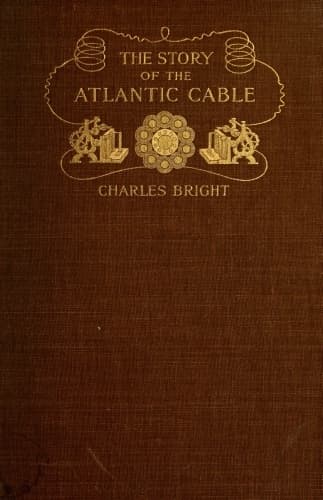
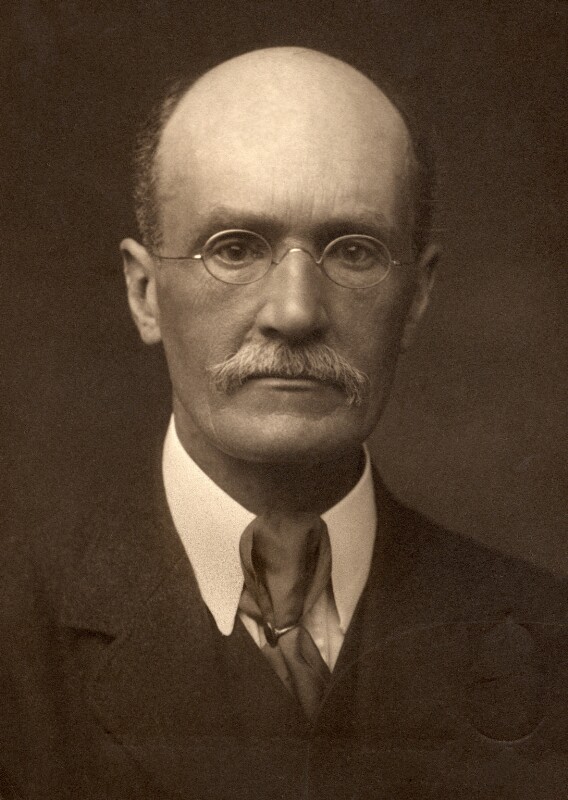
Sir Charles Bright was a prominent British civil engineer and inventor, best known for his pioneering work in telecommunication. Born in 1863, he played a crucial role in the development of the transatlantic telegraph cable, a monumental achievement that revolutionized global communication in the late 19th century. Bright's expertise in electrical engineering and his innovative approaches to cable laying were instrumental in the successful completion of this project, which connected Europe and North America, facilitating instant communication across the ocean for the first time. In addition to his work on the Atlantic cable, Bright authored several notable works, including 'The Story of the Atlantic Cable' and 'The Life Story of Sir Charles Tilston Bright, Civil Engineer.' These texts not only detail his own life and contributions but also provide insights into the broader context of telecommunication advancements during his era. Bright's legacy is marked by his significant contributions to engineering and communication technology, which laid the groundwork for the modern interconnected world we experience today. His work continues to be recognized for its impact on both engineering and the global exchange of information.
Famous Quotes
View all 3 quotes“What caused me to undertake the catalog was the nebula I discovered above the southern horn of Taurus on September 12, 1758, while observing the comet of that year. ... This nebula had such a resemblance to a comet in its form and brightness that I endeavored to find others, so that astronomers would not confuse these same nebulae with comets just beginning to shine. I observed further with suitable refractors for the discovery of comets, and this is the purpose I had in mind in compiling the catalog.After me, the celebrated Herschel published a catalog of 2000 which he has observed. This unveiling the sky, made with instruments of great aperture, does not help in the perusal of the sky for faint comets. Thus my object is different from his, and I need only nebulae visible in a telescope of two feet [focal length].””
“quaint wig by a pair of moist bright eyes that it must have cost their owner, in years gone by, some pains to drill to the composed and reserved expression of Tellson's Bank. He had a healthy colour in his cheeks, and his face, though lined, bore few traces of anxiety. But, perhaps the confidential bachelor clerks in Tellson's Bank were principally occupied with the cares of other people; and perhaps second-hand cares, like second-hand clothes, come easily off and on. Completing his resemblance to a man who was sitting for his portrait, Mr. Lorry dropped off to sleep. The arrival of his breakfast roused him, and he said to the drawer, as he moved his chair to it: "I wish accommodation prepared for a young lady who may come here at any time to-day. She may ask for Mr. Jarvis Lorry, or she may only ask for a gentleman from Tellson's Bank. Please to let me know." "Yes, sir. Tellson's Bank in London, sir?" "Yes." "Yes, sir. We have oftentimes the honour to entertain your gentlemen in their travelling backwards””
“Squeers. 'We go upon the practical mode of teaching, Nickleby; the regular education system. C-l-e-a- n, clean, verb active, to make bright, to scour. W-i-n, win, d-e-r, der, winder, a casement. When the boy knows this out of book, he goes and does it. It's just the same principle as the use of the globes. Where's the second boy?' 'Please, sir, he's weeding the garden,' replied a small voice. 'To be sure,' said Squeers, by no means disconcerted. 'So he is. B-o-t, bot, t-i-n, tin, bottin, n-e-y, ney, bottinney, noun substantive, a knowledge of plants.””
Books from the author

Link to this page
Add a free, dofollow link to Lex on your blog, forum, syllabus, or reading list.

<a href="https://lex-books.com/author/charles-sir-bright"><img src="https://lex-books.com/badges/read-on-lex.svg" alt="Charles, Sir Bright on Lex" width="160" height="40"></a>[](https://lex-books.com/author/charles-sir-bright)[url=https://lex-books.com/author/charles-sir-bright][img]https://lex-books.com/badges/read-on-lex.svg[/img][/url]Charles, Sir Bright on Lex: https://lex-books.com/author/charles-sir-bright