
Bernard Darwin
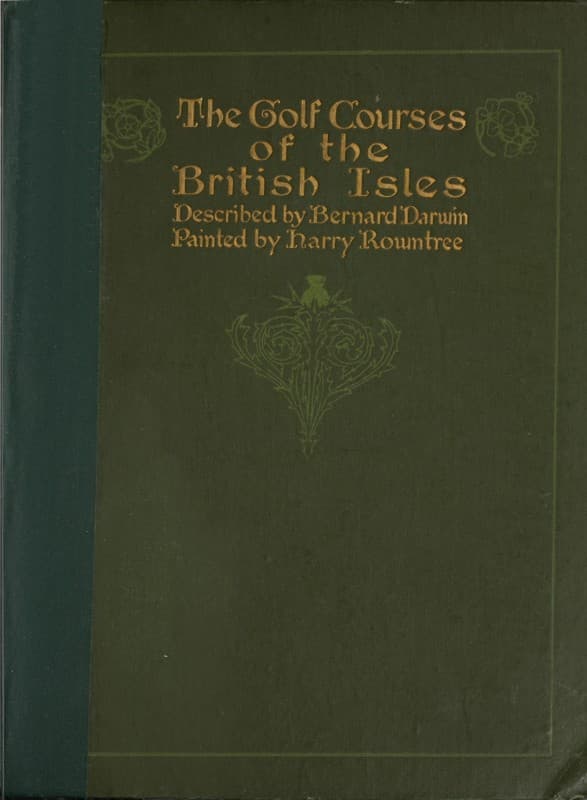
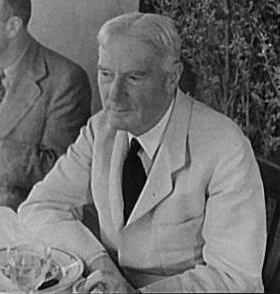
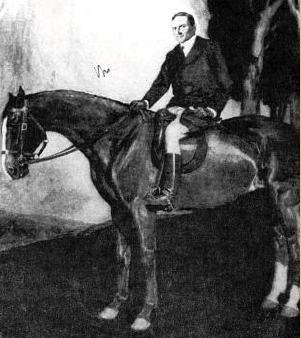
Bernard Darwin was a prominent golf writer and accomplished amateur golfer, known for his insightful contributions to the sport. As the grandson of the renowned naturalist Charles Darwin, he carried a legacy of intellectual rigor and curiosity. Darwin's writings on golf not only showcased his deep understanding of the game but also reflected his passion for its nuances and culture, making him a respected figure in the golfing community. His work included notable publications that captured the essence of golf, blending personal anecdotes with sharp observations about the sport's evolution and its players. Throughout his career, Darwin's influence extended beyond mere reporting; he helped shape the narrative of golf in the early 20th century, earning him a place in the World Golf Hall of Fame. His legacy is marked by a commitment to excellence both on the course and in his writing, leaving an indelible mark on the history of golf literature. His unique perspective and eloquent prose continue to resonate with golf enthusiasts and historians alike, solidifying his status as a key figure in the sport's literary canon.
Famous Quotes
View all 3 quotes“L'humanité a connu trois vexations. La première c'est Nicolas Copernic qui a déduit de ses observations du ciel que la Terre n'était pas au centre de l'univers. La deuxième c'est Charles Darwin qui a conclu que l'homme descendait d'un primate et était donc un animal comme les autres. La troisième c'est Sigmund Freud qui a signalé que la motivation réelle de la plupart de nos actes politiques ou artistiques était la sexualité.””
“Inimesed arvavad, et kõigile kõige paremat pakkudes saab neist lõpuks täiuslik ühiskond. See aga pole asja mõte. Loodus - mõelgu hr. Darwin ükskõik mida - ei arene parima ülevõimu poole (milliste kriteeriumide järgi ta siis areneb?). Loodus ammutab jõudu mitmekesisusest. Ta vajab häid, kurje, hulle, meeleheitlikke, sportlikke, vigaseid, küürakaid, jänesemokalisi, rõõmsaid, kurbi, intelligentseid, rumalaid, egoiste, heldeid, väikesi, suuri, musti, kollaseid, punaseid, valgeid ... Ta vajab kõiki religioone, kõiki filosoofiaid, kõiki fanatisme, kõiki tarkusi ... Ainus oht on see, kui üks neist liikidest kõrvaldab teise.Me oleme näinud, kuidas kunstlikult loodud, kahest parimast peast (sellisest, mis vajab kõige vähem vett, talub kõige paremini külma ja annab kõige ilusamaid teri) aretatud maisi põllud on korraga õige tühisemagi haiguse tagajärjel hävinud. Samal ajal aga on metsiku maisi põllud, mis koosnevad mitmetest erinevatest tüvedest - igaüks oma iseärasuste, nõrkuste ja kõrvalekalletega -, alati leidnud kaitse epideemiate vastu. Loodus vihkab ühetaolist ja armastab mitmekesisust. Võib-olla selles seisnebki tema geniaalsus.””
“TOTALITARIANISM: People are interested in ants because they think they have managed to create a successful totalitarian system. Certainly, the impression we get from the outside is that everyone in the anthill works, everyone is obedient, everyone is ready to sacrifice themselves and everyone is the same. And for the time being, all human totalitarian systems have failed. That is why we thought of copying social insects (like Napoleon, whose emblem was the bee). The pheromones that flood the anthill with global information have an equivalent in the planetary television of today. There is a widespread belief that if the best is made available to all, one day we will end up with a perfect human race. That is not the way of things. Nature, with all due respect to Mr Darwin, does not evolve in the direction of the supremacy of the best (according to which criteria, anyway?). Nature draws its strength from diversity. It needs all kinds of people, good, bad, mad, desperate, sporty, bed-ridden, hunchbacked, hare-lipped, happy, sad, intelligent, stupid, selfish, generous, small, tall, black, yellow, red and white. It needs all religions, philosophies, fanaticisms and wisdom. The only danger is that any one species may be eliminated by another. In the past, fields of maize artificially designed by men and made up of clones of the best heads (the ones that need least water, are most frost-resistant or produce the best grains) have suddenly succumbed to trivial infections while fields of wild maize made up of several different strains, each with its own peculiar strengths and weaknesses, have always managed to survive epidemics. Nature hates uniformity and loves diversity. It is in this perhaps that its essential genius lies. Edmond WellsEncyclopedia of Relative and Absolute Knowledge””
Books from the author



Link to this page
Add a free, dofollow link to Lex on your blog, forum, syllabus, or reading list.

<a href="https://lex-books.com/author/bernard-darwin"><img src="https://lex-books.com/badges/read-on-lex.svg" alt="Bernard Darwin on Lex" width="160" height="40"></a>[](https://lex-books.com/author/bernard-darwin)[url=https://lex-books.com/author/bernard-darwin][img]https://lex-books.com/badges/read-on-lex.svg[/img][/url]Bernard Darwin on Lex: https://lex-books.com/author/bernard-darwin