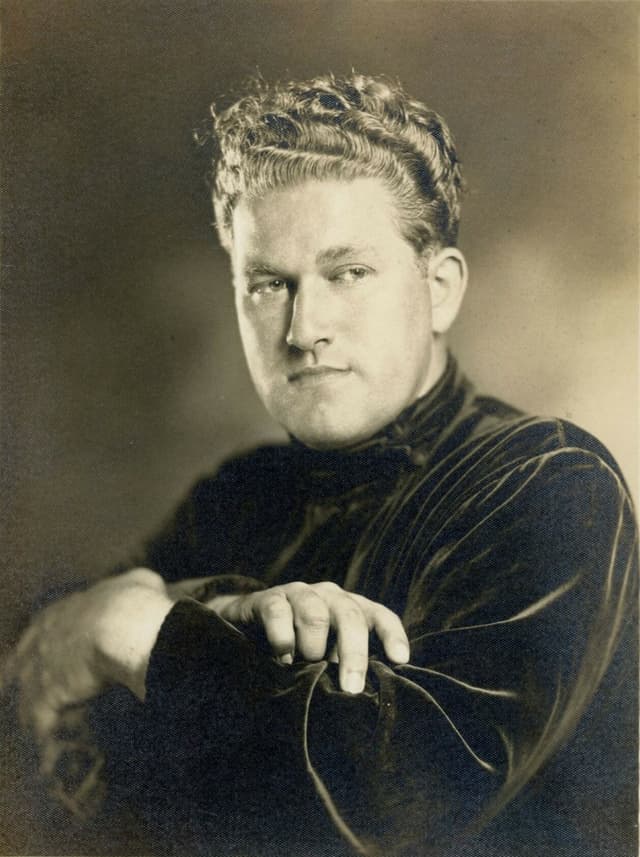
August Derleth
August Derleth was an influential American writer and anthologist, best known for his significant contributions to the cosmic horror genre and the Cthulhu Mythos. As the first publisher of H. P. Lovecraft's works, he played a crucial role in bringing Lovecraft's unique vision to a wider audience. Derleth co-founded Arkham House, a publishing company dedicated to preserving and promoting supernatural fiction, which helped introduce many British authors to American readers. His literary output was diverse, spanning genres such as historical fiction, poetry, detective fiction, and science fiction, showcasing his versatility as a writer. Among his notable creations is Solar Pons, a detective character inspired by Arthur Conan Doyle's Sherlock Holmes, which allowed Derleth to explore the detective genre with his own unique twist. He was also a dedicated regional writer, with his most ambitious work being the Sac Prairie Saga, a collection of fiction, poetry, and non-fiction that aimed to capture the essence of life in Wisconsin. In addition to his literary achievements, Derleth was a pioneering naturalist and conservationist, reflecting his deep appreciation for the natural world in his writing. His legacy endures through his contributions to horror literature and his efforts to preserve the literary heritage of the American Midwest.
Famous Quotes
View all 3 quotes“Children accept many things adults will not accept, since the world of a child is a constant revelation without any need for knowledge of cause and effect. ("Miss Esperson")”
“It is significant, I sometimes think, that the facets of nature which quicken my pulse with that awareness of both life and death are inextricably associated with the loneliness of man’s mote-like existence in the cosmos”
“There was something about him where he stood all by himself under the trees and the stars, on the edge of the streetlight’s glow in the darkness, that was symbolic of many men and women, not alone in this Sac Prairie, but in all the Sac Prairies of the world, something which spoke, out of that pathetic, ludicrous figure, of the spiritual isolation of so many people, something which made the thoughtful onlooker to wonder what thin line divided him from that other, knowing perhaps that the distance of chance or Providence was less great than the few steps separating one from the other in that darkness.”
Books from the author














Link to this page
Add a free, dofollow link to Lex on your blog, forum, syllabus, or reading list.

<a href="https://lex-books.com/author/august-derleth"><img src="https://lex-books.com/badges/read-on-lex.svg" alt="August Derleth on Lex" width="160" height="40"></a>[](https://lex-books.com/author/august-derleth)[url=https://lex-books.com/author/august-derleth][img]https://lex-books.com/badges/read-on-lex.svg[/img][/url]August Derleth on Lex: https://lex-books.com/author/august-derleth