
Basil Wells
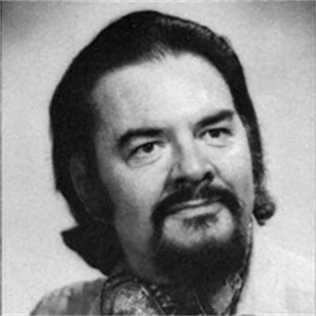
Basil Eugene Wells (June 11, 1912 – December 23, 2003) was an American writer. His first published story, "Rebirth of Man" appeared in the magazine Super Science Stories in 1940. He wrote science fiction, fantasy western and detective stories for various magazines sometimes under the name Gene Ellerman. Two collections of his stories, Planets of Adventure and Doorways to Space were published by Fantasy Publishing Company, Inc.
Famous Quotes
View all 4 quotes“The strategy of Fabius was not merely an evasion of battle to gain time, but calculated for its effect on the morale of the enemy-and, still more, for its effect on their potential allies. It was thus primarily a matter of war-policy, or grand strategy. Fabius recognized Hannibal's military superiority too well to risk a military decision. While seeking to avoid this, he aimed by military pin-pricks to wear down the invaders' endurance and, coincidentally, prevent their strength being recruited from the Italian cities or their Carthaginian base. The key condition of the strategy by which this grand strategy was carried out was that the Roman army should keep always to the hills, so as to nullify Hannibal's decisive superiority in cavalry. Thus this phase became a duel between the Hannibalic and the Fabian forms of the indirect approach.””
“Alexander's succeeding campaigns, until he reached the borders of India, were militarily a 'mopping up' of the Persian empire, while politically the consolidation of his own. He forced the Uxian defile and the Persian 'Gates' by an indirect approach, and when he was confronted on the Hydaspes by Porus, he produced a masterpiece of indirectness which showed the ripening of his own strategical powers. By laying in stores of corn, and by distributing his army widely along the western bank, he mystified his opponent as to his intentions. Repeated noisy marches and counter-marches of Alexander's cavalry first kept Porus on tenterhooks, and then, through repetition, dulled his reaction. Having thus fixed Porus to a definite and static position, Alexander left the bulk of his army opposite it, and himself with a picked force made a night crossing eighteen miles upstream. By the surprise of this indirect approach he dislocated the mental and moral balance of Porus, as well as the moral and physical balance of this army. In the ensuing battle Alexander, with a fraction of his own army, was enabled to defeat almost the whole of his enemy's. If this preliminary dislocation had not occurred there would have been no justification, either in theory or in fact, for Alexander's exposure of an isolated fraction to the risk of defeat in detail.””
“Then, in 333 B.C., he turned south through the Cilician 'Gates' on the direct route towards Syria, where Darius III was concentrating to oppose him. Here, through the failure of his intelligence service and his own assumption that the Persians would await him in the plains, Alexander was strategically out-manoeuvred. While Alexander made a direct approach, Darius made an indirect-and, moving up the higher reaches of the Euphrates, came through the Amanic Gates onto Alexander's rear. He, who had been so careful to secure his chain of bases, now found himself cut off from them. But, turning back, he extricated himself at the battle of Issus by the superiority of his tactics as well as of his tactical instrument-no Great Captain applied this unexpectedness of indirectness more in his tactics.””
Books from the author



















Link to this page
Add a free, dofollow link to Lex on your blog, forum, syllabus, or reading list.

<a href="https://lex-books.com/author/basil-wells"><img src="https://lex-books.com/badges/read-on-lex.svg" alt="Basil Wells on Lex" width="160" height="40"></a>[](https://lex-books.com/author/basil-wells)[url=https://lex-books.com/author/basil-wells][img]https://lex-books.com/badges/read-on-lex.svg[/img][/url]Basil Wells on Lex: https://lex-books.com/author/basil-wells