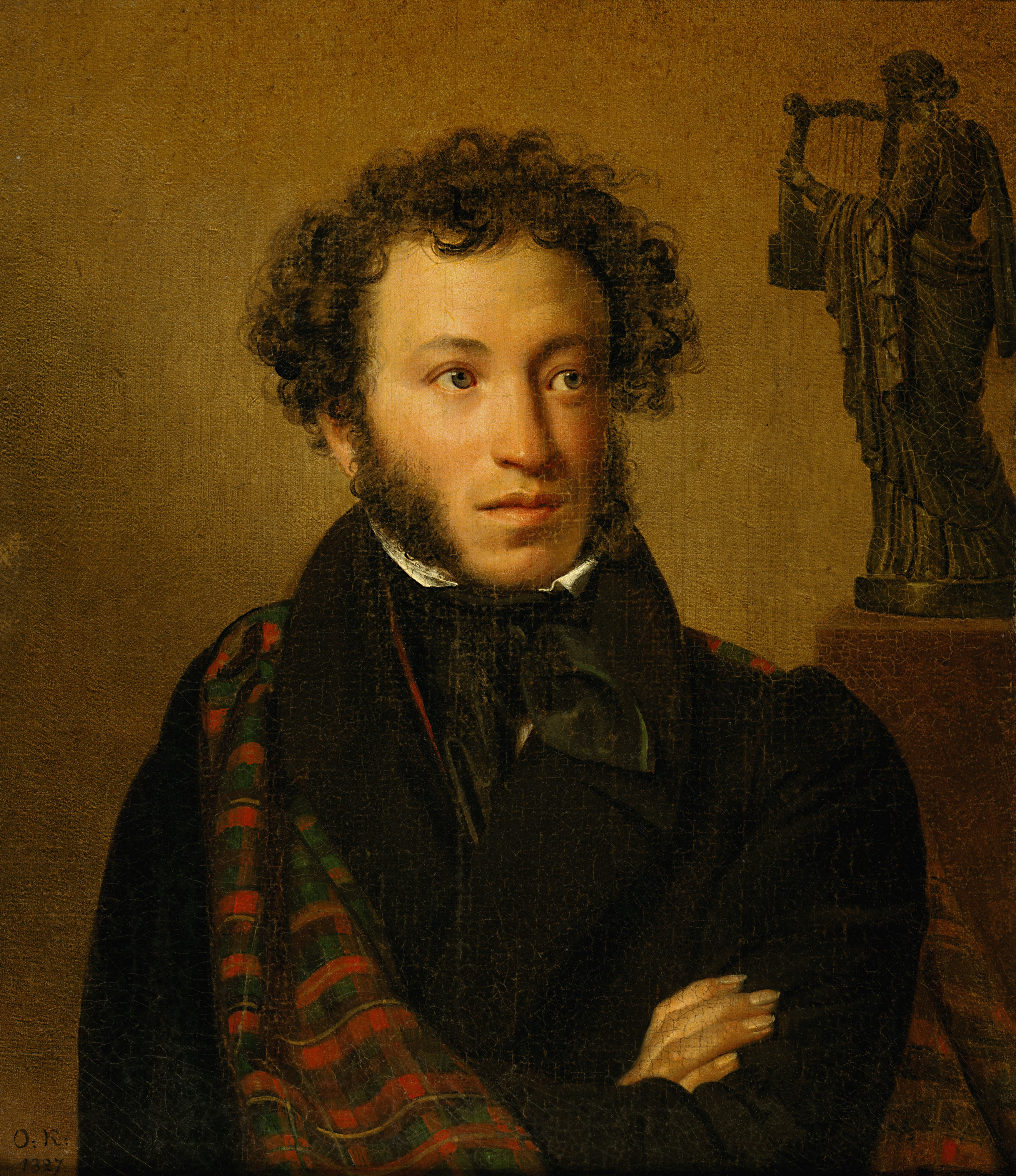
Alexander Pushkin
Alexander Pushkin was a seminal Russian poet, playwright, and novelist, often regarded as the father of modern Russian literature. Born into a noble family, he began writing poetry at a young age and quickly gained recognition for his lyrical talent. His early works, such as the narrative poem 'Ruslan and Lyudmila,' showcased his ability to blend Russian folklore with classical forms, setting the stage for his later masterpieces. Pushkin's writing was marked by its exploration of themes such as love, freedom, and the complexities of human nature, often infused with a sense of irony and social critique. His most notable work, the novel in verse 'Eugene Onegin,' is considered a cornerstone of Russian literature, combining a rich narrative with profound psychological insight. Pushkin's influence extended beyond poetry; he also wrote plays, short stories, and prose that tackled the intricacies of Russian society. His life was tragically cut short in a duel at the age of 37, but his legacy endures, inspiring countless writers and poets. Pushkin's innovative use of language and his ability to capture the Russian spirit have solidified his status as a literary giant, whose works continue to be celebrated and studied worldwide.
Books from the author




Link to this page
Add a free, dofollow link to Lex on your blog, forum, syllabus, or reading list.

<a href="https://lex-books.com/author/alexander-pushkin"><img src="https://lex-books.com/badges/read-on-lex.svg" alt="Alexander Pushkin on Lex" width="160" height="40"></a>[](https://lex-books.com/author/alexander-pushkin)[url=https://lex-books.com/author/alexander-pushkin][img]https://lex-books.com/badges/read-on-lex.svg[/img][/url]Alexander Pushkin on Lex: https://lex-books.com/author/alexander-pushkin