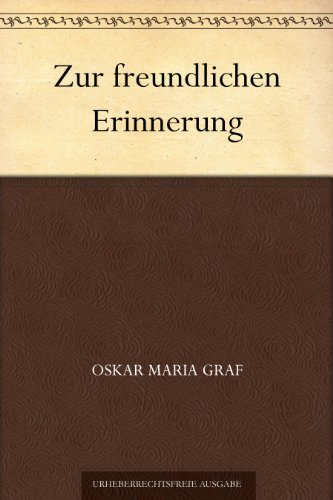
This collection from 1922 captures the grinding weight of working-class existence in early Weimar Germany. At its center stands Peter Windel, a factory worker whose laborious life has left him hollowed of memory and human connection. When his harshness toward his landlady precipitates her death, Peter is thrust into the chaos of his own conscience, caught between external investigation and the devastation within. The narrative traces his spiral into guilt, suspicion, and the stark realization of what his isolation has cost him. The tales that follow continue this exploration of emotional devastation and existential paralysis, of people trapped by circumstances of their own making or forced upon them by a brutal society. Graf writes with unflinching realism about the psychological toll of mechanized labor and the loneliness that defines modern life. His characters struggle against the crushing weight of routine, only to discover how thin the boundary is between ordinariness and catastrophe.