What to Eat, How to Serve It
1891
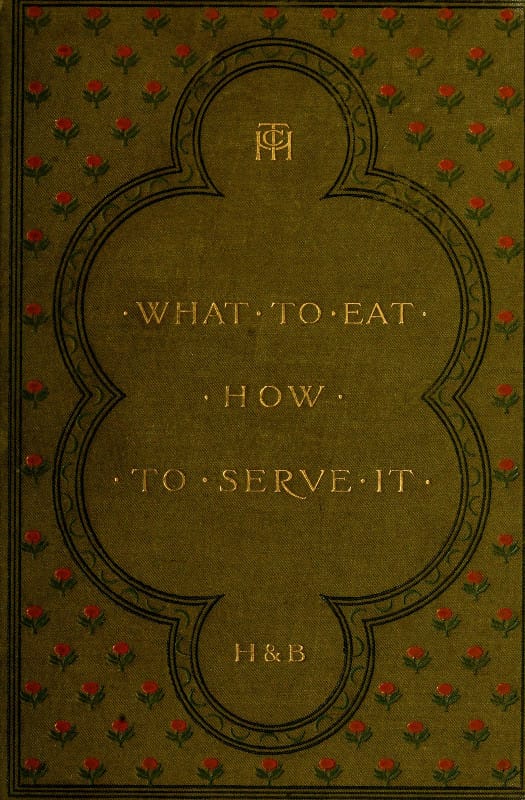
In 1891, the American middle class was inventing the modern dinner party. This guidebook captures that delicate moment when new wealth met old anxieties about proper behavior. Herrick addresses the questions that haunted hosts: Which direction should the table face? How many courses constitute respectability? Why must the dining room never occupy the basement? The answers reveal a world where domestic arrangement was moral performance. Beyond mere decoration, Herrick offers instruction on seasonal meal planning, the rhythm of service, and the invisible labor that made hosting appear effortless. The chapter on dining room aesthetics particularly shines, arguing that cheerfulness is a virtue and that basements breed both dampness and despair. For modern readers, the book functions as time machine: every recommendation about napkins and lighting peeks through to reveal class aspirations, gender expectations, and the earnest belief that the properly set table could civilize an entire family. It will appeal to anyone curious about what turn-of-the-century Americans believed was at stake in how they ate.
Editions
Link to this book
Add a free, dofollow link to Lex on your blog, forum, syllabus, or reading list.

<a href="https://lex-books.com/book/what-to-eat-how-to-serve-it-65d47de5-b2cb-43e5-8e17-fe4ff5061a6e"><img src="https://lex-books.com/badges/read-on-lex.svg" alt="Read What to Eat, How to Serve It by Christine Terhune Herrick free on Lex" width="160" height="40"></a>[](https://lex-books.com/book/what-to-eat-how-to-serve-it-65d47de5-b2cb-43e5-8e17-fe4ff5061a6e)[url=https://lex-books.com/book/what-to-eat-how-to-serve-it-65d47de5-b2cb-43e5-8e17-fe4ff5061a6e][img]https://lex-books.com/badges/read-on-lex.svg[/img][/url]Read What to Eat, How to Serve It by Christine Terhune Herrick free on Lex: https://lex-books.com/book/what-to-eat-how-to-serve-it-65d47de5-b2cb-43e5-8e17-fe4ff5061a6eCite this book
Reading this edition for a paper or guide? Copy a citation.
Herrick, Christine Terhune. What to Eat, How to Serve It. Lex, lex-books.com/book/what-to-eat-how-to-serve-it-65d47de5-b2cb-43e5-8e17-fe4ff5061a6e.Herrick, C. T. (1891). What to Eat, How to Serve It. Lex. https://lex-books.com/book/what-to-eat-how-to-serve-it-65d47de5-b2cb-43e5-8e17-fe4ff5061a6eHerrick, Christine Terhune. What to Eat, How to Serve It. Lex. https://lex-books.com/book/what-to-eat-how-to-serve-it-65d47de5-b2cb-43e5-8e17-fe4ff5061a6e.