Undine
1811
Undine
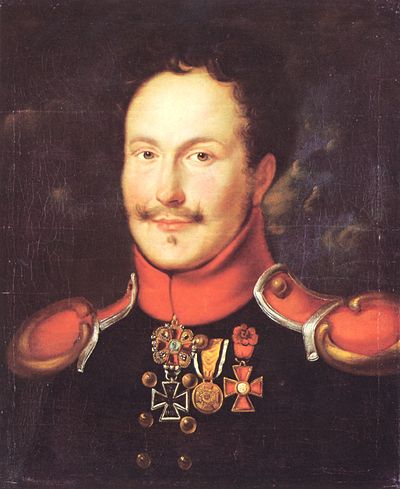
Friedrich Heinrich Karl, Freiherr de La Motte-Fouqué
1811
Translated by F. E. (Fanny Elizabeth), 1833? Bunnett
''Undine'' is a fantasy novella written by Friedrich Heinrich Karl, Freiherr de La Motte-Fouqué, first published in 1811. The story follows Undine, a water spirit, and her complex relationship with Sir Huldbrand, a noble knight. This work is notable for its blend of fairy tale elements and romantic themes, exploring love, identity, and the connection between the human and elemental worlds. ''Undine'' has influenced later literature, including Hans Christian Andersen's ''The Little Mermaid,'' and remains a significant contribution to the genre of fantasy fiction.
Editions

X-Ray
“You must know, my own love, that in each element there exists a race of beings, whose form scarcely differs from yours, but who very seldom appear to mortal sight … you now see before you, my love, an undine.””
— Friedrich Heinrich Karl, Freiherr de La Motte-Fouqué
“You must know, my loved one, that there are beings in the elements which almost appear like mortals, and which rarely allow themselves to become visible to your race. Wonderful salamanders glitter and sport in the flames; lean and malicious gnomes dwell deep within the earth; spirits, belonging to the air, wander through the forests; and a vast family of water spirits live in the lakes and streams and brooks. In resounding domes of crystal, through which the sky looks in with its sun and stars, these latter spirits find their beautiful abode; lofty trees of coral with blue and crimson fruits gleam in their gardens; they wander over the pure sand of the sea, and among lovely variegated shells, and amid all exquisite treasures of the old world, which the present is no longer worthy to enjoy; all these the floods have covered with their secret veils of silver, and the noble monuments sparkle below, stately and solemn, and bedewed by the loving waters which allure from them many a beautiful moss-flower and entwining cluster of sea grass. Those, however, who dwell there, are very fair and lovely to behold, and for the most part, are more beautiful than human beings. Many a fisherman has been so fortunate as to surprise some tender mermaid, as she rose above the waters and sang. He would then tell afar of her beauty, and such wonderful beings have been given the name of Undines. You, however, are now actually beholding an Undine.””
— Friedrich Heinrich Karl, Freiherr de La Motte-Fouqué
“And therefore must I weep, even if you cannot divine what such tears can be. And they are blessed, as everything is blessed to one in whom a faithful soul resides.””
— Friedrich Heinrich Karl, Freiherr de La Motte-Fouqué
“Is it not strange that things invariably turn out other than what we expected them to be? The malignant power, which lies in wait to deceive us, loves to lull its chosen victim to sleep with with sweet songs and golden stories. On the other hand the messenger that brings salvation from heaven often raps sharply and terrifyingly at our door.””
— Friedrich Heinrich Karl, Freiherr de La Motte-Fouqué
“When he asked him [Father Heilmann] what he was doing there, since he would not give the benediction, he answered, 'There are other benedictions than that which is given at the marriage-altar, and, if I am not come to the wedding, it may be I shall be needed for some other ceremony. Besides there is no great difference between wedding and weeping, and he who does not willfully blind himself, has to recognize that.””
— Friedrich Heinrich Karl, Freiherr de La Motte-Fouqué
Link to this book
Add a free, dofollow link to Lex on your blog, forum, syllabus, or reading list.

<a href="https://lex-books.com/book/undine-a673f9b4-c048-498b-923c-f4c0c4fd7ccb"><img src="https://lex-books.com/badges/read-on-lex.svg" alt="Read Undine by Friedrich Heinrich Karl, Freiherr de La Motte-Fouqué free on Lex" width="160" height="40"></a>[](https://lex-books.com/book/undine-a673f9b4-c048-498b-923c-f4c0c4fd7ccb)[url=https://lex-books.com/book/undine-a673f9b4-c048-498b-923c-f4c0c4fd7ccb][img]https://lex-books.com/badges/read-on-lex.svg[/img][/url]Read Undine by Friedrich Heinrich Karl, Freiherr de La Motte-Fouqué free on Lex: https://lex-books.com/book/undine-a673f9b4-c048-498b-923c-f4c0c4fd7ccbCite this book
Reading this edition for a paper or guide? Copy a citation.
Friedrich Heinrich Karl, Freiherr de La Motte-Fouqué. Undine. Lex, lex-books.com/book/undine-a673f9b4-c048-498b-923c-f4c0c4fd7ccb.Friedrich Heinrich Karl, F. D. L. M. (1811). Undine. Lex. https://lex-books.com/book/undine-a673f9b4-c048-498b-923c-f4c0c4fd7ccbFriedrich Heinrich Karl, Freiherr de La Motte-Fouqué. Undine. Lex. https://lex-books.com/book/undine-a673f9b4-c048-498b-923c-f4c0c4fd7ccb.