Typhon
1902
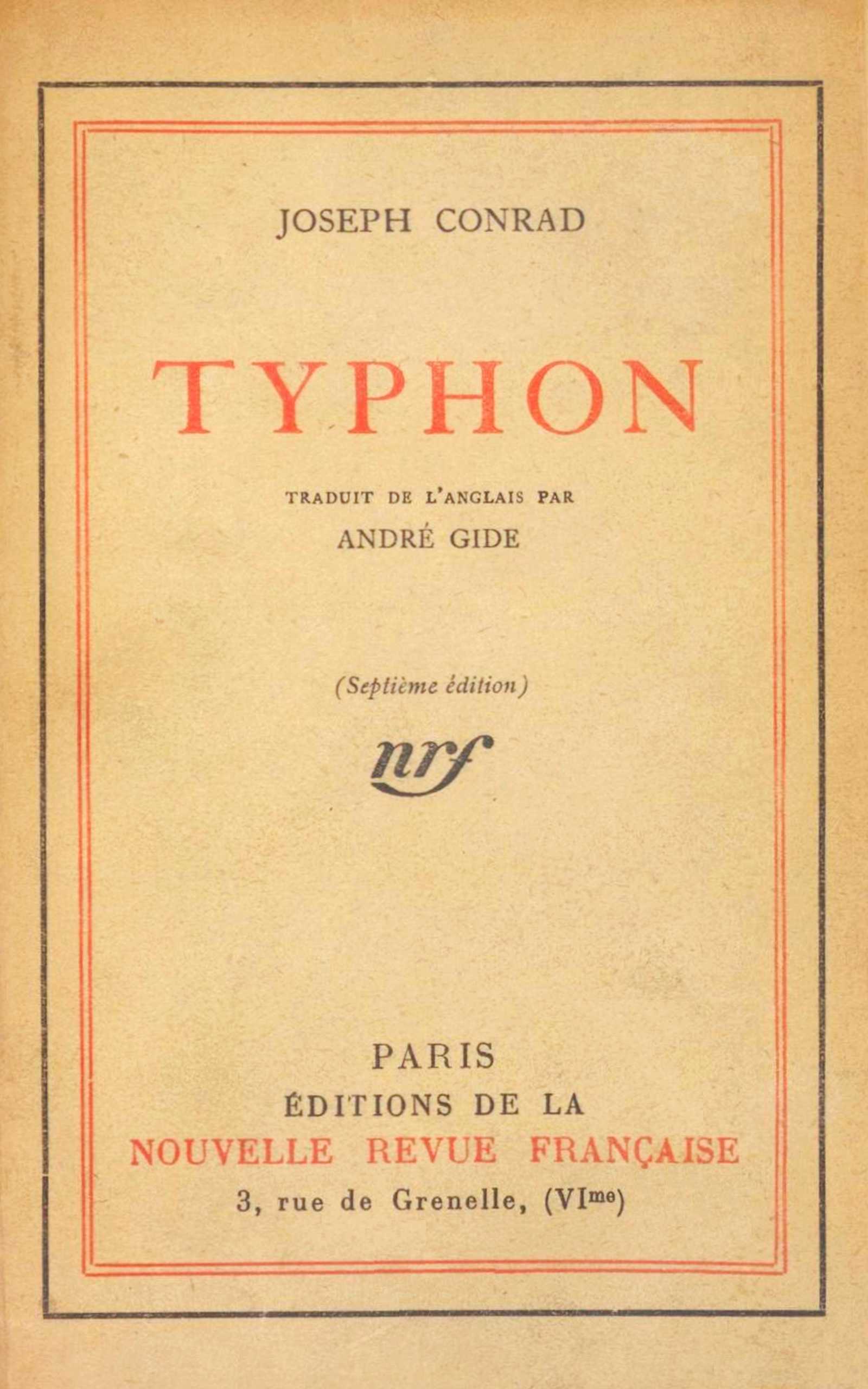
A novella written in the late 19th century. The story primarily revolves around Captain Mac Whirr, a seemingly unremarkable yet steadfast figure, as he navigates his ship, the Nan-Shan, through treacherous waters during a typhoon. The novella delves into themes of isolation, the unpredictability of nature, and the inner workings of a crew facing an impending disaster. The opening of ''Typhon'' introduces us to Captain Mac Whirr, who is portrayed as a dull yet reliable captain, accompanied by his second-in-command, Jukes. As the ship embarks on a journey from the South towards the port of Fou-Tchéou, various elements of the ship's crew and their dynamic relationships are illustrated. Tension begins to build as the barometer drops, hinting at the ominous approach of a typhoon. Through vivid descriptions and subtle character interactions, the beginning sets the stage for the unfolding disaster, focusing on the crew's reactions to the shifting weather and their reliance on Mac Whirr's leadership amid growing peril.
Editions
X-Ray
“Captain MacWhirr had sailed over the surface of the oceans assome men go skimming over the years of existence to sink gently intoa placid grave, ignorant of life to the last, without ever having beenmade to see all it may contain of perfidy, of violence, and of terror.There are on sea and land such men thus fortunate--or thus disdained bydestiny or by the sea.””
— Joseph Conrad
“Captain MacWhirr had sailed over the surface of the oceans as some men go skimming over the years of existence to sink gently into a placid grave, ignorant of life to the last, without ever having been made to see all it may contain of perfidy, of violence, and of terror. There are on sea and land such men thus fortunate”
— Joseph Conrad
“The only secret of her life was her abject terror of the time when her husband would come home to stay for good.””
— Joseph Conrad
“He was a corpulent man, with a gift for sly chaffing, which to the end of his life he exercised in his intercourse with his son, a little pityingly, as if upon a half-witted person.””
— Joseph Conrad
“Tale è la potenza disgregatrice di un uragano: essa isola l’individuo dai suoi simili. Un terremoto, una frana, una valanga soverchiano l’uomo incidentalmente, per così dire senza passione. La furia dell’uragano invece lo attacca come un nemico personale, cerca di afferrargli le membra, gli s’abbarbica alla mente, tenta di sradicare da lui perfino l’anima.””
— Joseph Conrad
“Fu qualcosa di formidabile e di subitaneo, come l'improvviso rompersi di un vaso colmo d'ira.””
— Joseph Conrad
Link to this book
Add a free, dofollow link to Lex on your blog, forum, syllabus, or reading list.

<a href="https://lex-books.com/book/typhon-d81173b3-1c99-47d1-b83a-3c931aeaed7a"><img src="https://lex-books.com/badges/read-on-lex.svg" alt="Read Typhon by Joseph Conrad free on Lex" width="160" height="40"></a>[](https://lex-books.com/book/typhon-d81173b3-1c99-47d1-b83a-3c931aeaed7a)[url=https://lex-books.com/book/typhon-d81173b3-1c99-47d1-b83a-3c931aeaed7a][img]https://lex-books.com/badges/read-on-lex.svg[/img][/url]Read Typhon by Joseph Conrad free on Lex: https://lex-books.com/book/typhon-d81173b3-1c99-47d1-b83a-3c931aeaed7aCite this book
Reading this edition for a paper or guide? Copy a citation.
Conrad, Joseph. Typhon. Lex, lex-books.com/book/typhon-d81173b3-1c99-47d1-b83a-3c931aeaed7a.Conrad, J. (1902). Typhon. Lex. https://lex-books.com/book/typhon-d81173b3-1c99-47d1-b83a-3c931aeaed7aConrad, Joseph. Typhon. Lex. https://lex-books.com/book/typhon-d81173b3-1c99-47d1-b83a-3c931aeaed7a.