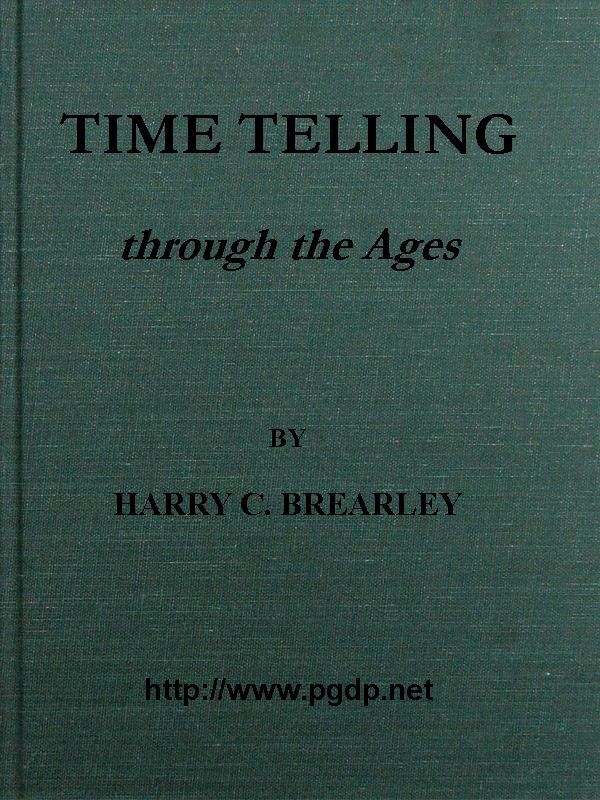
Time Telling Through the Ages
1919
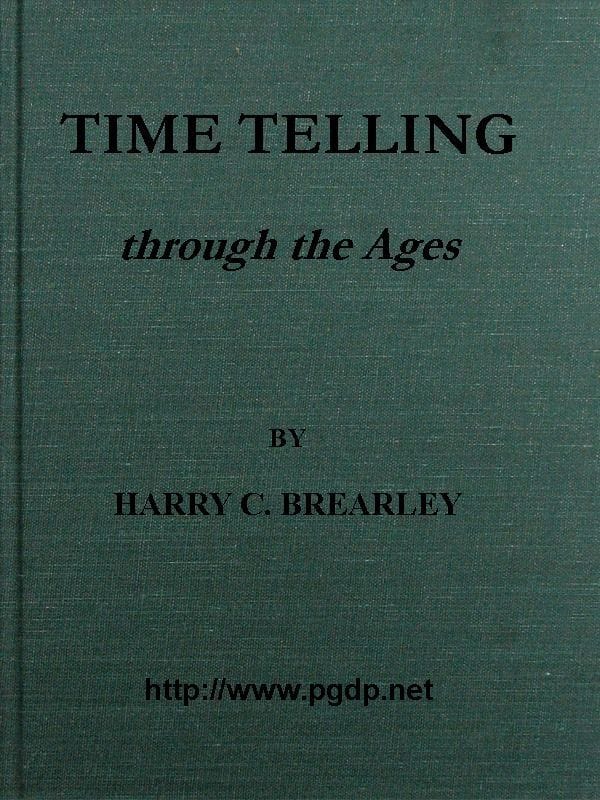
Time Telling Through the Ages
1919
In the darkness of a World War I trench, a soldier watches the glowing hands of his wristwatch, counting down the seconds until the artillery barrage begins. This is how Harry Chase Brearley opens his remarkable history of timekeeping: not with dusty artifacts, but with the deadly serious precision of modern warfare, where seconds mean survival. From that harrowing moment, the book travels backward through millennia, tracing humanity's obsessive quest to pin down time. We witness our ancestors reading the sun's shadow and the moon's phases, the invention of shadow clocks and water clocks, the revolutionary gear systems of medieval Europe, and finally the precision machinery that would eventually fill the pockets of soldiers on the Western Front. Written in 1919 and sponsored by the Ingersoll family (pioneers of affordable American watchmaking), this book captures a pivotal moment when timekeeping had become essential to both civilization and killing. It's a story of human ingenuity woven through war, commerce, and the deep human need to impose order on the relentless march of seconds.
Editions
X-Ray
The author and narrator who guides readers through the comprehensive history of timekeeping. He presents himself as an expert chronicler of horological development.
Research collaborator who performed fact-gathering work for the book. She consulted libraries, trade publications, and horological authorities.
Italian scientist who discovered the principle of the pendulum by observing a swinging lamp in Pisa Cathedral at age seventeen. His discovery revolutionized clockmaking.
German locksmith from Nuremberg who created the first portable timepieces around 1500, known as 'Nuremberg eggs.' Considered the father of the watch.
About Time Telling Through the Ages
Chapter Summaries
- Foreword
- A WWI soldier in a trench watches his luminous wristwatch, waiting for the signal to attack. This scene illustrates how timepieces have become essential to modern coordinated activity and civilization.
- 1
- Primitive humans first noticed time through natural phenomena like shadows and celestial movements. Early cave dwellers used the sun's position and shadow placement to make simple appointments and coordinate activities.
- 2
- Ancient Mesopotamian priests developed sophisticated astronomical knowledge, creating our calendar system with 12 months, 7-day weeks, and 60-minute hours. They combined genuine science with astrology and religious mysticism.
Key Themes
- Human Progress and Innovation
- The book traces humanity's relentless drive to improve timekeeping, showing how each generation built upon previous discoveries. This represents the cumulative nature of human knowledge and technological advancement.
- Civilization and Time
- Brearley demonstrates how accurate timekeeping became essential for complex societies, from ancient Babylonian astronomy to modern industrial coordination. Time measurement both reflects and enables civilizational complexity.
- Democracy and Accessibility
- The evolution from timepieces as luxury items for the wealthy to mass-produced watches for everyone parallels broader democratic movements. American manufacturing particularly embodied this democratization of precision timekeeping.
Characters
- Harry C. Brearley(protagonist)
- The author and narrator who guides readers through the comprehensive history of timekeeping. He presents himself as an expert chronicler of horological development.
- Mrs. Katherine Morrissey Dodge(major)
- Research collaborator who performed fact-gathering work for the book. She consulted libraries, trade publications, and horological authorities.
- Galileo(major)
- Italian scientist who discovered the principle of the pendulum by observing a swinging lamp in Pisa Cathedral at age seventeen. His discovery revolutionized clockmaking.
- Peter Henlein(major)
- German locksmith from Nuremberg who created the first portable timepieces around 1500, known as 'Nuremberg eggs.' Considered the father of the watch.
- Eli Terry(major)
- Connecticut clockmaker who pioneered American clock manufacturing, selling his wooden clocks on horseback throughout New England in the early 1800s.
- Seth Thomas(major)
- American clockmaker who worked with Eli Terry and established one of the most famous clock-making companies in America.
Link to this book
Add a free, dofollow link to Lex on your blog, forum, syllabus, or reading list.

<a href="https://lex-books.com/book/time-telling-through-the-ages-7d3b520a-2111-45af-bec1-39dc65887a6f"><img src="https://lex-books.com/badges/read-on-lex.svg" alt="Read Time Telling Through the Ages by Harry Chase Brearley free on Lex" width="160" height="40"></a>[](https://lex-books.com/book/time-telling-through-the-ages-7d3b520a-2111-45af-bec1-39dc65887a6f)[url=https://lex-books.com/book/time-telling-through-the-ages-7d3b520a-2111-45af-bec1-39dc65887a6f][img]https://lex-books.com/badges/read-on-lex.svg[/img][/url]Read Time Telling Through the Ages by Harry Chase Brearley free on Lex: https://lex-books.com/book/time-telling-through-the-ages-7d3b520a-2111-45af-bec1-39dc65887a6fCite this book
Reading this edition for a paper or guide? Copy a citation.
Brearley, Harry Chase. Time Telling Through the Ages. Lex, lex-books.com/book/time-telling-through-the-ages-7d3b520a-2111-45af-bec1-39dc65887a6f.Brearley, H. C. (1919). Time Telling Through the Ages. Lex. https://lex-books.com/book/time-telling-through-the-ages-7d3b520a-2111-45af-bec1-39dc65887a6fBrearley, Harry Chase. Time Telling Through the Ages. Lex. https://lex-books.com/book/time-telling-through-the-ages-7d3b520a-2111-45af-bec1-39dc65887a6f.