Computers—the Machines We Think with
1962
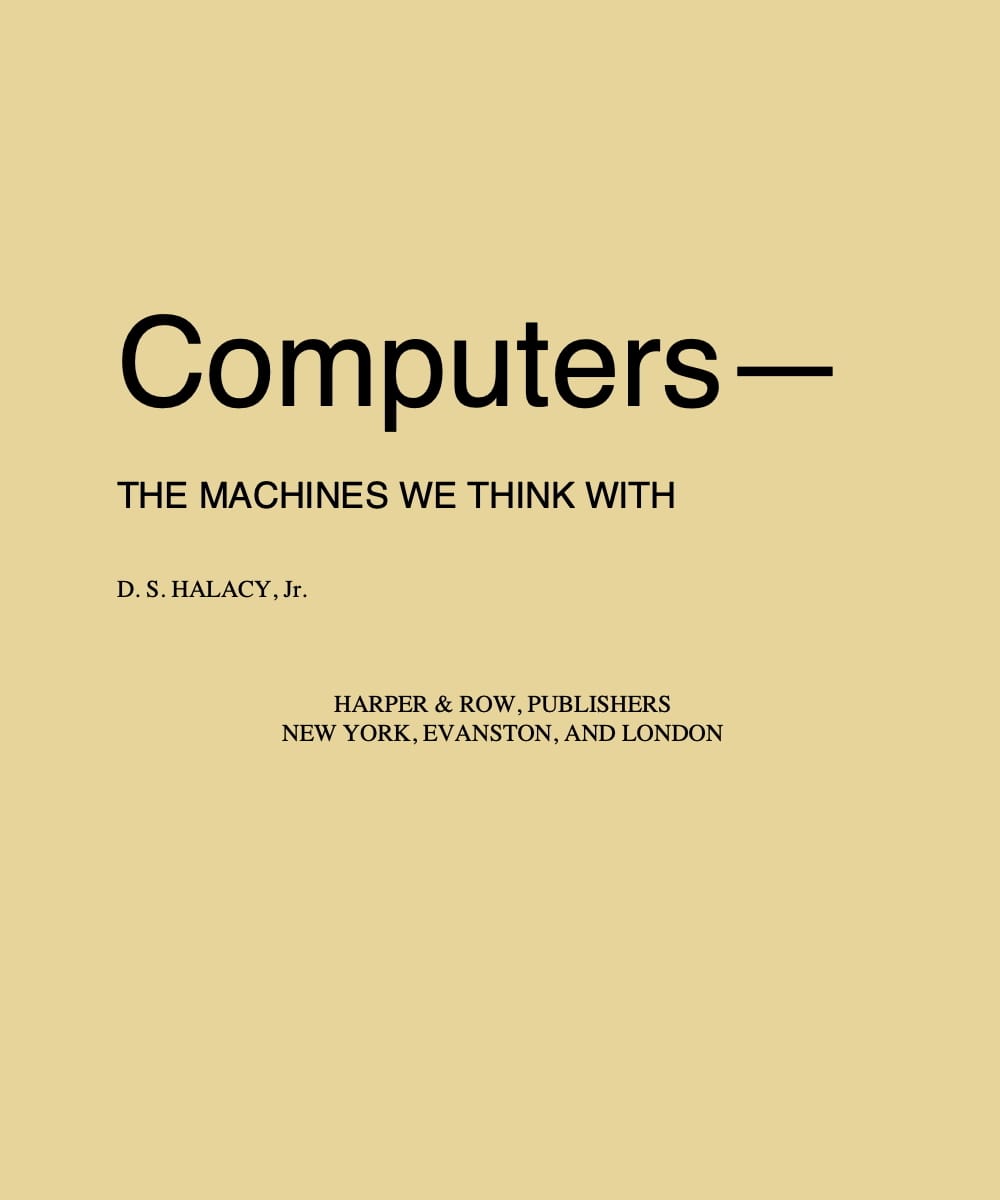
Published in 1962, when computers still occupied entire rooms and the word 'software' had barely entered the lexicon, this book captures a pivotal moment: the birth of the digital age as experienced by someone who witnessed its first breath. D. S. Halacy writes with the breathless excitement of a witness to revolution, documenting how these room-sized electronic brains were already transforming everything from banking to military defense, from industrial logistics to scientific research. He describes machines that could perform millions of operations in seconds, marveling at capabilities that now fit in a pocket. Yet what makes this book enduring isn't its technical details, it's its window into a particular kind of hope. Here is computing before cynicism, before cybersecurity fears, before the internet's dark alleys. Halacy sees machines that extend human capability, that free us for higher thought. Whether you approach this as historical curiosity or cultural archaeology, it offers something rare: the chance to see the digital future as it looked when it was still fresh, still bright, still full of possibility.
Editions
Link to this book
Add a free, dofollow link to Lex on your blog, forum, syllabus, or reading list.

<a href="https://lex-books.com/book/computers-the-machines-we-think-with-0b7be0bb-3f9e-48a9-98b4-9a9cbc59d17a"><img src="https://lex-books.com/badges/read-on-lex.svg" alt="Read Computers—the Machines We Think with by D. S. Halacy free on Lex" width="160" height="40"></a>[](https://lex-books.com/book/computers-the-machines-we-think-with-0b7be0bb-3f9e-48a9-98b4-9a9cbc59d17a)[url=https://lex-books.com/book/computers-the-machines-we-think-with-0b7be0bb-3f9e-48a9-98b4-9a9cbc59d17a][img]https://lex-books.com/badges/read-on-lex.svg[/img][/url]Read Computers—the Machines We Think with by D. S. Halacy free on Lex: https://lex-books.com/book/computers-the-machines-we-think-with-0b7be0bb-3f9e-48a9-98b4-9a9cbc59d17aCite this book
Reading this edition for a paper or guide? Copy a citation.
Halacy, D. S.. Computers—the Machines We Think with. Lex, lex-books.com/book/computers-the-machines-we-think-with-0b7be0bb-3f9e-48a9-98b4-9a9cbc59d17a.Halacy, D. S. (1962). Computers—the Machines We Think with. Lex. https://lex-books.com/book/computers-the-machines-we-think-with-0b7be0bb-3f9e-48a9-98b4-9a9cbc59d17aHalacy, D. S.. Computers—the Machines We Think with. Lex. https://lex-books.com/book/computers-the-machines-we-think-with-0b7be0bb-3f9e-48a9-98b4-9a9cbc59d17a.