The Venus of Milo: An Archeological Study of the Goddess of Womanhood
1916
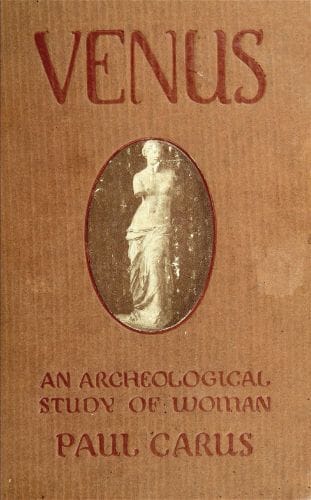
The Venus of Milo: An Archeological Study of the Goddess of Womanhood
1916
The Venus of Milo has stood in the Louvre for over two hundred years, her missing arms sparking more speculation than almost any other artifact in human history. Paul Carus, the influential philosopher and scholar, traces the statue's improbable journey from a windswept hillside on Melos in 1820, when a Greek peasant stumbled upon her in two pieces buried in the earth, through the frantic diplomatic scramble between French, Turkish, and Greek claimants who all wanted to possess her. But this is more than a adventure story of art acquisition. Carus uses the Venus as a lens to examine what ancient civilizations believed about womanhood, beauty, and the divine feminine, and how those beliefs shifted as empires rose and fell. He interrogates the statue's meaning across centuries: Why did the French so desperately want her? What did the missing limbs originally hold? And what does our endless fascination with this particular image reveal about us? Carus writes with the precision of a Victorian scholar but the curiosity of someone who understands that artifacts are never neutral, they carry the weight of every eye that has ever looked upon them.
Editions
Link to this book
Add a free, dofollow link to Lex on your blog, forum, syllabus, or reading list.

<a href="https://lex-books.com/book/the-venus-of-milo-an-archeological-study-of-the-goddess-of-womanhood-df82378d-4359-4375-8a7f-ee6007fc6f88"><img src="https://lex-books.com/badges/read-on-lex.svg" alt="Read The Venus of Milo: An Archeological Study of the Goddess of Womanhood by Paul Carus free on Lex" width="160" height="40"></a>[](https://lex-books.com/book/the-venus-of-milo-an-archeological-study-of-the-goddess-of-womanhood-df82378d-4359-4375-8a7f-ee6007fc6f88)[url=https://lex-books.com/book/the-venus-of-milo-an-archeological-study-of-the-goddess-of-womanhood-df82378d-4359-4375-8a7f-ee6007fc6f88][img]https://lex-books.com/badges/read-on-lex.svg[/img][/url]Read The Venus of Milo: An Archeological Study of the Goddess of Womanhood by Paul Carus free on Lex: https://lex-books.com/book/the-venus-of-milo-an-archeological-study-of-the-goddess-of-womanhood-df82378d-4359-4375-8a7f-ee6007fc6f88Cite this book
Reading this edition for a paper or guide? Copy a citation.
Carus, Paul. The Venus of Milo: An Archeological Study of the Goddess of Womanhood. Lex, lex-books.com/book/the-venus-of-milo-an-archeological-study-of-the-goddess-of-womanhood-df82378d-4359-4375-8a7f-ee6007fc6f88.Carus, P. (1916). The Venus of Milo: An Archeological Study of the Goddess of Womanhood. Lex. https://lex-books.com/book/the-venus-of-milo-an-archeological-study-of-the-goddess-of-womanhood-df82378d-4359-4375-8a7f-ee6007fc6f88Carus, Paul. The Venus of Milo: An Archeological Study of the Goddess of Womanhood. Lex. https://lex-books.com/book/the-venus-of-milo-an-archeological-study-of-the-goddess-of-womanhood-df82378d-4359-4375-8a7f-ee6007fc6f88.