The Temptation of St. Antony; Or, a Revelation of the Soul
1874
The Temptation of St. Antony; Or, a Revelation of the Soul
1874
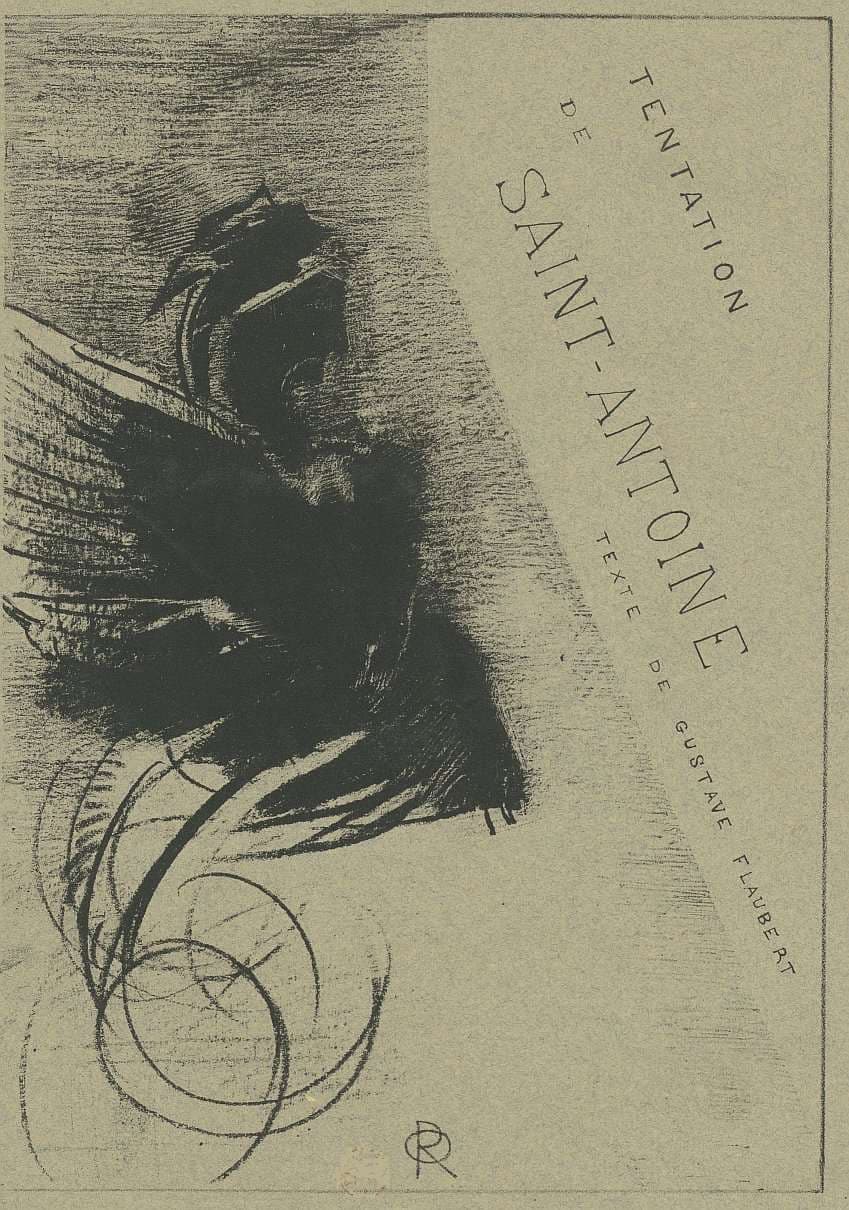
A lone hermit in the Egyptian desert, surrounded by silence and sand, faces an army of phantoms. The Queen of Sheba arrives draped in jewels. Dancing girls coil around him. Philosophers whisper heresies. Monsters rise from the floor of hell itself. This is not a story in any conventional sense, but a feverish cascade of visions that Gustave Flaubert spent decades perfecting into a work of terrifying beauty. St. Antony, fourth-century saint and anchorite, has fled the world to find God, only to discover that the desert holds its own inhabitants: every desire he rejected, every doubt he buried, every beautiful and terrible thing he chose not to see. The temptations escalate from sensual to philosophical to cosmic, each hallucination more dazzling and more annihilating than the last. What unfolds is less a narrative than a descent into the human psyche at its absolute limit, where faith either breaks or becomes something stranger and more terrible than doubt. For readers who have ever wondered what remains when you strip away everything worldly, every comfort, every connection, and are left alone with your own soul.
Editions
X-Ray
“And he beholds the moon; like a rounded fragment of ice filled with motionless light.””
— Gustave Flaubert
“Thy chastity is but a more subtle form of corruption, and thy contempt of this world is but the impotence of thy hatred against it.””
— Gustave Flaubert
“Le monde est l'œuvre d'un Dieu en délire.””
— Gustave Flaubert
“Shake the vermin from thy rags! Rise up from thy filth! Thy god is not a moloch who demands human flesh in sacrifice!””
— Gustave Flaubert
“That is but the device of the devil to seduce the faithful more easily. He attacks the strong through the mind, the weak through the flesh.””
— Gustave Flaubert
“Hypocrite qui s'enfonce dans la solitude pour se livrer mieux au debordement de ses convoitises! Tu te prives de viandes, de vin, d'etuves, d'esclaves et d'honneurs; mais comme tu laisses ton imagination t'offrir des banquets, des parfums, des femmes nues et des des foules applaudissantes! Ta chastete n'est qu'une corruption plus subtile, et ce mepris du monde l'impuissance de ta haine contre lui! C'est la ce qui rend tes pareils si lugubres, ou peut-etre parce qu'ils doutent. La possession de la verite donne la joie. Est-ce que Jesus etait triste? Il allait entoure d'amis, se reposait a l'ombre de l'olivier, entrait chez le publicain, multipliait les coupes, pardonnant a la pecheresse, guerissant toutes les douleurs. Toi, tu n'as de pitie que pour ta misere. C'est comme un remords qui t'agite et une demence farouche, jusqu'a repousser la caresse d'un chien ou le sourire d'un enfant.””
— Gustave Flaubert
“tout au fond, seul, coiffe de la tiare et couvert d'escarboucles, mange et boit le roi Nabuchodonosor. A sa droite et a sa gauche, deux theories de pretres en bonnets pointus balancent des encensoirs. Par terre, sous lui, rampent les rois captifs, sans pieds ni mains, auxquels il jette des os a ronger; plus bas se tiennent ses freres, avec un bandeau sur les yeux,--etant tous aveugles. Une plainte continue monte du fond des ergastules. Les sons doux et lents d'un orgue hydraulique alternent avec les choeurs de voix; et on sent qu'il y a tout autour de la salle une ville demesuree, un ocean d'hommes dont les flots battent les murs.””
— Gustave Flaubert
“We obtain merit only by our thirst for truth.””
— Gustave Flaubert
“Thou, thou hast no pity save for thine own misery. It is like a remorse that gnaws thee, a savage madness that impels thee to repel the caress of a dog or to frown upon the smile of a child.””
— Gustave Flaubert
Link to this book
Add a free, dofollow link to Lex on your blog, forum, syllabus, or reading list.

<a href="https://lex-books.com/book/the-temptation-of-st-antony-or-a-revelation-of-the-soul-b5806ccb-78f6-4bea-9622-82b82f35e46e"><img src="https://lex-books.com/badges/read-on-lex.svg" alt="Read The Temptation of St. Antony; Or, a Revelation of the Soul by Gustave Flaubert free on Lex" width="160" height="40"></a>[](https://lex-books.com/book/the-temptation-of-st-antony-or-a-revelation-of-the-soul-b5806ccb-78f6-4bea-9622-82b82f35e46e)[url=https://lex-books.com/book/the-temptation-of-st-antony-or-a-revelation-of-the-soul-b5806ccb-78f6-4bea-9622-82b82f35e46e][img]https://lex-books.com/badges/read-on-lex.svg[/img][/url]Read The Temptation of St. Antony; Or, a Revelation of the Soul by Gustave Flaubert free on Lex: https://lex-books.com/book/the-temptation-of-st-antony-or-a-revelation-of-the-soul-b5806ccb-78f6-4bea-9622-82b82f35e46eCite this book
Reading this edition for a paper or guide? Copy a citation.
Flaubert, Gustave. The Temptation of St. Antony; Or, a Revelation of the Soul. Lex, lex-books.com/book/the-temptation-of-st-antony-or-a-revelation-of-the-soul-b5806ccb-78f6-4bea-9622-82b82f35e46e.Flaubert, G. (1874). The Temptation of St. Antony; Or, a Revelation of the Soul. Lex. https://lex-books.com/book/the-temptation-of-st-antony-or-a-revelation-of-the-soul-b5806ccb-78f6-4bea-9622-82b82f35e46eFlaubert, Gustave. The Temptation of St. Antony; Or, a Revelation of the Soul. Lex. https://lex-books.com/book/the-temptation-of-st-antony-or-a-revelation-of-the-soul-b5806ccb-78f6-4bea-9622-82b82f35e46e.