The Suppression of the African Slave Trade to the United States of America: 1638-1870
1879
The Suppression of the African Slave Trade to the United States of America: 1638-1870
1879
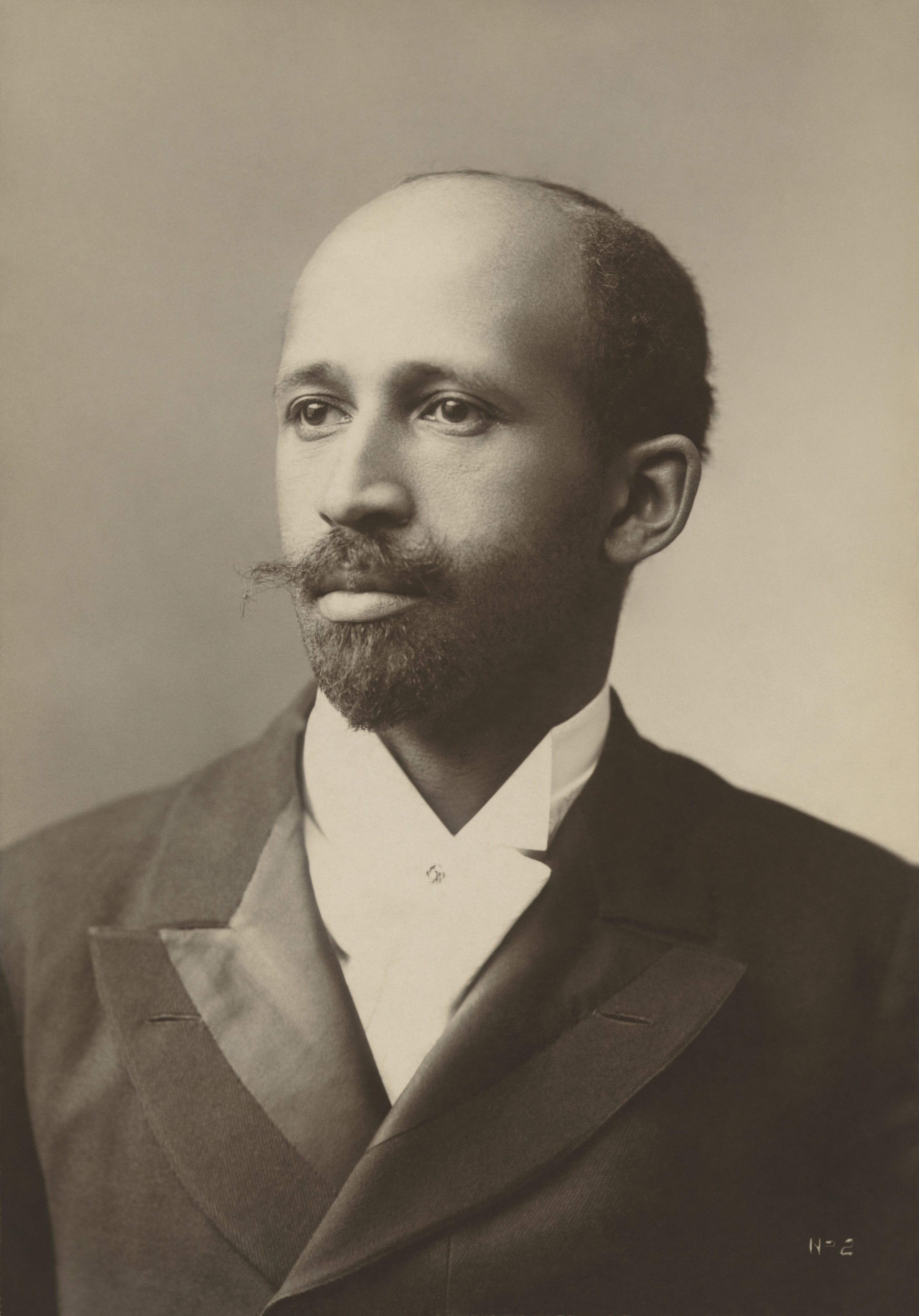
In 1896, W. E. B. Du Bois became the first African American to earn a Ph.D. from Harvard with this groundbreaking dissertation, a work that fundamentally reshaped the study of American history. Rather than merely documenting the suppression of the slave trade, Du Bois exposed the tangled web of economic interest, political maneuvering, and moral contradiction that defined America's relationship with human bondage. He traced the arc from the colonial period through the Constitutional Convention, the Haitian Revolution's terrifying example to Southern slaveholders, and the complex legislative battles that eventually banned the trade, all while revealing how Northern capital and Southern cotton interests sustained the institution longer than moral suasion ever could. This is not a distant academic exercise but a carefully argued case for understanding how a nation grappled, fitfully and incompletely, with its original sin. The work remains essential not for its conclusions alone but for its methodology: Du Bois demanded that slavery be studied with the same rigor applied to any other historical phenomenon, refusing to let discomfort shield the subject from scrutiny. For readers seeking to understand the deep roots of American racism, the economic foundations of slavery, or the intellectual legacy of Du Bois himself, this remains the essential starting point.
Editions
X-Ray
“social problem, which required two centuries and a half for a nation of trained European stock and boasted moral fibre to solve.””
— W. E. B. Du Bois
“Blanco and Carballo of Havana, who owned the vessel, had correspondents in the United States: "at Baltimore, Messrs. Peter Harmony and Co., in New York, Robert Barry, Esq." 57 The slaver "Martha" of New York, captured by the "Perry," contained among her papers curious revelations of the guilt of persons in America who were little suspected.””
— W. E. B. Du Bois
“the American slave-trade finally came to be carried on principally by United States capital, in United States ships, officered by United States citizens, and under the United States flag.””
— W. E. B. Du Bois
“The demand for land showed itself in the annexation of Texas, the conquest of Mexico, and the movement toward the acquisition of Cuba.””
— W. E. B. Du Bois
“The changes in price during the next few years drove out of competition many survivors of the small-farming free-labor system, and put the slave régime in position to dictate the policy of the nation.””
— W. E. B. Du Bois
“In 1822 the crop was a half-million bales; in 1831, a million; in 1838, a million and a half; and in 1840–1843, two million. By this time the world's consumption of cotton goods began to increase so rapidly that, in spite of the increase in Southern crops, the price kept rising. Three million bales were gathered in 1852, three and a half million in 1856, and the remarkable crop of five million bales in 1860. 5””
— W. E. B. Du Bois
“a new economic future was opened up to this land, and immediately the whole South began to extend its cotton culture, and more and more to throw its whole energy into this one staple.””
— W. E. B. Du Bois
“England, the chief cotton market of the world, the consumption of raw cotton rose steadily from 13,000 bales in 1781, to 572,000 in 1820, to 871,000 in 1830, and to 3,366,000 in 1860.””
— W. E. B. Du Bois
“During the years 1810–1814 she signed treaties relating to the subject with Portugal, Denmark, and Sweden. 13 May 30, 1814, an additional article to the Treaty of Paris, between France and Great Britain, engaged these powers to endeavor to induce the approaching Congress at Vienna "to decree the abolition of the Slave Trade, so that the said Trade shall cease universally, as it shall cease definitively, under any circumstances, on the part of the French Government, in the course of 5 years; and that during the said period no Slave Merchant shall import or sell Slaves, except in the Colonies of the State of which he is a Subject.””
— W. E. B. Du Bois
About The Suppression of the African Slave Trade to the United States of America: 1638-1870
Chapter Summaries
- I
- Du Bois outlines his methodology and the rise of the English slave trade from Sir John Hawkins's 1562 voyage through various chartered companies. He establishes the economic foundation that made slavery central to colonial development.
- II
- Examines early restrictions on slave importation in Georgia, South Carolina, North Carolina, Virginia, and Maryland, showing how opposition was based primarily on fear of insurrection rather than moral objections.
- III
- Analyzes the Dutch origins of the continental slave trade and restrictions in New York, Pennsylvania, Delaware, and New Jersey, where economic motives dominated opposition to the trade.
Key Themes
- Constitutional Compromise and Moral Failure
- The Constitution's twenty-year protection of the slave trade represents a fundamental compromise that prioritized political union over moral principle, establishing a pattern of accommodation that would plague the nation for decades.
- Economic Interest versus Human Rights
- Throughout the colonial and early national periods, economic arguments consistently trumped humanitarian concerns, with even opponents of slavery often motivated more by fear of insurrection than moral conviction.
- Federal versus State Authority
- The struggle over slave trade regulation reveals ongoing tensions between federal power and states' rights, with Southern states consistently resisting national authority when it threatened their economic interests.
Characters
- W. E. B. Du Bois(protagonist)
- The author and scholar who conducted this comprehensive study of the African slave trade to the United States. He was a Rogers Memorial Fellow at Harvard University when he began this research.
- Dr. Albert Bushnell Hart(major)
- Harvard University professor who suggested Du Bois begin this work and provided guidance and encouragement throughout the research process.
- Thomas Jefferson(major)
- Third President of the United States who recommended congressional action against the slave trade in 1806 and drafted strong anti-slavery language for the Declaration of Independence that was later removed.
- James Madison(major)
- Fourth President and key figure in Constitutional Convention debates on the slave trade, who argued for limiting the trade and wrote Federalist No. 41 defending the Constitution's compromise.
- Charles Pinckney(major)
- South Carolina delegate to Constitutional Convention who strongly defended the slave trade and argued it benefited the entire Union economically.
- John Rutledge(major)
- South Carolina delegate who bluntly declared that religion and humanity had nothing to do with the slave trade question, calling it purely a matter of 'interest.'
Link to this book
Add a free, dofollow link to Lex on your blog, forum, syllabus, or reading list.

<a href="https://lex-books.com/book/the-suppression-of-the-african-slave-trade-to-the-united-states-of-america-1638--ec4e8bf8-9801-4842-9c7b-33cfbf35d1aa"><img src="https://lex-books.com/badges/read-on-lex.svg" alt="Read The Suppression of the African Slave Trade to the United States of America: 1638-1870 by W. E. B. Du Bois free on Lex" width="160" height="40"></a>[](https://lex-books.com/book/the-suppression-of-the-african-slave-trade-to-the-united-states-of-america-1638--ec4e8bf8-9801-4842-9c7b-33cfbf35d1aa)[url=https://lex-books.com/book/the-suppression-of-the-african-slave-trade-to-the-united-states-of-america-1638--ec4e8bf8-9801-4842-9c7b-33cfbf35d1aa][img]https://lex-books.com/badges/read-on-lex.svg[/img][/url]Read The Suppression of the African Slave Trade to the United States of America: 1638-1870 by W. E. B. Du Bois free on Lex: https://lex-books.com/book/the-suppression-of-the-african-slave-trade-to-the-united-states-of-america-1638--ec4e8bf8-9801-4842-9c7b-33cfbf35d1aaCite this book
Reading this edition for a paper or guide? Copy a citation.
Bois, W. E. B. Du. The Suppression of the African Slave Trade to the United States of America: 1638-1870. Lex, lex-books.com/book/the-suppression-of-the-african-slave-trade-to-the-united-states-of-america-1638--ec4e8bf8-9801-4842-9c7b-33cfbf35d1aa.Bois, W. E. B. D. (1879). The Suppression of the African Slave Trade to the United States of America: 1638-1870. Lex. https://lex-books.com/book/the-suppression-of-the-african-slave-trade-to-the-united-states-of-america-1638--ec4e8bf8-9801-4842-9c7b-33cfbf35d1aaBois, W. E. B. Du. The Suppression of the African Slave Trade to the United States of America: 1638-1870. Lex. https://lex-books.com/book/the-suppression-of-the-african-slave-trade-to-the-united-states-of-america-1638--ec4e8bf8-9801-4842-9c7b-33cfbf35d1aa.