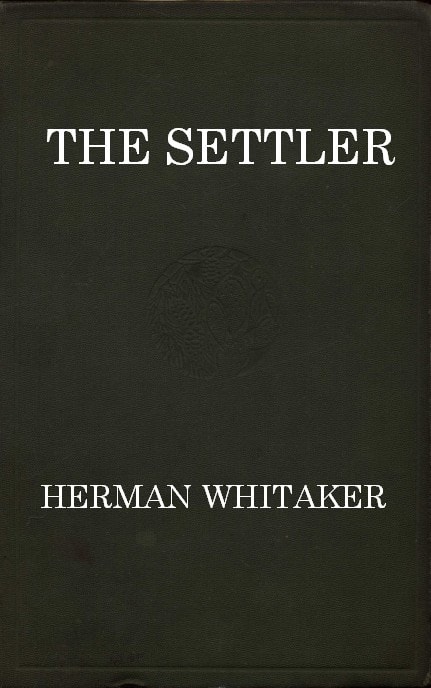
The Settler
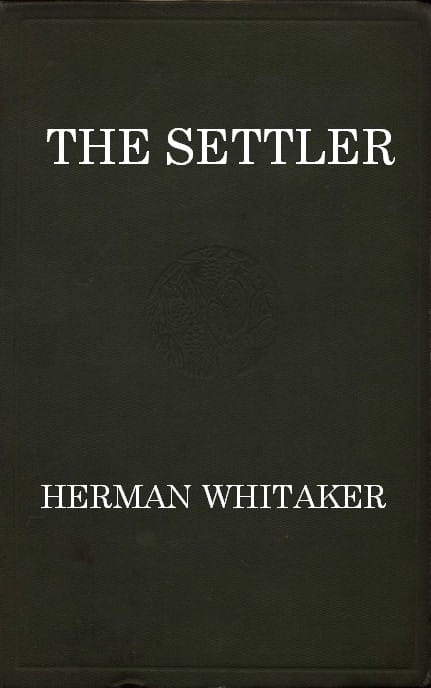
On the vast Canadian prairie at the turn of the century, survival is measured in sweat and silence. Carter, a stoic settler with weathered hands and a keen eye for the land, watches over his sick neighbor Morrill while the wind strips the earth of anything not anchored deep. When Morrill's sister Helen arrives to tend to her ailing brother, tensions among the scattered homesteaders begin to simmer just beneath the surface of mutual necessity. The land gives nothing freely - not water, not harvest, not peace - and the neighbors who might once have offered aid now eye each other's resources with quiet desperation. This is a story of people caught between the punishing sky and the unforgiving soil, where building a home means fighting not just the elements but the creeping suspicion that there will never be enough for everyone. The community that forms around these settlers is as rough and raw as the landscape itself, bound together by shared hardship yet fractured by the constant threat of ruin. Through the intimate struggles of Carter, Morrill, and Helen, the novel paints a vivid portrait of frontier life where courage often means simply getting up to face another day of impossible choices.
Editions
X-Ray
“The surest way to eradicate a people’s right to their land is to deny their historical connection to it.””
— Unknown
“a colonial war waged against the indigenous population, by a variety of parties, to force them to relinquish their homeland to another people against their will.””
— Unknown
“Significantly, the overwhelming Arab majority of the population (around 94 percent at that time) went unmentioned by Balfour, except in a backhanded way as the “existing non-Jewish communities in Palestine.” They were described in terms of what they were not, and certainly not as a nation or a people”
— Unknown
“[T]he modern history of Palestine can best be understood in these terms: as a colonial war waged against the indigenous population, by a variety of parties, to force them to relinquish their homeland to another people against their will.””
— Unknown
“The comforting idea that “the old will die and the young will forget””
— Unknown
“In the words of one scholar, “by virtue of Israel’s definition of itself as a Jewish state and the state’s exclusionary policies and laws, what was conferred on Palestinians was in effect second-class citizenship.” Most significantly, the martial regime under which the Palestinians lived granted the Israeli military near-unlimited authority to control the minutiae of their lives.57””
— Unknown
“The Zionists’ colonial enterprise, aimed at taking over the country, necessarily had to produce resistance. “If you wish to colonize a land in which people are already living,” Jabotinsky wrote in 1925, “you must find a garrison for the land, or find a benefactor who will provide a garrison on your behalf.… Zionism is a colonizing venture and, therefore, it stands or falls on the question of armed forces.”81 At least initially, only the armed forces provided by Britain could overcome the natural resistance of those being colonized.””
— Unknown
“With Hamas now in control of the Gaza Strip, Israel imposed a full-blown siege. Goods entering the strip were reduced to a bare minimum; regular exports were stopped completely; fuel supplies were cut; and leaving and entering Gaza were only rarely permitted. Gaza was in effect turned into an open-air prison, where by 2018 at least 53 percent of some two million Palestinians lived in a state of poverty,24 and unemployment stood at an astonishing 52 percent, with much higher rates for youth and women.25 What had begun with international refusal to recognize Hamas’s election victory had led to a disastrous Palestinian rupture and the blockade of Gaza. This sequence of events amounted to a new declaration of war on the Palestinians. It also provided indispensable international cover for the open warfare that was to come.””
— Unknown
“Just like Zionism, Palestinian and other Arab national identities were modern and contingent, a product of late nineteenth- and twentieth-century circumstances, not eternal and immutable. The denial of an authentic, independent Palestinian identity is of a piece with Herzl’s colonialist views on the alleged benefits of Zionism to the indigenous population, and constitutes a crucial element in the erasure of their national rights and peoplehood by the Balfour Declaration and its sequels.””
— Unknown
Link to this book
Add a free, dofollow link to Lex on your blog, forum, syllabus, or reading list.

<a href="https://lex-books.com/book/the-settler-f01945d9-0ba5-418d-91a4-b7859b8a0e67"><img src="https://lex-books.com/badges/read-on-lex.svg" alt="Read The Settler by Unknown free on Lex" width="160" height="40"></a>[](https://lex-books.com/book/the-settler-f01945d9-0ba5-418d-91a4-b7859b8a0e67)[url=https://lex-books.com/book/the-settler-f01945d9-0ba5-418d-91a4-b7859b8a0e67][img]https://lex-books.com/badges/read-on-lex.svg[/img][/url]Read The Settler by Unknown free on Lex: https://lex-books.com/book/the-settler-f01945d9-0ba5-418d-91a4-b7859b8a0e67Cite this book
Reading this edition for a paper or guide? Copy a citation.
Unknown. The Settler. Lex, lex-books.com/book/the-settler-f01945d9-0ba5-418d-91a4-b7859b8a0e67.Unknown (n.d.). The Settler. Lex. https://lex-books.com/book/the-settler-f01945d9-0ba5-418d-91a4-b7859b8a0e67Unknown. The Settler. Lex. https://lex-books.com/book/the-settler-f01945d9-0ba5-418d-91a4-b7859b8a0e67.