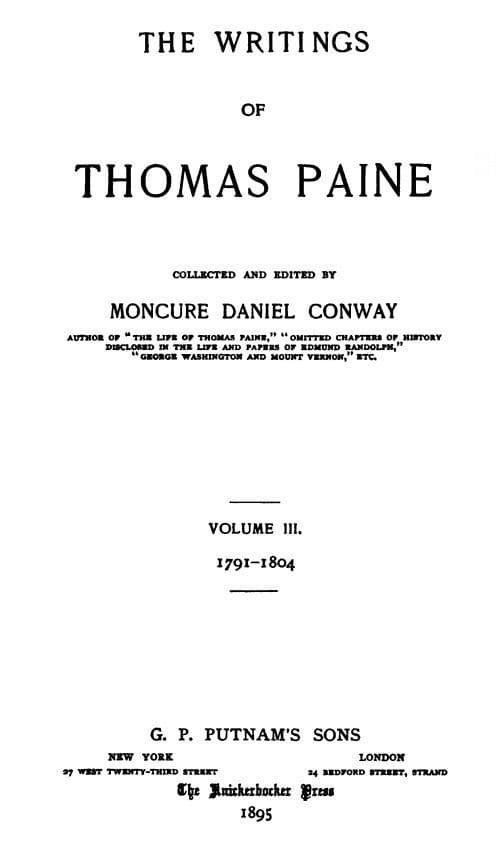
The Rights of Man

In the tumultuous wake of the French Revolution, Thomas Paine's *The Rights of Man* bursts forth as a fiery defense against Edmund Burke's conservative broadside. Paine meticulously dismantles Burke's fears and distortions, offering a clear-eyed account of the revolution's genesis and principles. He champions the inherent rights of citizens, dissecting the foundational 'Declaration of the Rights of Man and of Citizens' and advocating for a radical reimagining of government built on reason and popular sovereignty, not inherited privilege or tradition. The second part extends this vision, outlining concrete proposals for establishing republican systems even in monarchical Britain. This isn't just a historical artifact; it's a living blueprint for democratic ideals. Paine's prose, sharp and accessible, cuts through aristocratic cant, igniting a popular imagination hungry for change. Its immediate impact was seismic, inspiring reform societies and directly challenging the established order to the point of Paine's own exile. Reading it today reveals the enduring power of revolutionary thought and the fundamental arguments that still underpin debates about liberty, governance, and the very definition of a just society.
Editions

Link to this book
Add a free, dofollow link to Lex on your blog, forum, syllabus, or reading list.

<a href="https://lex-books.com/book/the-rights-of-man-bc0ac0da-0797-46f4-a178-e3cf2501ef40"><img src="https://lex-books.com/badges/read-on-lex.svg" alt="Read The Rights of Man by Thomas Paine free on Lex" width="160" height="40"></a>[](https://lex-books.com/book/the-rights-of-man-bc0ac0da-0797-46f4-a178-e3cf2501ef40)[url=https://lex-books.com/book/the-rights-of-man-bc0ac0da-0797-46f4-a178-e3cf2501ef40][img]https://lex-books.com/badges/read-on-lex.svg[/img][/url]Read The Rights of Man by Thomas Paine free on Lex: https://lex-books.com/book/the-rights-of-man-bc0ac0da-0797-46f4-a178-e3cf2501ef40Cite this book
Reading this edition for a paper or guide? Copy a citation.
Paine, Thomas. The Rights of Man. Lex, lex-books.com/book/the-rights-of-man-bc0ac0da-0797-46f4-a178-e3cf2501ef40.Paine, T. (n.d.). The Rights of Man. Lex. https://lex-books.com/book/the-rights-of-man-bc0ac0da-0797-46f4-a178-e3cf2501ef40Paine, Thomas. The Rights of Man. Lex. https://lex-books.com/book/the-rights-of-man-bc0ac0da-0797-46f4-a178-e3cf2501ef40.