The Pleasures of Life
1887
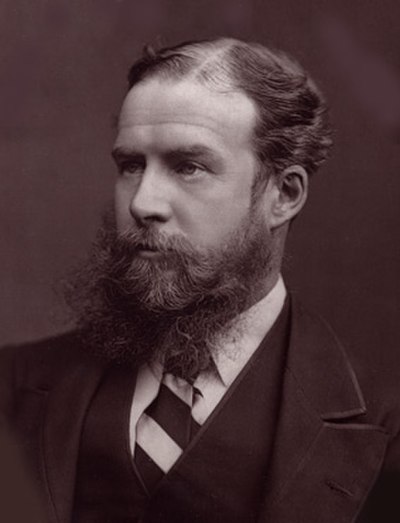
Sir John Lubbock's 1887 meditation on happiness arrives like a wise uncle settling into the armchair across from you, ready to share what a lifetime of observation has taught him. Drawing from lectures delivered at schools and colleges, Lubbock proposes a radical idea for his era: that happiness is not merely inherited or stumbled upon, but actively cultivated through intentional living. He traces pleasure through its many tributaries: the communion of good books, the sanctum of home, the expanding horizons of travel, the quiet gifts of nature, and the sacred bonds of friendship. Yet Lubbock is no mere optimist. He confronts life's troubles honestly, arguing that duty and labor, properly understood, become sources of joy rather than drudgery. His Victorian sensibility grounds every reflection in moral seriousness, yet the prose never founders into didacticism. The result is a surprisingly intimate guide to flourishing, one that argues our happiness is inseparable from the happiness we extend to others. For readers who find modern self-help hollow, Lubbock offers something richer: philosophy as companionable counsel, as timeless as the questions he poses about what makes a life well-lived.
Editions
X-Ray
“Art is unquestionably one of the purest and highest elements in human happiness. It trains the mind through the eye, and the eye through the mind. As the sun colors flowers, so does art color life.””
— John, Sir Lubbock
“We may sit in our library and yet be in all quarters of the earth.””
— John, Sir Lubbock
“Our great mistake in education is, as it seems to me, the worship of book-learning–the confusion of instruction and education. . The children in our elementary schools are wearied by the mechanical act of writing, and the interminable intricacies of spelling; they are oppressed by columns of dates, by lists of kings and places, which convey no definite idea to their minds, and have no near relation to their daily wants and occupations; while in our public schools the same unfortunate results are produced by the weary monotony of Latin and Greek grammar. . What does it matter if the pupil know a little more or a little less? A boy who leaves school knowing much, but hating his lessons, will soon have forgotten almost all he ever learned; while another who had acquired a thirst for knowledge, even if he had learned little, would soon teach himself more than the first ever knew.””
— John, Sir Lubbock
“If we are ever in doubt what to do, it is a good rule to ask ourselves what we shall wish on the morrow that we had done.””
— John, Sir Lubbock
“In truth, people can generally make time for what they choose to do; it is not really the time but the will that is wanting.””
— John, Sir Lubbock
“We profit little by books we do not enjoy.””
— John, Sir Lubbock
“I cannot, however, but think that the world would be better and brighter if our teachers would dwell on the Duty of Happiness as well as the Happiness of Duty; for we ought to be as cheerful as we can, if only because to be happy ourselves is a most effectual contribution to the happiness of others.””
— John, Sir Lubbock
“When we have done our best, we should wait the result in peace.””
— John, Sir Lubbock
“If we succeed in giving the love of learning, the learning itself is sure to follow.””
— John, Sir Lubbock
Link to this book
Add a free, dofollow link to Lex on your blog, forum, syllabus, or reading list.

<a href="https://lex-books.com/book/the-pleasures-of-life-22ebbbce-a034-46cf-889b-d47b929ae36c"><img src="https://lex-books.com/badges/read-on-lex.svg" alt="Read The Pleasures of Life by John, Sir Lubbock free on Lex" width="160" height="40"></a>[](https://lex-books.com/book/the-pleasures-of-life-22ebbbce-a034-46cf-889b-d47b929ae36c)[url=https://lex-books.com/book/the-pleasures-of-life-22ebbbce-a034-46cf-889b-d47b929ae36c][img]https://lex-books.com/badges/read-on-lex.svg[/img][/url]Read The Pleasures of Life by John, Sir Lubbock free on Lex: https://lex-books.com/book/the-pleasures-of-life-22ebbbce-a034-46cf-889b-d47b929ae36cCite this book
Reading this edition for a paper or guide? Copy a citation.
John, Sir Lubbock. The Pleasures of Life. Lex, lex-books.com/book/the-pleasures-of-life-22ebbbce-a034-46cf-889b-d47b929ae36c.John, S. L. (1887). The Pleasures of Life. Lex. https://lex-books.com/book/the-pleasures-of-life-22ebbbce-a034-46cf-889b-d47b929ae36cJohn, Sir Lubbock. The Pleasures of Life. Lex. https://lex-books.com/book/the-pleasures-of-life-22ebbbce-a034-46cf-889b-d47b929ae36c.