The Origins of Contemporary France
1876

The Origins of Contemporary France
1876
Translated by John Durand
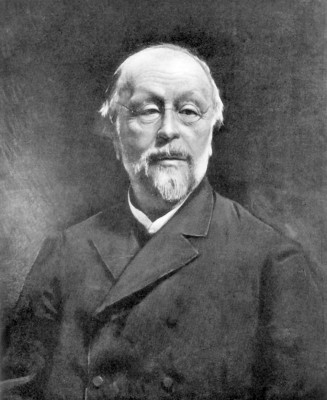
Hippolyte Taine undertook an ambitious task in this 1876 masterwork: to diagnose why France, one of Europe's most sophisticated civilizations, collapsed into violent revolution and what emerged from that collapse. Writing barely a decade after the Second Empire's fall, Taine brought a 19th-century positivist's rigor to the question that had haunted France for a century. This first volume examines the ancient regime's fatal contradictions, the clergy's parasitic wealth alongside rural penury, the nobility's privileges without purpose, and a monarchy too rigid to reform itself. Taine traces how these structural failures created the powder keg that the Revolution ignited. He then follows the revolutionary impulse from early idealism through factional warfare to the Terror's logic of extermination, and finally to Napoleon's authoritarian settlement. Written in dense,拉丁ate prose that mirrors its Victorian seriousness, this is not a narrative history but an autopsy of a civilization. For patient readers willing to grapple with Taine's philosophical framework, it offers a bracing counter-narrative to more celebratory revolutionary mythology.
Editions

Link to this book
Add a free, dofollow link to Lex on your blog, forum, syllabus, or reading list.

<a href="https://lex-books.com/book/the-origins-of-contemporary-france-43a2e532-88a3-4472-aa61-8e32c7dbd8cb"><img src="https://lex-books.com/badges/read-on-lex.svg" alt="Read The Origins of Contemporary France by Hippolyte Taine free on Lex" width="160" height="40"></a>[](https://lex-books.com/book/the-origins-of-contemporary-france-43a2e532-88a3-4472-aa61-8e32c7dbd8cb)[url=https://lex-books.com/book/the-origins-of-contemporary-france-43a2e532-88a3-4472-aa61-8e32c7dbd8cb][img]https://lex-books.com/badges/read-on-lex.svg[/img][/url]Read The Origins of Contemporary France by Hippolyte Taine free on Lex: https://lex-books.com/book/the-origins-of-contemporary-france-43a2e532-88a3-4472-aa61-8e32c7dbd8cbCite this book
Reading this edition for a paper or guide? Copy a citation.
Taine, Hippolyte. The Origins of Contemporary France. Lex, lex-books.com/book/the-origins-of-contemporary-france-43a2e532-88a3-4472-aa61-8e32c7dbd8cb.Taine, H. (1876). The Origins of Contemporary France. Lex. https://lex-books.com/book/the-origins-of-contemporary-france-43a2e532-88a3-4472-aa61-8e32c7dbd8cbTaine, Hippolyte. The Origins of Contemporary France. Lex. https://lex-books.com/book/the-origins-of-contemporary-france-43a2e532-88a3-4472-aa61-8e32c7dbd8cb.