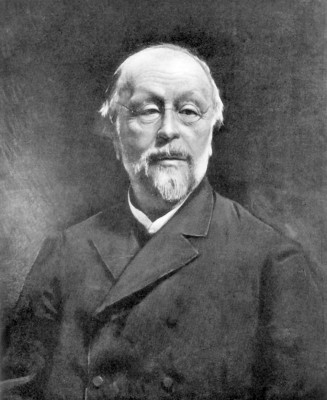
The Modern Regime, Volume 2
The Modern Regime, Volume 2
Translated by John Durand
Hippolyte Taine's piercing analysis of how revolutionary France remade itself into a centralized State remains startlingly relevant. Written in the aftermath of the Franco-Prussian War, this volume dissects the moral architecture of 19th-century France: the Church hollowed by Concordat, the family subordinated to bureaucratic oversight, and education reclaimed from religious orders to serve nationalist ends. Taine traces Napoleon's grand bargain with Catholicism, wherein the State granted the Church survival in exchange for spiritual submission, while simultaneously building a parallel apparatus of public instruction designed to produce loyal citizens rather than free thinkers. André Chevrillon's preface frames the central tragedy Taine identifies: a society whose ancient organic institutions, once providing genuine moral cohesion, have been absorbed one by one into a machine of State control. This is not mere historiography but a diagnosis of modern authoritarianism's逻辑, showing how the language of liberty can mask the most comprehensive systems of social engineering. For readers seeking to understand how France escaped the Revolution only to build a new form of domination, Taine offers an indispensable, unflinching guide.
Editions
Link to this book
Add a free, dofollow link to Lex on your blog, forum, syllabus, or reading list.

<a href="https://lex-books.com/book/the-modern-regime-volume-2-3b47c122-0b44-44db-9cca-b1a77a650f7f"><img src="https://lex-books.com/badges/read-on-lex.svg" alt="Read The Modern Regime, Volume 2 by Hippolyte Taine free on Lex" width="160" height="40"></a>[](https://lex-books.com/book/the-modern-regime-volume-2-3b47c122-0b44-44db-9cca-b1a77a650f7f)[url=https://lex-books.com/book/the-modern-regime-volume-2-3b47c122-0b44-44db-9cca-b1a77a650f7f][img]https://lex-books.com/badges/read-on-lex.svg[/img][/url]Read The Modern Regime, Volume 2 by Hippolyte Taine free on Lex: https://lex-books.com/book/the-modern-regime-volume-2-3b47c122-0b44-44db-9cca-b1a77a650f7fCite this book
Reading this edition for a paper or guide? Copy a citation.
Taine, Hippolyte. The Modern Regime, Volume 2. Lex, lex-books.com/book/the-modern-regime-volume-2-3b47c122-0b44-44db-9cca-b1a77a650f7f.Taine, H. (n.d.). The Modern Regime, Volume 2. Lex. https://lex-books.com/book/the-modern-regime-volume-2-3b47c122-0b44-44db-9cca-b1a77a650f7fTaine, Hippolyte. The Modern Regime, Volume 2. Lex. https://lex-books.com/book/the-modern-regime-volume-2-3b47c122-0b44-44db-9cca-b1a77a650f7f.