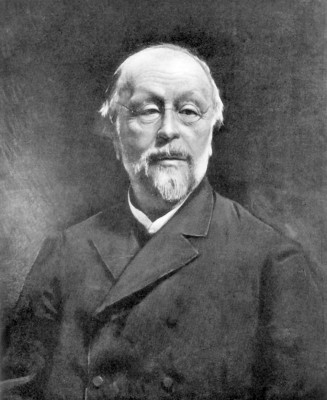
The Ancient Regime
1891
The Ancient Regime
1891
Translated by John Durand
Hippolyte Taine approaches the French Ancien Régime the way a pathologist approaches a cadaver: with meticulous precision and an unsentimental eye. Written decades after the Revolution itself, this landmark study seeks to understand not merely what happened in 1789, but why a society that seemed eternal collapsed so completely. Taine dissects the three pillars of the old order: the clergy with their accumulated spiritual authority and landholdings, the nobility with their martial traditions and courtly privileges, and the monarchy with its claim to absolute divine right. But this is more than institutional cataloging. Taine traces how these classes emerged, how their privileges crystallized over centuries, and how their very rigidity made violent upheaval inevitable. He offers a disturbing insight: the Ancien Régime did not fall because it was attacked from outside, but because its internal contradictions had rendered it unable to reform. For anyone seeking to understand the anatomy of revolutionary collapse, the machinery of aristocratic privilege, or why the French Revolution continues to shadow modern political life, Taine's analysis remains indispensable. It was written to answer a question that haunts every age of upheaval: how did everything seem fine, until it wasn't.
Editions
X-Ray
“The combined ignorance of ten millions is not the equivalent of one man's wisdom.””
— Hippolyte Taine
Link to this book
Add a free, dofollow link to Lex on your blog, forum, syllabus, or reading list.

<a href="https://lex-books.com/book/the-ancient-regime-414129e6-b905-4991-a9ab-8fd85af5787c"><img src="https://lex-books.com/badges/read-on-lex.svg" alt="Read The Ancient Regime by Hippolyte Taine free on Lex" width="160" height="40"></a>[](https://lex-books.com/book/the-ancient-regime-414129e6-b905-4991-a9ab-8fd85af5787c)[url=https://lex-books.com/book/the-ancient-regime-414129e6-b905-4991-a9ab-8fd85af5787c][img]https://lex-books.com/badges/read-on-lex.svg[/img][/url]Read The Ancient Regime by Hippolyte Taine free on Lex: https://lex-books.com/book/the-ancient-regime-414129e6-b905-4991-a9ab-8fd85af5787cCite this book
Reading this edition for a paper or guide? Copy a citation.
Taine, Hippolyte. The Ancient Regime. Lex, lex-books.com/book/the-ancient-regime-414129e6-b905-4991-a9ab-8fd85af5787c.Taine, H. (1891). The Ancient Regime. Lex. https://lex-books.com/book/the-ancient-regime-414129e6-b905-4991-a9ab-8fd85af5787cTaine, Hippolyte. The Ancient Regime. Lex. https://lex-books.com/book/the-ancient-regime-414129e6-b905-4991-a9ab-8fd85af5787c.