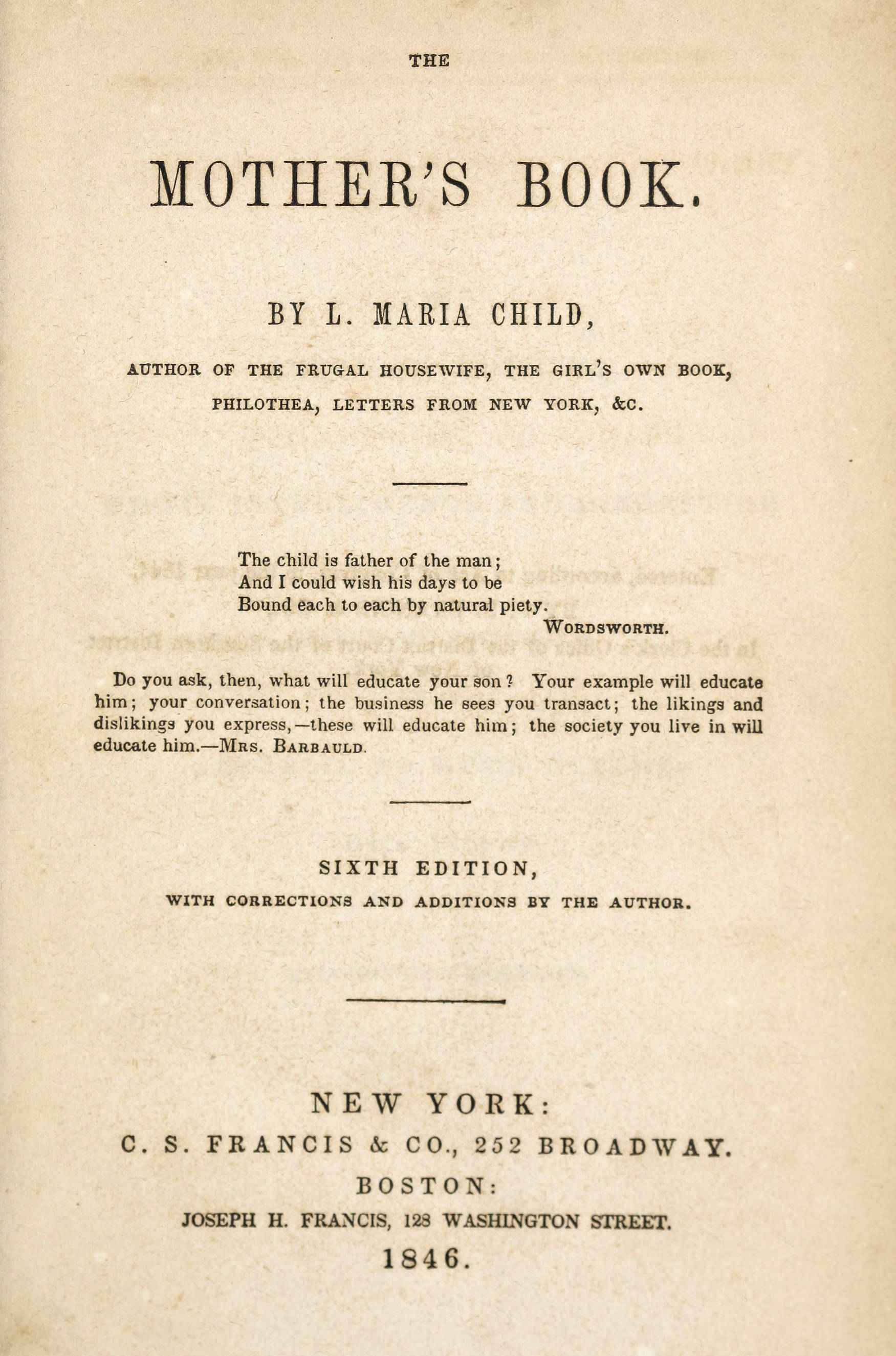
The Mother's Book
1831
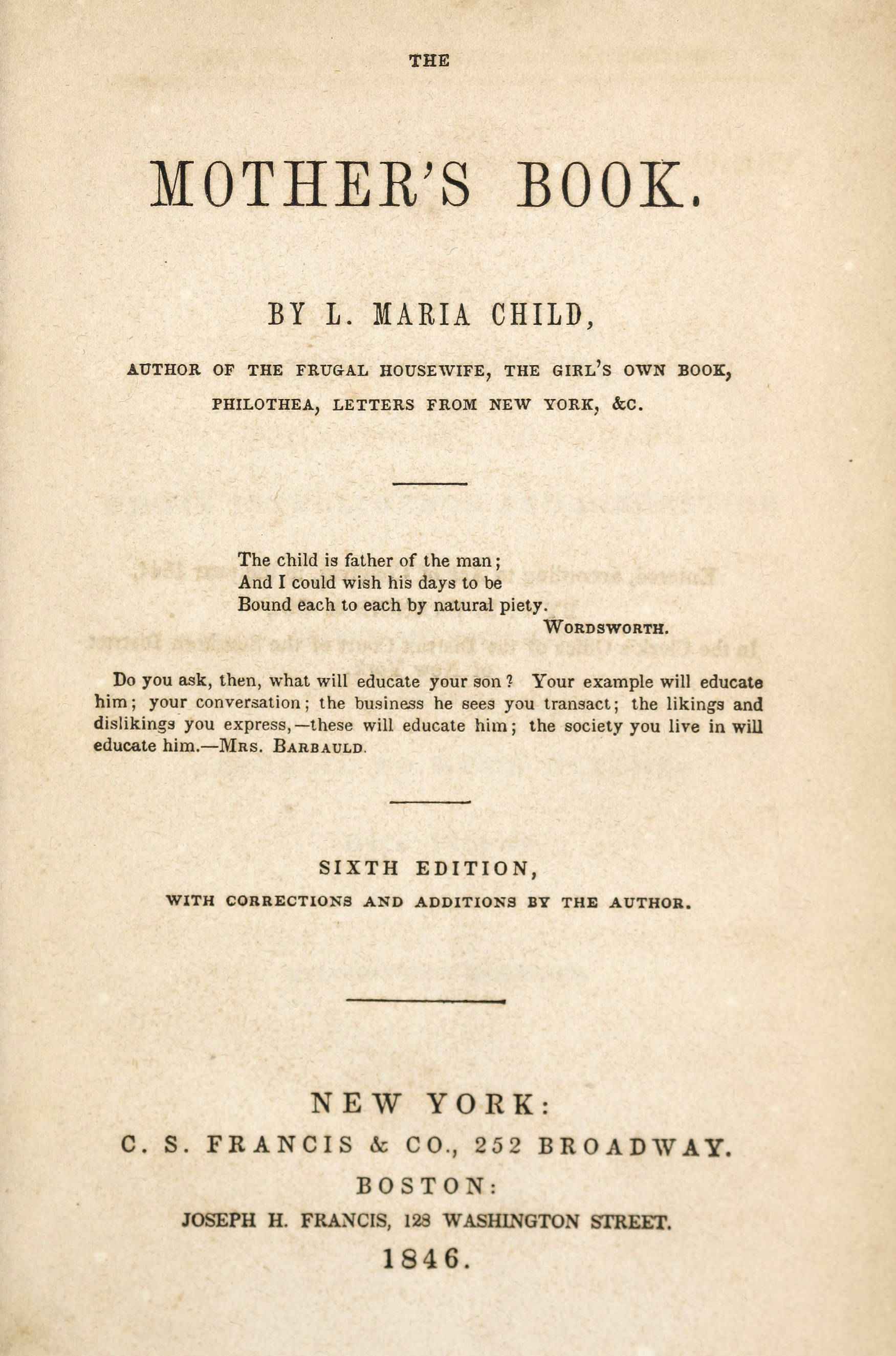
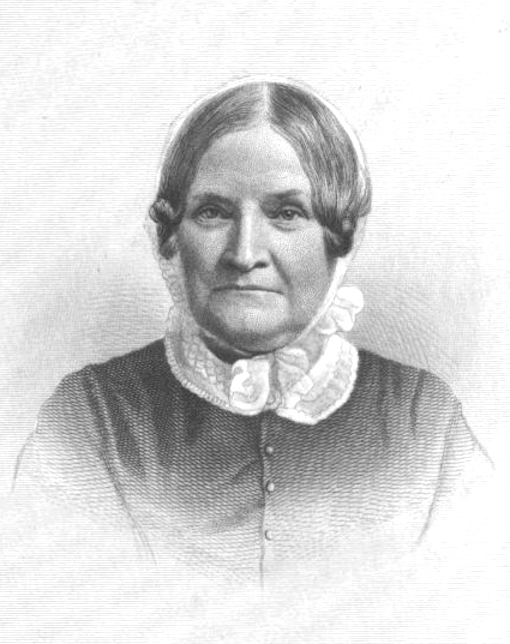
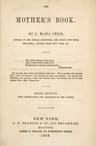
Long before modern child psychology, Lydia Maria Child published this revolutionary parenting manual in 1831, arguing that mothers hold unprecedented power in shaping human character. Child believed a mother's emotions, habits, and daily choices literally formed her child's brain and soul, making early childhood the most consequential work any woman could undertake. The book walks mothers through every stage: stimulating infant senses, channeling childhood curiosity into learning, teaching politeness without crushing spirit, and navigating the treacherous teen years with patience instead of authoritarian control. What makes this volume remarkable is its radical gentleness. Child explicitly argues against corporal punishment, insisting that love and reason outperform fear. The final chapter, "Views of Matrimony," reflects its era but offers surprisingly practical counsel about choosing a husband based on mutual respect rather than mere passion. This facsimile from Old Sturbridge Village preserves a moment when American mothers were first invited to see their role as something more than domestic drudgery. It matters now as both historical document and reminder that anxieties about raising humans have always been with us.
Editions
X-Ray
“It is better to paint virtue to be imitated than vice to be shunned.””
— Lydia Maria Child
Link to this book
Add a free, dofollow link to Lex on your blog, forum, syllabus, or reading list.

<a href="https://lex-books.com/book/the-mother-s-book-cf48aadf-f204-4eed-9fc6-86387d61826f"><img src="https://lex-books.com/badges/read-on-lex.svg" alt="Read The Mother's Book by Lydia Maria Child free on Lex" width="160" height="40"></a>[](https://lex-books.com/book/the-mother-s-book-cf48aadf-f204-4eed-9fc6-86387d61826f)[url=https://lex-books.com/book/the-mother-s-book-cf48aadf-f204-4eed-9fc6-86387d61826f][img]https://lex-books.com/badges/read-on-lex.svg[/img][/url]Read The Mother's Book by Lydia Maria Child free on Lex: https://lex-books.com/book/the-mother-s-book-cf48aadf-f204-4eed-9fc6-86387d61826fCite this book
Reading this edition for a paper or guide? Copy a citation.
Child, Lydia Maria. The Mother's Book. Lex, lex-books.com/book/the-mother-s-book-cf48aadf-f204-4eed-9fc6-86387d61826f.Child, L. M. (1831). The Mother's Book. Lex. https://lex-books.com/book/the-mother-s-book-cf48aadf-f204-4eed-9fc6-86387d61826fChild, Lydia Maria. The Mother's Book. Lex. https://lex-books.com/book/the-mother-s-book-cf48aadf-f204-4eed-9fc6-86387d61826f.