The Life of Flavius Josephus
The Life of Flavius Josephus
Translated by William Whiston
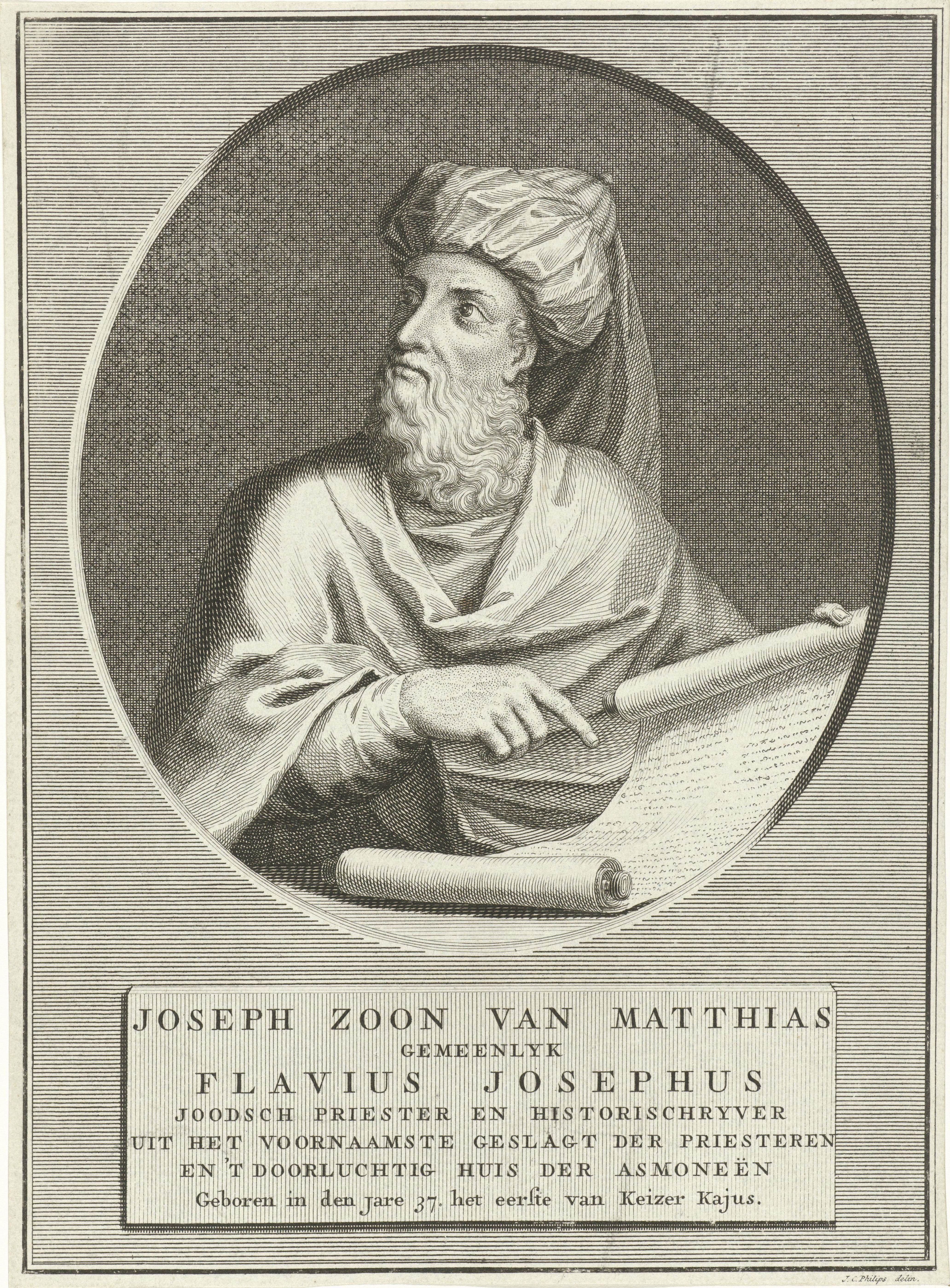
The autobiography of a man who betrayed his people and lived with the consequences. Flavius Josephus was born into the highest echelons of Jewish society, descended from both priestly and royal blood. He became a commander in the Jewish revolt against Rome, survived the siege of Jotapata, and made thecalculated decision to surrender to Vespasian rather than die with his men. What follows is his defense: a meticulous recounting of his actions, his motivations, and his complex relationships with rival factions, written decades later in Rome as he served the very empire that destroyed Jerusalem. This is not objective history. It is a man trying to salvage his legacy from those who called him traitor. Yet without Josephus, we would have no contemporary account of the Jewish War, no description of the Temple's destruction, and shockingly little independent information about Jesus, John the Baptist, or the world of the New Testament. His bias is the price we pay for his existence.
Editions
X-Ray
“But when he saw that Adam had no female companion, no society, for there was no such created, and that he wondered at the other animals which were male and female, he laid him asleep, and took away one of his ribs, and out of it formed the woman; whereupon Adam knew her when she was brought to him, and acknowledged that she was made out of himself. Now a woman is called in the Hebrew tongue Issa; but the name of this woman was Eve, which signifies the mother of all living.””
— Flavius Josephus
“Now some of the Jews thought that the destruction of Herod's army came from God, and that very justly, as a punishment of what he did against John, that was called the Baptist: for Herod slew him, who was a good man, and commanded the Jews to exercise virtue, both as to righteousness towards one another, and piety towards God, and so to come to baptism; for that the washing [with water] would be acceptable to him, if they made use of it, not in order to the putting away [or the remission] of some sins [only], but for the purification of the body; supposing still that the soul was thoroughly purified beforehand by righteousness. Now when [many] others came in crowds about him, for they were very greatly moved [or pleased] by hearing his words, Herod, who feared lest the great influence John had over the people might put it into his power and inclination to raise a rebellion, [for they seemed ready to do any thing he should advise,] thought it best, by putting him to death, to prevent any mischief he might cause, and not bring himself into difficulties, by sparing a man who might make him repent of it when it would be too late. Accordingly he was sent a prisoner, out of Herod's suspicious temper, to Macherus, the castle I before mentioned, and was there put to death. Now the Jews had an opinion that the destruction of this army was sent as a punishment upon Herod, and a mark of God's displeasure to him.””
— Flavius Josephus
“The Key to the answers to all the questions of Life - all the blessings and curses of the World - lie not in men's hearts, but in their bones. as quoted in 'The Bone Key Curse'(2008)””
— Flavius Josephus
“He drew over to him both many of the Jews and many of the Gentiles. He was [the] Christ. And when Pilate, at the suggestion of the principal men amongst us, had condemned him to the cross, 9 those that loved him at the first did not forsake him; for he appeared to them alive again the third day; 10 as the divine prophets had foretold these and ten thousand other wonderful things concerning him. And the tribe of Christians, so named from him, are not extinct at this day.””
— Flavius Josephus
“for he appeared to them alive again the third day; (10) as the divine prophets had foretold these and ten thousand other wonderful things concerning him. And the tribe of Christians, so named from him, are not extinct at this day.””
— Flavius Josephus
“Now there was about this time Jesus, a wise man, if it be lawful to call him a man;””
— Flavius Josephus
“He also said he would be revenged on God, if he should have a mind to drown the world again; for that he would build a tower too high for the waters to be able to reach! and that he would avenge himself on God for destroying their forefathers!””
— Flavius Josephus
“for that wars are then managed the best when the warriors preserve a good conscience;””
— Flavius Josephus
“I once, indeed, thought it best not to set down the names of this family, especially because of their difficult pronunciation, [by the Greeks;] but, upon the whole, I think it necessary to mention those names, that I may disprove such as believe that we came not originally from Mesopotamia, but are Egyptians. Now””
— Flavius Josephus
About The Life of Flavius Josephus
Chapter Summaries
- 1-2
- Josephus establishes his noble priestly lineage, tracing his ancestry through both priestly and royal bloodlines. He describes his exceptional education and early recognition for his learning, culminating in his exploration of the three Jewish sects and his time with the ascetic Banus.
- 3
- At age 26, Josephus travels to Rome to secure the release of imprisoned Jewish priests. After surviving a shipwreck, he gains access to Nero's court through the actor Aliturius and successfully petitions Poppea for the priests' freedom.
- 4-6
- Returning to Jerusalem, Josephus finds growing revolutionary sentiment against Rome. He attempts to dissuade the people from rebellion, warning of Rome's superior power, but fails to prevent the uprising that begins with the defeat of Gessius Florus.
Key Themes
- Political Survival and Loyalty
- Josephus demonstrates the complex navigation required to survive in a world of shifting political allegiances, showing how he balanced loyalty to his Jewish heritage with pragmatic accommodation to Roman power.
- Religious Authority and Secular Power
- The work explores the tension between religious leadership and political governance, as Josephus, a priest, must exercise secular authority while maintaining religious credibility among his people.
- Truth and Historical Accuracy
- Josephus repeatedly emphasizes his commitment to truthful historical recording, defending his work against rival historians like Justus and asserting the importance of eyewitness testimony and documentary evidence.
Characters
- Flavius Josephus(protagonist)
- The author and narrator, a Jewish priest and historian who served as governor of Galilee during the Jewish revolt against Rome. Born into a noble priestly family, he was educated in Jewish law and later became a Roman citizen under imperial patronage.
- John of Gischala (John son of Levi)(antagonist)
- A Jewish leader from Gischala who repeatedly plotted against Josephus and sought to usurp his authority in Galilee. He was ambitious, treacherous, and skilled at manipulation and conspiracy.
- Justus of Tiberias(antagonist)
- Son of Pistus, a learned man from Tiberias who opposed Josephus and later wrote a rival history of the Jewish War. He was eloquent, ambitious, and skilled in Greek learning but characterized by Josephus as treacherous.
- Jonathan(major)
- One of the four ambassadors sent from Jerusalem to remove Josephus from his governorship of Galilee. A Pharisee who conspired with John of Gischala against Josephus.
- King Agrippa II(major)
- The last Herodian king, who maintained loyalty to Rome during the Jewish revolt. He corresponded with Josephus and later provided testimony to the accuracy of his historical works.
- Vespasian(major)
- Roman general who later became emperor. He captured Josephus but treated him with respect and eventually made him a Roman citizen with imperial patronage.
Link to this book
Add a free, dofollow link to Lex on your blog, forum, syllabus, or reading list.

<a href="https://lex-books.com/book/the-life-of-flavius-josephus-2a63479b-f06a-4308-b0e7-76a69dcc71d7"><img src="https://lex-books.com/badges/read-on-lex.svg" alt="Read The Life of Flavius Josephus by Flavius Josephus free on Lex" width="160" height="40"></a>[](https://lex-books.com/book/the-life-of-flavius-josephus-2a63479b-f06a-4308-b0e7-76a69dcc71d7)[url=https://lex-books.com/book/the-life-of-flavius-josephus-2a63479b-f06a-4308-b0e7-76a69dcc71d7][img]https://lex-books.com/badges/read-on-lex.svg[/img][/url]Read The Life of Flavius Josephus by Flavius Josephus free on Lex: https://lex-books.com/book/the-life-of-flavius-josephus-2a63479b-f06a-4308-b0e7-76a69dcc71d7Cite this book
Reading this edition for a paper or guide? Copy a citation.
Josephus, Flavius. The Life of Flavius Josephus. Lex, lex-books.com/book/the-life-of-flavius-josephus-2a63479b-f06a-4308-b0e7-76a69dcc71d7.Josephus, F. (n.d.). The Life of Flavius Josephus. Lex. https://lex-books.com/book/the-life-of-flavius-josephus-2a63479b-f06a-4308-b0e7-76a69dcc71d7Josephus, Flavius. The Life of Flavius Josephus. Lex. https://lex-books.com/book/the-life-of-flavius-josephus-2a63479b-f06a-4308-b0e7-76a69dcc71d7.