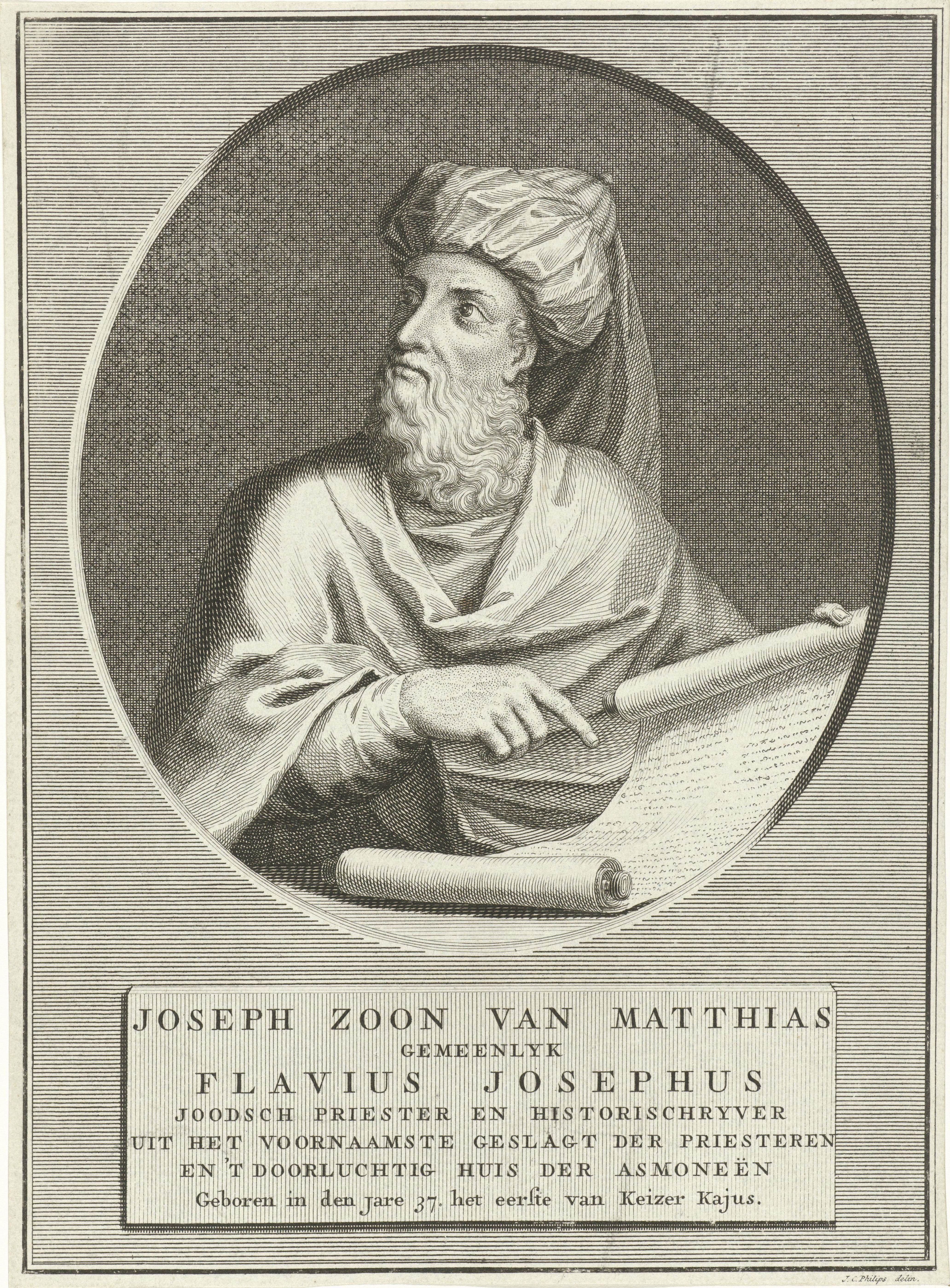
An Extract out of Josephus's Discourse to the Greeks Concerning Hades
An Extract out of Josephus's Discourse to the Greeks Concerning Hades
Translated by William Whiston
This short but incendiary text captures a first-century Jewish historian arguing with Greek philosophy on its own turf. Flavius Josephus, writing to a Hellenistic audience, lays out a vision of the afterlife that would震动 the ancient world: not the Greek notion of the soul wandering eternally without body or consequence, but a place of strict divine judgment where souls are sorted, the righteous ascending to "the Bosom of Abraham" while the unjust descend into a chthonic darkness. The text matters because it offers one of the earliest explicit Jewish descriptions of afterlife geography and the mechanics of resurrection, a theological stakescape that would become foundational to Christian eschatology. Josephus frames bodily resurrection not as speculation but as polemic, a counter-argument to Greco-Roman immortality that insists the soul cannot escape the consequences of its earthly choices. For readers interested in the intellectual world behind the New Testament, this brief extract illuminates the contested afterlife beliefs that early Christians and Jews debated in the decades after Jesus.
Editions
X-Ray
“But when he saw that Adam had no female companion, no society, for there was no such created, and that he wondered at the other animals which were male and female, he laid him asleep, and took away one of his ribs, and out of it formed the woman; whereupon Adam knew her when she was brought to him, and acknowledged that she was made out of himself. Now a woman is called in the Hebrew tongue Issa; but the name of this woman was Eve, which signifies the mother of all living.””
— Flavius Josephus
“Now some of the Jews thought that the destruction of Herod's army came from God, and that very justly, as a punishment of what he did against John, that was called the Baptist: for Herod slew him, who was a good man, and commanded the Jews to exercise virtue, both as to righteousness towards one another, and piety towards God, and so to come to baptism; for that the washing [with water] would be acceptable to him, if they made use of it, not in order to the putting away [or the remission] of some sins [only], but for the purification of the body; supposing still that the soul was thoroughly purified beforehand by righteousness. Now when [many] others came in crowds about him, for they were very greatly moved [or pleased] by hearing his words, Herod, who feared lest the great influence John had over the people might put it into his power and inclination to raise a rebellion, [for they seemed ready to do any thing he should advise,] thought it best, by putting him to death, to prevent any mischief he might cause, and not bring himself into difficulties, by sparing a man who might make him repent of it when it would be too late. Accordingly he was sent a prisoner, out of Herod's suspicious temper, to Macherus, the castle I before mentioned, and was there put to death. Now the Jews had an opinion that the destruction of this army was sent as a punishment upon Herod, and a mark of God's displeasure to him.””
— Flavius Josephus
“The Key to the answers to all the questions of Life - all the blessings and curses of the World - lie not in men's hearts, but in their bones. as quoted in 'The Bone Key Curse'(2008)””
— Flavius Josephus
“He drew over to him both many of the Jews and many of the Gentiles. He was [the] Christ. And when Pilate, at the suggestion of the principal men amongst us, had condemned him to the cross, 9 those that loved him at the first did not forsake him; for he appeared to them alive again the third day; 10 as the divine prophets had foretold these and ten thousand other wonderful things concerning him. And the tribe of Christians, so named from him, are not extinct at this day.””
— Flavius Josephus
“for he appeared to them alive again the third day; (10) as the divine prophets had foretold these and ten thousand other wonderful things concerning him. And the tribe of Christians, so named from him, are not extinct at this day.””
— Flavius Josephus
“Now there was about this time Jesus, a wise man, if it be lawful to call him a man;””
— Flavius Josephus
“He also said he would be revenged on God, if he should have a mind to drown the world again; for that he would build a tower too high for the waters to be able to reach! and that he would avenge himself on God for destroying their forefathers!””
— Flavius Josephus
“for that wars are then managed the best when the warriors preserve a good conscience;””
— Flavius Josephus
“I once, indeed, thought it best not to set down the names of this family, especially because of their difficult pronunciation, [by the Greeks;] but, upon the whole, I think it necessary to mention those names, that I may disprove such as believe that we came not originally from Mesopotamia, but are Egyptians. Now””
— Flavius Josephus
About An Extract out of Josephus's Discourse to the Greeks Concerning Hades
Chapter Summaries
- 1
- Josephus describes Hades as a subterranean region of perpetual darkness where souls are detained after death. Angels serve as guardians who distribute temporary punishments according to each soul's behavior and character.
- 2
- A lake of unquenchable fire exists in Hades, prepared for God's predetermined day of judgment. The unjust will face everlasting punishment while the just will obtain an incorruptible kingdom, though both are currently confined in Hades in separate places.
- 3
- Souls enter Hades through one gate guarded by an archangel, but are then separated - the righteous go right to a place of light and comfort called Abraham's Bosom, while experiencing joy and anticipation of future glory.
Key Themes
- Divine Justice and Judgment
- The text emphasizes that ultimate justice comes from God through Christ, not human or mythological judges. Every person will face righteous judgment based on their deeds, with eternal consequences that perfectly match their earthly choices.
- Bodily Resurrection vs. Soul Transmigration
- Josephus argues against Greek philosophical concepts of soul transmigration, asserting instead the Jewish-Christian doctrine of bodily resurrection. He maintains that the same body that dies will be raised, though transformed and purified.
- Separation of Righteous and Unrighteous
- A fundamental division exists between the just and unjust, both in the intermediate state of Hades and in the final resurrection. This separation is absolute and unbridgeable, determined by one's earthly conduct and relationship with God.
Characters
- Flavius Josephus(protagonist)
- The author and narrator, a Jewish historian writing to Greeks about the afterlife. He serves as the authoritative voice explaining Jewish and Christian eschatological beliefs to a Gentile audience.
- God the Father(major)
- The supreme deity who determines the fate of souls and has appointed Christ as judge. He is portrayed as the ultimate authority over life, death, and resurrection.
- Christ(major)
- The divine judge appointed by God the Father to exercise righteous judgment over all humanity. He is presented as the true judge, contrasted with Greek mythological figures.
- Angels(major)
- Divine beings who serve as guardians and guides in Hades, distributing punishments and leading souls to their appointed places. They are organized into different roles for the righteous and unrighteous.
- The Archangel(minor)
- A high-ranking angel who stands at the gate of Hades with a host, overseeing the entrance to the underworld.
- The Just/Righteous(major)
- Souls of those who lived righteously, currently dwelling in the Bosom of Abraham awaiting resurrection. They experience comfort and anticipation of eternal glory.
Link to this book
Add a free, dofollow link to Lex on your blog, forum, syllabus, or reading list.

<a href="https://lex-books.com/book/an-extract-out-of-josephus-s-discourse-to-the-greeks-concerning-hades-2f57d078-1df3-4871-8c1c-68b0bff61046"><img src="https://lex-books.com/badges/read-on-lex.svg" alt="Read An Extract out of Josephus's Discourse to the Greeks Concerning Hades by Flavius Josephus free on Lex" width="160" height="40"></a>[](https://lex-books.com/book/an-extract-out-of-josephus-s-discourse-to-the-greeks-concerning-hades-2f57d078-1df3-4871-8c1c-68b0bff61046)[url=https://lex-books.com/book/an-extract-out-of-josephus-s-discourse-to-the-greeks-concerning-hades-2f57d078-1df3-4871-8c1c-68b0bff61046][img]https://lex-books.com/badges/read-on-lex.svg[/img][/url]Read An Extract out of Josephus's Discourse to the Greeks Concerning Hades by Flavius Josephus free on Lex: https://lex-books.com/book/an-extract-out-of-josephus-s-discourse-to-the-greeks-concerning-hades-2f57d078-1df3-4871-8c1c-68b0bff61046Cite this book
Reading this edition for a paper or guide? Copy a citation.
Josephus, Flavius. An Extract out of Josephus's Discourse to the Greeks Concerning Hades. Lex, lex-books.com/book/an-extract-out-of-josephus-s-discourse-to-the-greeks-concerning-hades-2f57d078-1df3-4871-8c1c-68b0bff61046.Josephus, F. (n.d.). An Extract out of Josephus's Discourse to the Greeks Concerning Hades. Lex. https://lex-books.com/book/an-extract-out-of-josephus-s-discourse-to-the-greeks-concerning-hades-2f57d078-1df3-4871-8c1c-68b0bff61046Josephus, Flavius. An Extract out of Josephus's Discourse to the Greeks Concerning Hades. Lex. https://lex-books.com/book/an-extract-out-of-josephus-s-discourse-to-the-greeks-concerning-hades-2f57d078-1df3-4871-8c1c-68b0bff61046.