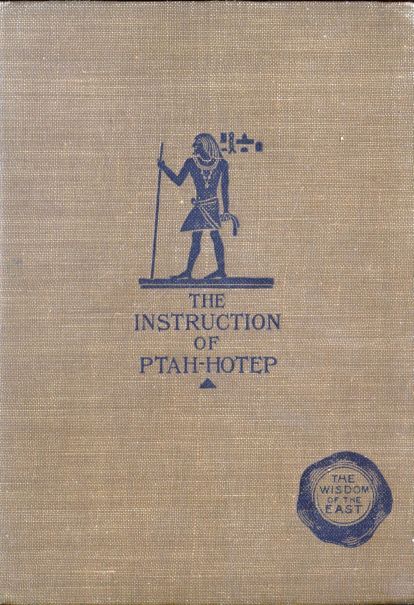
The Instruction of Ptah-Hotep and the Instruction of Ke'gemni: The Oldest Books in the World
1908
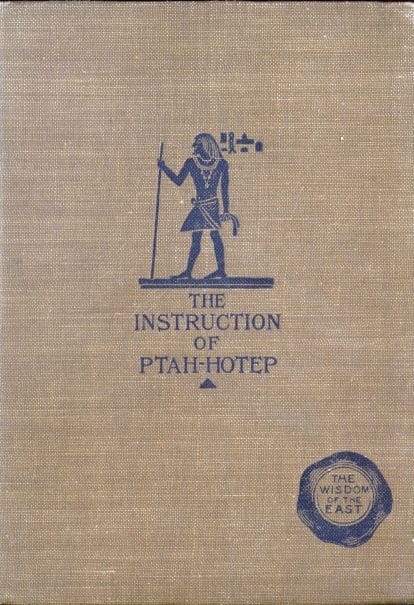
The Instruction of Ptah-Hotep and the Instruction of Ke'gemni: The Oldest Books in the World
1908
Translated by Battiscombe G. (Battiscombe George) Gunn
Four thousand years before the printing press, before Rome, before the Hebrew Bible took its final form, an Egyptian vizier named Ptah-Hotep sat down to write advice for his son. What he produced survives as one of the oldest books in human history, and the wisdom inside feels less like an artifact and more like a letter from a wise grandparent. The instructions cover what you'd expect from any father worried about his child's future: speak carefully and listen more than you talk; don't傲慢 when you succeed or despair when you fail; keep your temper when others lose theirs; be gracious at social gatherings and moderate in all things. The second text, from Ke'gemni, sharpens these lessons into guidance for conduct among the powerful. What makes these fragments extraordinary isn't their age but their stubborn relevance. Here is proof that humans have been wrestling with the same questions for forty centuries, and that some answers haven't changed because they don't need to. This is wisdom literature at its most elemental, stripped of myth and ritual, offering only the hard-won truths about how to live well among others.
Editions
X-Ray
“Silence is more profitable unto thee than abundance of speech.””
— Ptahhotep
“These 'Instructions' were held in high esteem as text-books and writing exercises in schools”
— Ptahhotep
“In these days, when all things and memories of the past are at length become not only subservient to, but submerged by, the matters and needs of the immediate present, those paths of knowledge that lead into regions seemingly remote from such needs are somewhat discredited; and the aims of those that follow them whither they lead are regarded as quite out of touch with the real interests of life.””
— Ptahhotep
Link to this book
Add a free, dofollow link to Lex on your blog, forum, syllabus, or reading list.

<a href="https://lex-books.com/book/the-instruction-of-ptah-hotep-and-the-instruction-of-ke-gemni-the-oldest-books-i-9e4c58f5-19da-4091-b1d1-6005d6ac9ea8"><img src="https://lex-books.com/badges/read-on-lex.svg" alt="Read The Instruction of Ptah-Hotep and the Instruction of Ke'gemni: The Oldest Books in the World by Ptahhotep free on Lex" width="160" height="40"></a>[](https://lex-books.com/book/the-instruction-of-ptah-hotep-and-the-instruction-of-ke-gemni-the-oldest-books-i-9e4c58f5-19da-4091-b1d1-6005d6ac9ea8)[url=https://lex-books.com/book/the-instruction-of-ptah-hotep-and-the-instruction-of-ke-gemni-the-oldest-books-i-9e4c58f5-19da-4091-b1d1-6005d6ac9ea8][img]https://lex-books.com/badges/read-on-lex.svg[/img][/url]Read The Instruction of Ptah-Hotep and the Instruction of Ke'gemni: The Oldest Books in the World by Ptahhotep free on Lex: https://lex-books.com/book/the-instruction-of-ptah-hotep-and-the-instruction-of-ke-gemni-the-oldest-books-i-9e4c58f5-19da-4091-b1d1-6005d6ac9ea8Cite this book
Reading this edition for a paper or guide? Copy a citation.
Ptahhotep. The Instruction of Ptah-Hotep and the Instruction of Ke'gemni: The Oldest Books in the World. Lex, lex-books.com/book/the-instruction-of-ptah-hotep-and-the-instruction-of-ke-gemni-the-oldest-books-i-9e4c58f5-19da-4091-b1d1-6005d6ac9ea8.Ptahhotep (1908). The Instruction of Ptah-Hotep and the Instruction of Ke'gemni: The Oldest Books in the World. Lex. https://lex-books.com/book/the-instruction-of-ptah-hotep-and-the-instruction-of-ke-gemni-the-oldest-books-i-9e4c58f5-19da-4091-b1d1-6005d6ac9ea8Ptahhotep. The Instruction of Ptah-Hotep and the Instruction of Ke'gemni: The Oldest Books in the World. Lex. https://lex-books.com/book/the-instruction-of-ptah-hotep-and-the-instruction-of-ke-gemni-the-oldest-books-i-9e4c58f5-19da-4091-b1d1-6005d6ac9ea8.