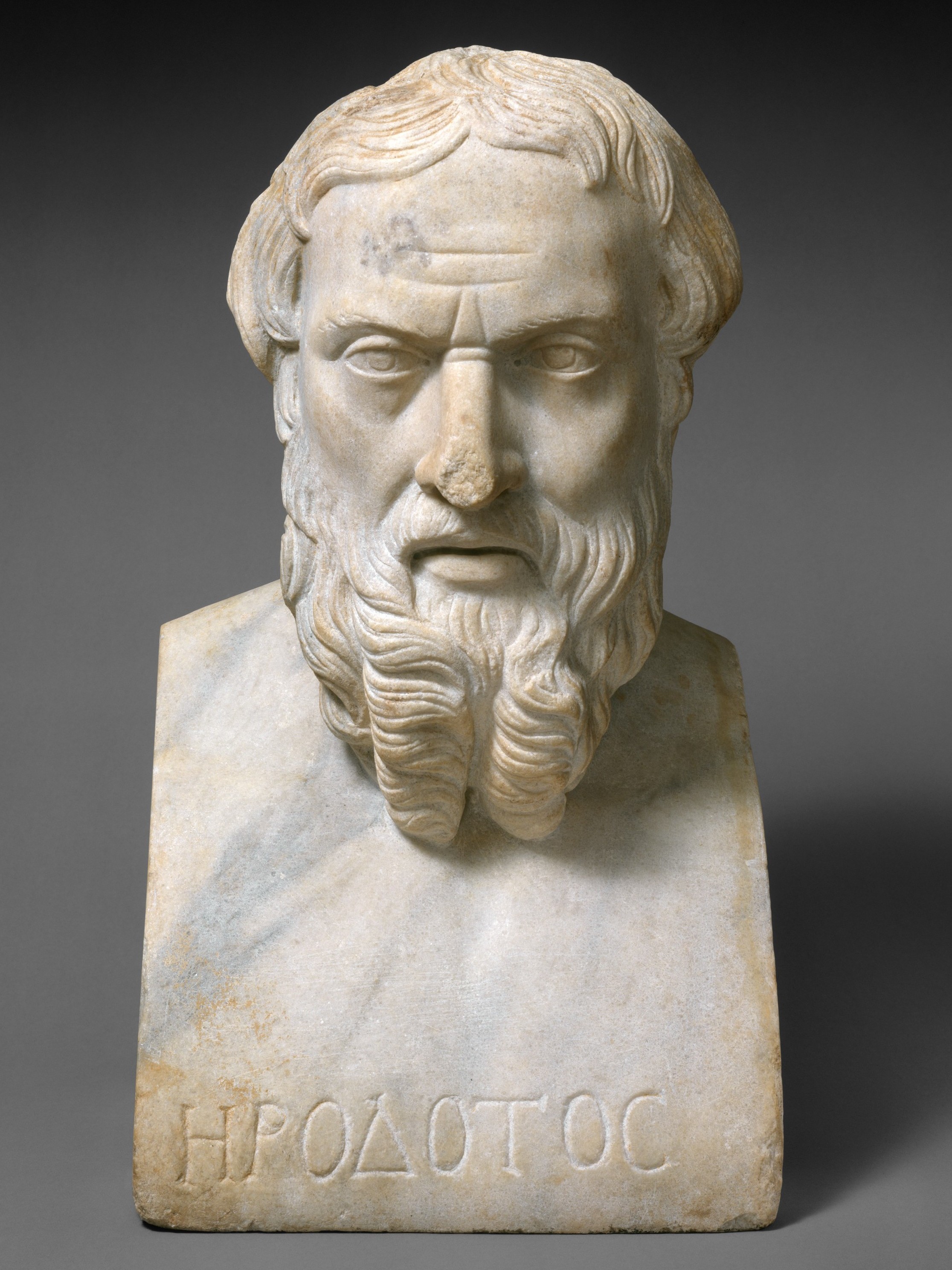
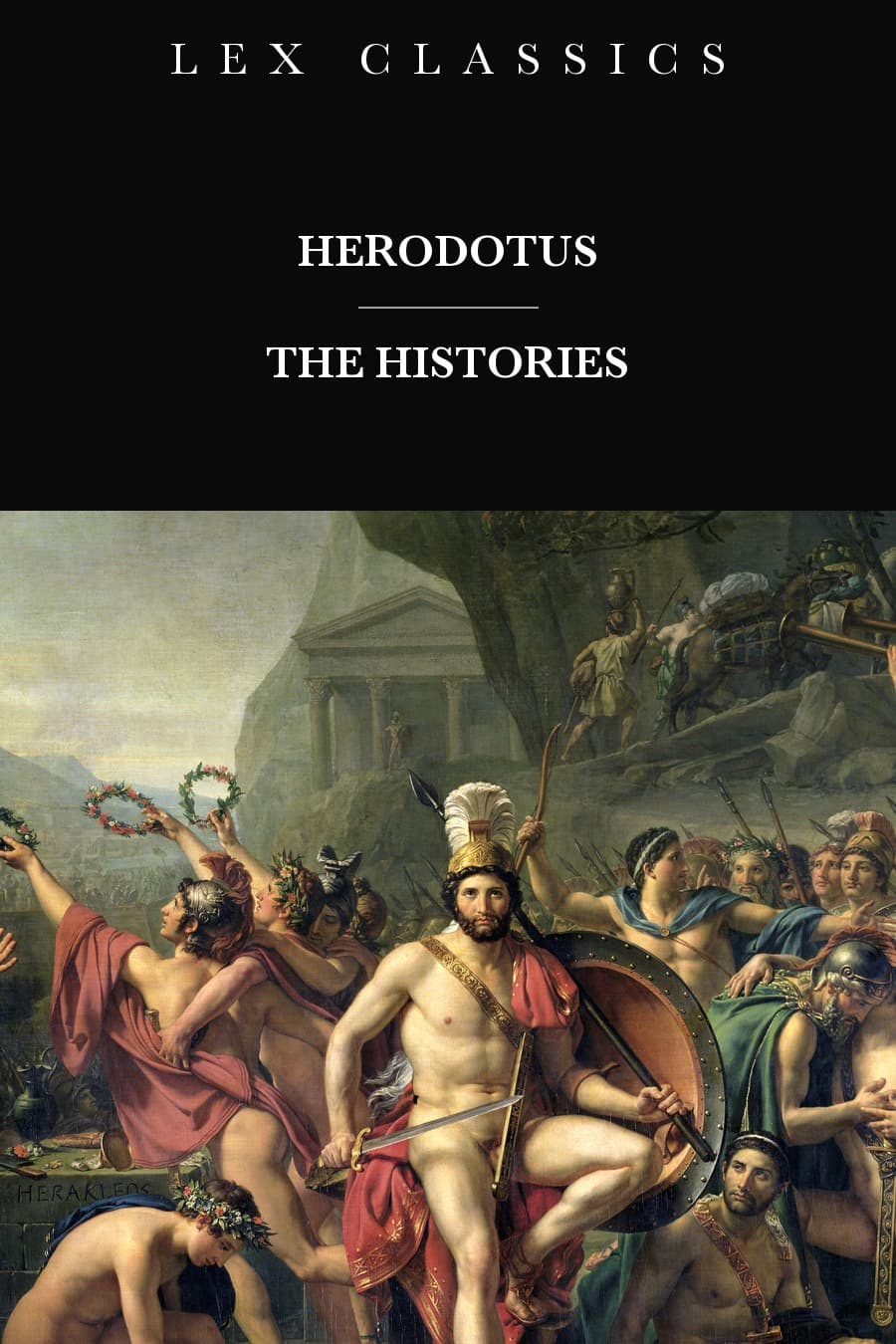
The History of Herodotus — Volume 2
600 BC
The History of Herodotus — Volume 2
600 BC
Translated by G. C. (George Campbell) Macaulay
This is where Western civilization tells its own origin story. Herodotus, the first writer to distinguish fact from myth, chronicles the cataclysmic collision between the young Greek world and the vast Persian Empire. Volume Two traces the Ionian Revolt that sparked the wars, then follows the giant Persian host southward: the平原 of Marathon, the narrow pass at Thermopylae where three hundred Spartans made their stand, the naval battle at Salamis that changed warfare forever, and the final confrontation at Plataea. But this is no mere campaign chronicle. Herodotus fills his account with the strange customs of foreign peoples, the caprices of kings, the political machinations that shaped both empires, and the irreducible role of fortune in human affairs. He asks what makes some peoples free and others subject, what drives men to resist impossible odds, and how tomorrow's victors become history's judges. Nearly twenty-five centuries later, we still live in the world these battles made.
Editions
X-Ray
“philosophical writers after his time: nor again must his simplicity of thought and occasional quaintness be reproduced in the form of archaisms of language; and””
— Herodotus
“must his simplicity of thought and occasional quaintness be reproduced in the form of archaisms of language; and that not only because the affectation of an archaic””
— Herodotus
“THE HISTORY OF HERODOTUS””
— Herodotus
About The History of Herodotus — Volume 2
Chapter Summaries
- 1-4
- Dareios plans revenge against Athens after Marathon but dies before executing it. A succession dispute between his sons Artobazanes and Xerxes is resolved in Xerxes' favor with Demaratos' advice about royal succession customs.
- 5-7
- Initially reluctant to invade Greece, Xerxes is persuaded by his cousin Mardonios and influenced by exiled Greek leaders and the oracle-monger Onomacritos. After conquering Egypt, Xerxes commits to the Greek expedition.
- 8-18
- Xerxes announces his invasion plan to Persian nobles. Artabanos warns against the expedition, leading Xerxes to reconsider, but recurring divine dreams compel both men to support the campaign, interpreting it as divinely ordained.
Key Themes
- Divine Justice and Retribution
- Throughout the work, Herodotus demonstrates how the gods punish hubris and injustice. Xerxes' scourging of the Hellespont, Cleomenes' madness and suicide, and various omens all illustrate divine intervention in human affairs when mortals overstep proper boundaries.
- The Dangers of Hubris
- Persian overconfidence and excessive ambition repeatedly lead to downfall. Xerxes' massive invasion, despite warnings from Artabanos, exemplifies how pride and the desire for unlimited power ultimately bring destruction.
- East vs. West Cultural Conflict
- The fundamental differences between Persian despotism and Greek freedom create an inevitable clash. Herodotus explores how different political systems, values, and ways of life lead to misunderstanding and conflict between civilizations.
Characters
- Xerxes(protagonist)
- King of Persia and son of Dareios, who leads the massive invasion of Greece. Initially reluctant but becomes determined after divine visions, he represents the height of Persian imperial ambition.
- Dareios(major)
- Former Persian king and father of Xerxes who died before completing his planned revenge on Athens. His unfinished business motivates much of Xerxes' campaign.
- Mardonios(major)
- Persian general and cousin of Xerxes who strongly advocates for the Greek invasion. Ambitious and eager for military glory, he serves as Xerxes' primary war counselor.
- Artabanos(major)
- Uncle of Xerxes and voice of caution who initially opposes the Greek expedition. Represents wisdom and prudence, warning of the dangers of hubris and overextension.
- Demaratos(major)
- Exiled Spartan king who advises Xerxes on Greek affairs. His counsel helps Xerxes gain the throne and provides insight into Greek military capabilities.
- Pythios(major)
- Wealthy Lydian who entertains Xerxes' army magnificently but suffers terrible punishment when he asks for one son to be spared from military service.
Link to this book
Add a free, dofollow link to Lex on your blog, forum, syllabus, or reading list.

<a href="https://lex-books.com/book/the-history-of-herodotus-volume-2-ede28ebf-ffed-45c4-be5d-29db4b393a4b"><img src="https://lex-books.com/badges/read-on-lex.svg" alt="Read The History of Herodotus — Volume 2 by Herodotus free on Lex" width="160" height="40"></a>[](https://lex-books.com/book/the-history-of-herodotus-volume-2-ede28ebf-ffed-45c4-be5d-29db4b393a4b)[url=https://lex-books.com/book/the-history-of-herodotus-volume-2-ede28ebf-ffed-45c4-be5d-29db4b393a4b][img]https://lex-books.com/badges/read-on-lex.svg[/img][/url]Read The History of Herodotus — Volume 2 by Herodotus free on Lex: https://lex-books.com/book/the-history-of-herodotus-volume-2-ede28ebf-ffed-45c4-be5d-29db4b393a4bCite this book
Reading this edition for a paper or guide? Copy a citation.
Herodotus. The History of Herodotus — Volume 2. Lex, lex-books.com/book/the-history-of-herodotus-volume-2-ede28ebf-ffed-45c4-be5d-29db4b393a4b.Herodotus (600 BC). The History of Herodotus — Volume 2. Lex. https://lex-books.com/book/the-history-of-herodotus-volume-2-ede28ebf-ffed-45c4-be5d-29db4b393a4bHerodotus. The History of Herodotus — Volume 2. Lex. https://lex-books.com/book/the-history-of-herodotus-volume-2-ede28ebf-ffed-45c4-be5d-29db4b393a4b.