The Displaying of Supposed Witchcraft: Wherein Is Affirmed That There Are Many Sorts of Deceivers and Impostors, and Divers Persons Under a Passive Delusion of Melancholy and Fancy. but That There Is a Corporeal League Made Betwixt the Devil and the Witch, or That He Sucks on the Witches Body, Has Carnal Copulation, or That Witches Are Turned into Cats, Dogs, Raise Tempests, or the Like, Is Utterly Denied and Disproved. Wherein Also Is Handled, the Existence of Angels and Spirits, the Truth of Apparitions, the Nature of Astral and Sydereal Spirits, the Force of Charms, and Philters; With Other Abstruse Matters
1677
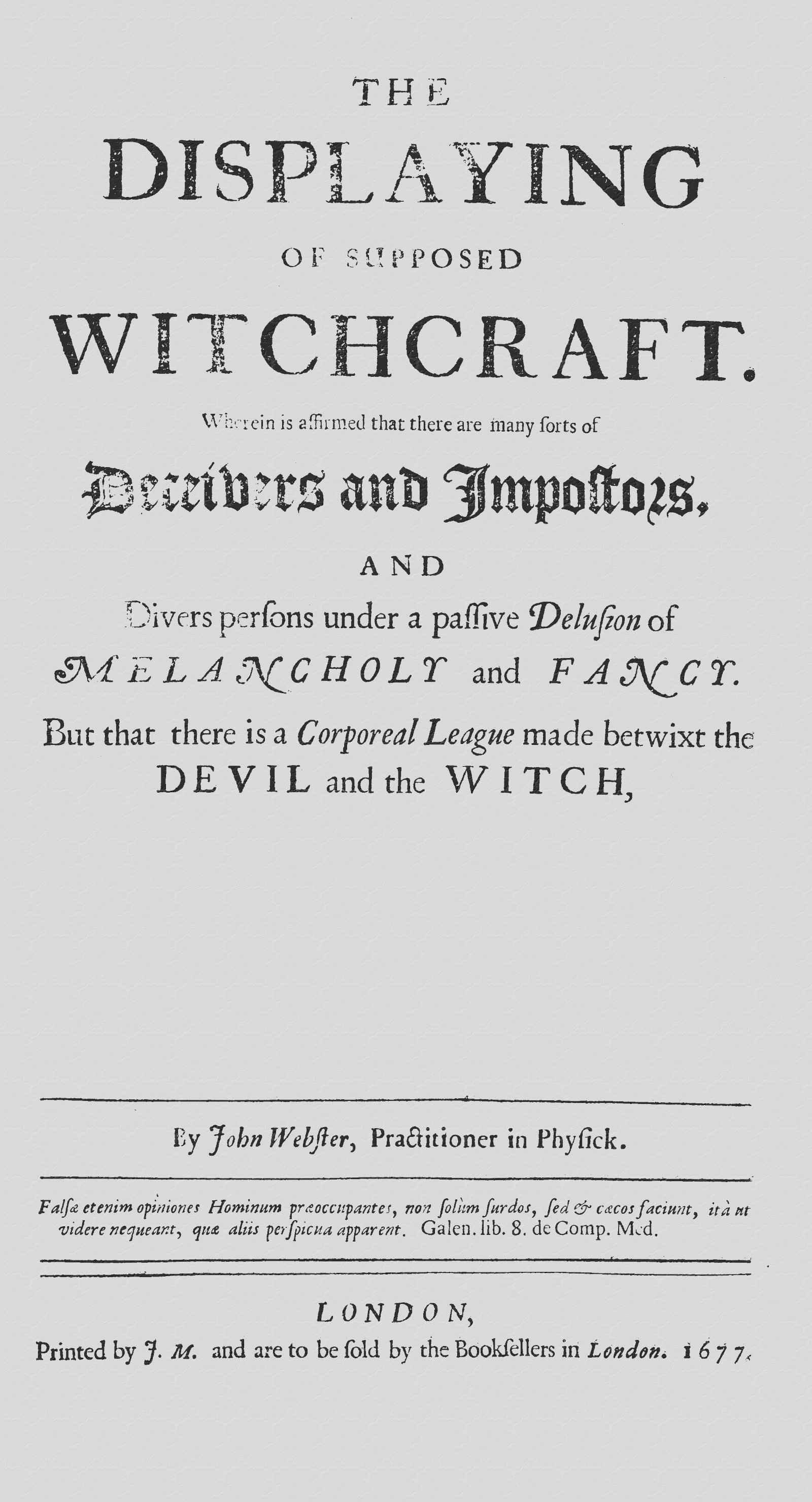
The Displaying of Supposed Witchcraft: Wherein Is Affirmed That There Are Many Sorts of Deceivers and Impostors, and Divers Persons Under a Passive Delusion of Melancholy and Fancy. but That There Is a Corporeal League Made Betwixt the Devil and the Witch, or That He Sucks on the Witches Body, Has Carnal Copulation, or That Witches Are Turned into Cats, Dogs, Raise Tempests, or the Like, Is Utterly Denied and Disproved. Wherein Also Is Handled, the Existence of Angels and Spirits, the Truth of Apparitions, the Nature of Astral and Sydereal Spirits, the Force of Charms, and Philters; With Other Abstruse Matters
1677
In 1677, a physician named John Webster risked his reputation to argue that the witch trials sweeping England were built on superstition and fear. This isn't a defense of witchcraft in the modern sense. It's something more radical: a denial that witchcraft even exists as supernatural power, an argument that "witches" are either impostors or victims of melancholy and madness. Webster tackles the most lurid beliefs of his age head-on: the alleged sexual relations between witches and the devil, the transformations into animals, the raising of storms. He denies all of it. Yet he maintains there are real spirits, real angels, real forces of darkness, just not the kind that dwell in cunning old women. The book is a fascinating time capsule of a mind trying to be rational within a worldview we would now consider entirely irrational. It's also a courageous work, defending learned men accused of witchcraft and arguing that the real danger to society isn't devil-worship but the credulity and bloodlust of the mob.
Editions
Link to this book
Add a free, dofollow link to Lex on your blog, forum, syllabus, or reading list.

<a href="https://lex-books.com/book/the-displaying-of-supposed-witchcraft-wherein-is-affirmed-that-there-are-many-so-178bdc25-fec8-4d6c-a342-a32e303832fa"><img src="https://lex-books.com/badges/read-on-lex.svg" alt="Read The Displaying of Supposed Witchcraft: Wherein Is Affirmed That There Are Many Sorts of Deceivers and Impostors, and Divers Persons Under a Passive Delusion of Melancholy and Fancy. but That There Is a Corporeal League Made Betwixt the Devil and the Witch, or That He Sucks on the Witches Body, Has Carnal Copulation, or That Witches Are Turned into Cats, Dogs, Raise Tempests, or the Like, Is Utterly Denied and Disproved. Wherein Also Is Handled, the Existence of Angels and Spirits, the Truth of Apparitions, the Nature of Astral and Sydereal Spirits, the Force of Charms, and Philters; With Other Abstruse Matters by John Webster free on Lex" width="160" height="40"></a>[](https://lex-books.com/book/the-displaying-of-supposed-witchcraft-wherein-is-affirmed-that-there-are-many-so-178bdc25-fec8-4d6c-a342-a32e303832fa)[url=https://lex-books.com/book/the-displaying-of-supposed-witchcraft-wherein-is-affirmed-that-there-are-many-so-178bdc25-fec8-4d6c-a342-a32e303832fa][img]https://lex-books.com/badges/read-on-lex.svg[/img][/url]Read The Displaying of Supposed Witchcraft: Wherein Is Affirmed That There Are Many Sorts of Deceivers and Impostors, and Divers Persons Under a Passive Delusion of Melancholy and Fancy. but That There Is a Corporeal League Made Betwixt the Devil and the Witch, or That He Sucks on the Witches Body, Has Carnal Copulation, or That Witches Are Turned into Cats, Dogs, Raise Tempests, or the Like, Is Utterly Denied and Disproved. Wherein Also Is Handled, the Existence of Angels and Spirits, the Truth of Apparitions, the Nature of Astral and Sydereal Spirits, the Force of Charms, and Philters; With Other Abstruse Matters by John Webster free on Lex: https://lex-books.com/book/the-displaying-of-supposed-witchcraft-wherein-is-affirmed-that-there-are-many-so-178bdc25-fec8-4d6c-a342-a32e303832faCite this book
Reading this edition for a paper or guide? Copy a citation.
Webster, John. The Displaying of Supposed Witchcraft: Wherein Is Affirmed That There Are Many Sorts of Deceivers and Impostors, and Divers Persons Under a Passive Delusion of Melancholy and Fancy. but That There Is a Corporeal League Made Betwixt the Devil and the Witch, or That He Sucks on the Witches Body, Has Carnal Copulation, or That Witches Are Turned into Cats, Dogs, Raise Tempests, or the Like, Is Utterly Denied and Disproved. Wherein Also Is Handled, the Existence of Angels and Spirits, the Truth of Apparitions, the Nature of Astral and Sydereal Spirits, the Force of Charms, and Philters; With Other Abstruse Matters. Lex, lex-books.com/book/the-displaying-of-supposed-witchcraft-wherein-is-affirmed-that-there-are-many-so-178bdc25-fec8-4d6c-a342-a32e303832fa.Webster, J. (1677). The Displaying of Supposed Witchcraft: Wherein Is Affirmed That There Are Many Sorts of Deceivers and Impostors, and Divers Persons Under a Passive Delusion of Melancholy and Fancy. but That There Is a Corporeal League Made Betwixt the Devil and the Witch, or That He Sucks on the Witches Body, Has Carnal Copulation, or That Witches Are Turned into Cats, Dogs, Raise Tempests, or the Like, Is Utterly Denied and Disproved. Wherein Also Is Handled, the Existence of Angels and Spirits, the Truth of Apparitions, the Nature of Astral and Sydereal Spirits, the Force of Charms, and Philters; With Other Abstruse Matters. Lex. https://lex-books.com/book/the-displaying-of-supposed-witchcraft-wherein-is-affirmed-that-there-are-many-so-178bdc25-fec8-4d6c-a342-a32e303832faWebster, John. The Displaying of Supposed Witchcraft: Wherein Is Affirmed That There Are Many Sorts of Deceivers and Impostors, and Divers Persons Under a Passive Delusion of Melancholy and Fancy. but That There Is a Corporeal League Made Betwixt the Devil and the Witch, or That He Sucks on the Witches Body, Has Carnal Copulation, or That Witches Are Turned into Cats, Dogs, Raise Tempests, or the Like, Is Utterly Denied and Disproved. Wherein Also Is Handled, the Existence of Angels and Spirits, the Truth of Apparitions, the Nature of Astral and Sydereal Spirits, the Force of Charms, and Philters; With Other Abstruse Matters. Lex. https://lex-books.com/book/the-displaying-of-supposed-witchcraft-wherein-is-affirmed-that-there-are-many-so-178bdc25-fec8-4d6c-a342-a32e303832fa.