The Case for India
1917
The Case for India
1917
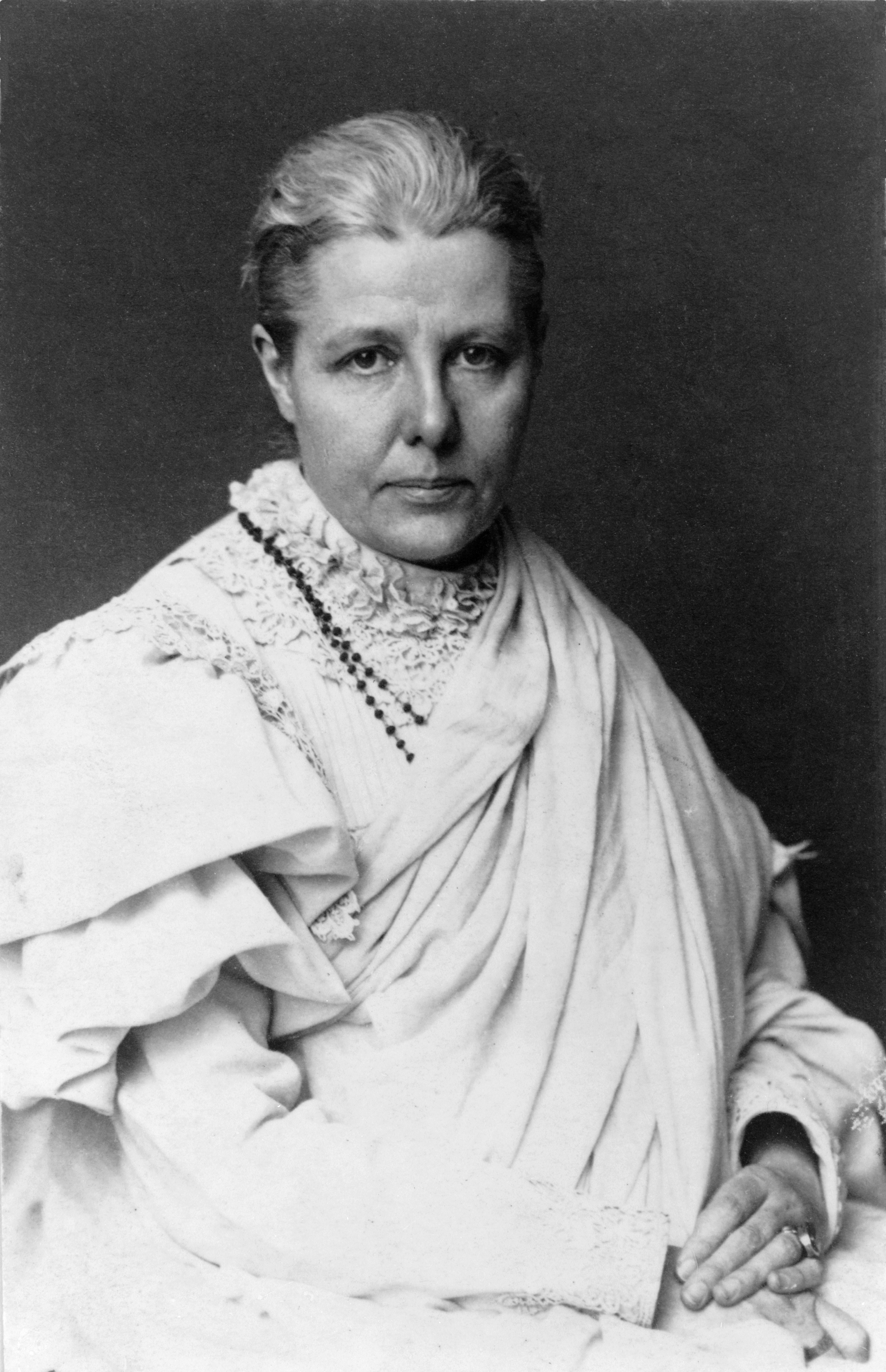
In 1917, Annie Besant stood before the Indian National Congress and delivered an impassioned argument that would echo through the century: India deserved to govern herself. Born in Ireland, Besant had made India her adopted homeland and threw herself into the fight for its liberation with the ferocity of a convert. Her presidential address captures a nation in anguish, watching its sons die in a war fought for freedom abroad while remaining enslaved at home. She dissects the economics of empire with precision, showing how British policies had drained India's wealth, burdened her with debt, and left her people in poverty while extracting resources for the war effort. Yet Besant rises above mere grievance. She articulates a vision of national dignity, arguing that self-rule is not a privilege to be granted but a birthright to be reclaimed. This is colonial resistance as intellectual rigor, as moral urgency, as political necessity. The text endures not as nostalgia but as proof that the logic of empire was always vulnerable to its own contradictions.
Editions
X-Ray
“know for certain that millions, I say deliberately, millions, in every civilised land are waiting for the message that will save them from the hideous abyss of materialism into which modern money-worship is driving them headlong,””
— Annie Besant
“My deeds must speak for me, for words are too poor.””
— Annie Besant
“Children of India, I am here to speak to you to-day about some practical things, and my object in reminding you about the glories of the past is simply this. Many times have I been told that looking into the past only degenerates and leads to nothing, and that we should look to the future. That is true. But out of the past is built the future. Look back, therefore, as far as you can, drink deep of the eternal fountains that are behind, and after that, look forward, march forward, and make India brighter, greater, much higher than she ever was. Our ancestors were great. We must recall that. We must learn the elements of our being, the blood that courses in our veins; we must have faith in that blood, and what it did in the past: and out of that faith, and consciousness of past greatness, we must build an India yet greater than what she has been. And””
— Annie Besant
“The peril was pressing; the menace unmistakable. The””
— Annie Besant
“voice of the Congress was supposed to be the voice of sedition and of class ambition, instead of being, as it was the voice of educated Indians, the most truly patriotic and loyal class of the population. In””
— Annie Besant
“institutions. The Aryan emigrants, who spread over the lands of Europe, carried with them the seeds of liberty sown in their blood in their Asian cradle-land. Western historians trace the self-rule of the Saxon villages to their earlier prototypes in the East, and see the growth of English liberty as up-springing from the Aryan root of the free and self-contained village communities. Its growth was crippled by Norman feudalism there, as its millennia-nourished security here was smothered by the East India Company. But in England it burst its shackles and nurtured a liberty-loving people and a free Commons' House. Here, it similarly bourgeoned out into the Congress activities, and more recently into those of the Muslim League, now together blossoming into Home Rule for India. The England of Milton, Cromwell, Sydney, Burke, Paine, Shelley, Wilberforce, Gladstone; the England that sheltered Mazzini, Kossuth, Kropotkin, Stepniak, and that welcomed Garibaldi; the””
— Annie Besant
“put the facts very briefly, but they are indisputable. Education. The percentage to the whole population of children receiving education is 2.8, the percentage having risen by 0.9 since Mr. Gokhale moved his Education Bill six years ago. The percentage of children of school-going age attending school is 18.7. In 1913 the Government of India put the number of pupils at 4-1/2 millions; this has been accomplished in 63 years, reckoning from Sir Charles Wood's Educational Despatch in 1854,””
— Annie Besant
“The Education Department controls the education given, and it is planned on foreign models, and its object is to serve foreign rather than native ends, to make docile Government servants rather than patriotic citizens; high spirits, courage, self-respect, are not encouraged, and docility is regarded as the most precious quality in the student; pride in country, patriotism, ambition, are looked on as dangerous, and English, instead of Indian, Ideals are exalted; the blessings of a foreign rule and the incapacity of Indians to manage their own affairs are constantly inculcated. What wonder that boys thus trained often turn out, as men, time-servers and sycophants, and, finding their legitimate ambitions frustrated, become selfish and care little for the public weal? Their own inferiority has been so driven into them during their most impressionable years, that they do not even feel what Mr. Asquith called the "intolerable degradation of a foreign yoke." India's””
— Annie Besant
“Now, I suggest four tests to judge whether the Government is progressive, and, further, whether it is continuously progressive. The first test that I would apply is what measures it adopts for the moral and material improvement of the mass of the people, and under these measures I do not include those appliances of modern Governments which the British Government has applied in this country, because they were appliances necessary for its very existence, though they have benefited the people, such as the construction of Railways, the introduction of Post and Telegraphs, and things of that kind. By measures for the moral and material improvement of the people, I mean what the Government does for education, what the Government does for sanitation, what the Government does for agricultural development, and so forth. That is my first test. The second test that I would apply is what steps the Government takes to give us a larger share in the administration of our local affairs”
— Annie Besant
Link to this book
Add a free, dofollow link to Lex on your blog, forum, syllabus, or reading list.

<a href="https://lex-books.com/book/the-case-for-india-1e6e3bd7-d197-47eb-ae63-975c273884b4"><img src="https://lex-books.com/badges/read-on-lex.svg" alt="Read The Case for India by Annie Besant free on Lex" width="160" height="40"></a>[](https://lex-books.com/book/the-case-for-india-1e6e3bd7-d197-47eb-ae63-975c273884b4)[url=https://lex-books.com/book/the-case-for-india-1e6e3bd7-d197-47eb-ae63-975c273884b4][img]https://lex-books.com/badges/read-on-lex.svg[/img][/url]Read The Case for India by Annie Besant free on Lex: https://lex-books.com/book/the-case-for-india-1e6e3bd7-d197-47eb-ae63-975c273884b4Cite this book
Reading this edition for a paper or guide? Copy a citation.
Besant, Annie. The Case for India. Lex, lex-books.com/book/the-case-for-india-1e6e3bd7-d197-47eb-ae63-975c273884b4.Besant, A. (1917). The Case for India. Lex. https://lex-books.com/book/the-case-for-india-1e6e3bd7-d197-47eb-ae63-975c273884b4Besant, Annie. The Case for India. Lex. https://lex-books.com/book/the-case-for-india-1e6e3bd7-d197-47eb-ae63-975c273884b4.