The Caesars
1853
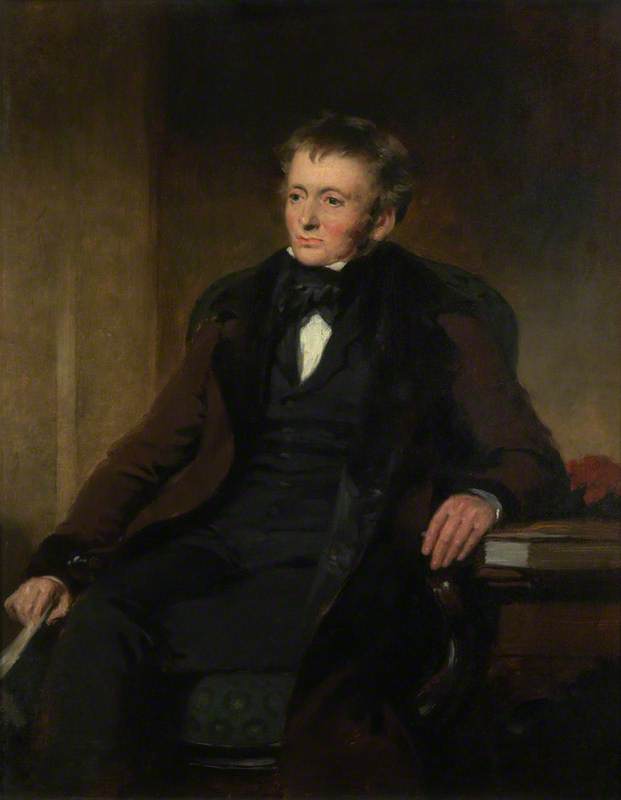
The Caesars, written by Thomas De Quincey and first published in 1853, is a historical analysis of Roman emperors, with a particular focus on Julius Cæsar. De Quincey examines Cæsar's complex character and his pivotal role in the transition from the Roman Republic to the Empire, arguing that he was both a destroyer of liberty and a catalyst for Rome's greatness. The book offers insights into the power dynamics of the era, highlighting the precarious nature of imperial rule and the threats faced by emperors, all enriched by vivid historical anecdotes.
Editions
X-Ray
“Cuando lleguemos a ese río, ya hablaremos de ese puente.””
— Thomas De Quincey
“When the gods intend to make a man pay for his crimes, they generally allow him to enjoy moments of success and a long period of impunity, so that he may feel his reverse of fortune, when it eventually comes, all the more keenly.””
— Thomas De Quincey
“The Romans formed a line of mantlets and constructed a siege terrace. When they began to erect a siege tower at some distance, the defenders on the wall at first made abusive remarks and ridiculed the idea of setting up such a huge apparatus so far away. Did those pygmy Romans, they asked, with their feeble hands and muscles, imagine that they could mount such a heavy tower on top of a wall? (All the Gauls are inclined to be contemptuous of our short stature, contrasting it with their own great height.) 31. But when they saw the tower in motion and approaching the fortress walls, the strange, unfamiliar spectacle frightened them into sending envoys to ask Caesar for peace. The envoys said they were forced to the conclusion that the Romans had divine aid in their warlike operations, since they could move up apparatus of such height at such a speed.””
— Thomas De Quincey
“One device, however, that our men had prepared proved very useful – pointed hooks fixed into the ends of long poles, not unlike the grappling-hooks used in sieges. With these the halyards were grasped and pulled taut, and then snapped by rowing hard away. This of course brought the yards down, and since the Gallic ships depended wholly on their sails and rigging, when stripped of these they were at once immobilized.””
— Thomas De Quincey
“The Gauls’ own ships were built and rigged in a different manner from ours. They were made with much flatter bottoms, to help them to ride shallow water caused by shoals or ebb-tides. Exceptionally high bows and sterns fitted them for use in heavy seas and violent gales, and the hulls were made entirely of oak, to enable them to stand any amount of shocks and rough usage. The cross-timbers, which consisted of beams a foot wide, were fastened with iron bolts as thick as a man’s thumb. The anchors were secured with iron chains instead of ropes. They used sails made of raw hides or thin leather, either because they had no flax and were ignorant of its use, or more probably because they thought that ordinary sails would not stand the violent storms and squalls of the Atlantic and were not suitable for such heavy vessels. In meeting them the only advantage our ships possessed was that they were faster and could be propelled by oars; in other respects the enemy’s were much better adapted for sailing such treacherous and stormy waters. We could not injure them by ramming because they were so solidly built, and their height made it difficult to reach them with missiles or board them with grappling-irons. Moreover, when it began to blow hard and they were running before the wind, they weathered the storm more easily; they could bring in to shallow water with greater safety, and when left aground by the tide had nothing to fear from reefs or pointed rocks – whereas to our ships all these risks were formidable.””
— Thomas De Quincey
“Being informed that it was not garrisoned, he tried to storm it directly he arrived, but the width of the moat and the height of the wall enabled the few defenders to repel his assault. After constructing a camp, therefore, he formed a line of mantlets and set about the usual preparations for a siege. But the next night, before his preparations were completed, the whole fugitive army of the Suessiones came crowding into the place. When they saw the mantlets rushed up to the wall, earth shovelled into the moat, and siege towers erected, they were alarmed by the impressive size of this apparatus, which had never before been seen or heard of in Gaul, and by the speed with which the Romans worked.””
— Thomas De Quincey
“The ground in front of his camp was ideal for deploying the army for action. The low hill on which the camp stood was of just the right width, on the side facing the enemy, for the legions to occupy in battle formation; on each flank it descended steeply to the plain, while in front it formed a slight ridge and then sloped gently down. On either side of the hill Caesar had a trench dug, running for about six hundred and fifty yards at right angles to the line along which the troops would be drawn up, and placed redoubts and artillery at both ends of each trench, to prevent the enemy from using their numerical superiority to envelop his men from the flanks while they were fighting. He left the two newly enrolled legions in camp, to be used as reinforcements wherever they were needed, and drew up the other six in front in line of battle. The enemy also had marched out and deployed for action.””
— Thomas De Quincey
“He therefore built a bridge over the Saône and led his army across. Alarmed by his unexpected arrival and seeing that he had effected in one day the crossing which they had the greatest difficulty in accomplishing in twenty days,””
— Thomas De Quincey
“pues que suelen los dioses inmortales, cuando quieren descargar su ira sobre los hombres en venganza de sus maldades concederles tal vez prosperidad con impunidad más prolongada, para que después les cause mayor tormento el trastorno de su fortuna.””
— Thomas De Quincey
Link to this book
Add a free, dofollow link to Lex on your blog, forum, syllabus, or reading list.

<a href="https://lex-books.com/book/the-caesars-deb3d82d-8515-4a72-8a32-0fcf0438696f"><img src="https://lex-books.com/badges/read-on-lex.svg" alt="Read The Caesars by Thomas De Quincey free on Lex" width="160" height="40"></a>[](https://lex-books.com/book/the-caesars-deb3d82d-8515-4a72-8a32-0fcf0438696f)[url=https://lex-books.com/book/the-caesars-deb3d82d-8515-4a72-8a32-0fcf0438696f][img]https://lex-books.com/badges/read-on-lex.svg[/img][/url]Read The Caesars by Thomas De Quincey free on Lex: https://lex-books.com/book/the-caesars-deb3d82d-8515-4a72-8a32-0fcf0438696fCite this book
Reading this edition for a paper or guide? Copy a citation.
Quincey, Thomas De. The Caesars. Lex, lex-books.com/book/the-caesars-deb3d82d-8515-4a72-8a32-0fcf0438696f.Quincey, T. D. (1853). The Caesars. Lex. https://lex-books.com/book/the-caesars-deb3d82d-8515-4a72-8a32-0fcf0438696fQuincey, Thomas De. The Caesars. Lex. https://lex-books.com/book/the-caesars-deb3d82d-8515-4a72-8a32-0fcf0438696f.