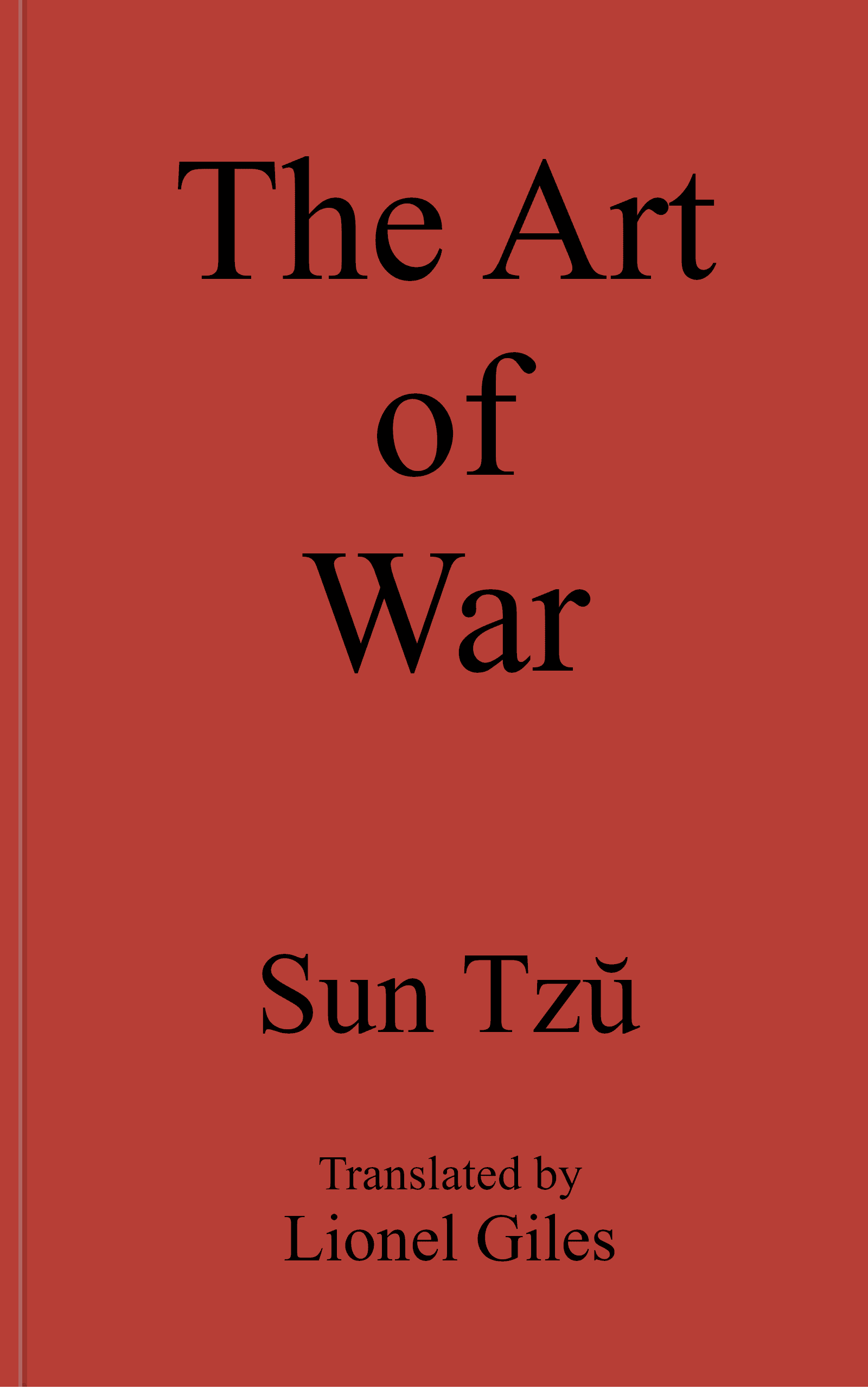
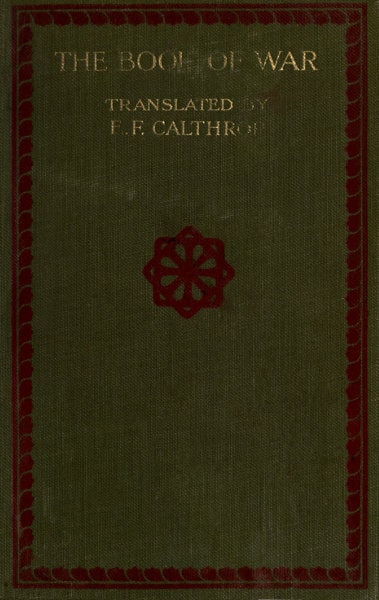
The Book of War: The Military Classic of the Far East: The Articles of Suntzu; The Sayings of Wutzu
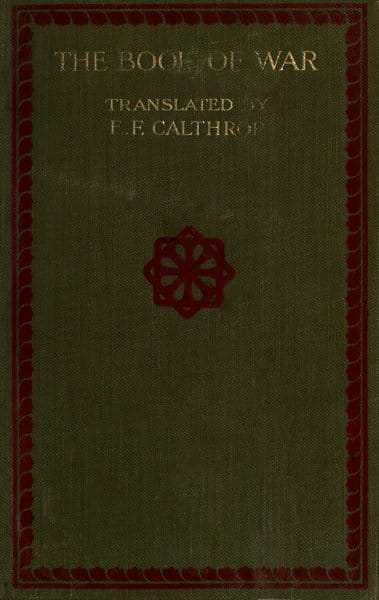
The Book of War: The Military Classic of the Far East: The Articles of Suntzu; The Sayings of Wutzu
Translated by Everard Ferguson Calthrop
The Book of War, attributed to Sunzi and written in the 5th century BC, is a foundational text on military strategy and philosophy. It explores key principles of warfare, including adaptability, intelligence, and the psychological aspects of conflict. The treatise emphasizes the importance of moral leadership and strategic preparation, making it relevant not only to military applications but also to politics and business. Its insights have influenced military thought and practices for over two millennia, establishing it as a classic in both Eastern and Western military literature.
Editions
X-Ray
“Appear weak when you are strong, and strong when you are weak.””
— Sunzi
“The supreme art of war is to subdue the enemy without fighting.””
— Sunzi
“If you know the enemy and know yourself, you need not fear the result of a hundred battles. If you know yourself but not the enemy, for every victory gained you will also suffer a defeat. If you know neither the enemy nor yourself, you will succumb in every battle.””
— Sunzi
“Let your plans be dark and impenetrable as night, and when you move, fall like a thunderbolt.””
— Sunzi
“In the midst of chaos, there is also opportunity””
— Sunzi
“All warfare is based on deception. Hence, when we are able to attack, we must seem unable; when using our forces, we must appear inactive; when we are near, we must make the enemy believe we are far away; when far away, we must make him believe we are near.””
— Sunzi
“Supreme excellence consists of breaking the enemy's resistance without fighting.””
— Sunzi
“Victorious warriors win first and then go to war, while defeated warriors go to war first and then seek to win””
— Sunzi
“The greatest victory is that which requires no battle.””
— Sunzi
About The Book of War: The Military Classic of the Far East: The Articles of Suntzu; The Sayings of Wutzu
Chapter Summaries
- Introduction
- Establishes the enduring relevance of these 5th century BC military classics. Explains how fundamental principles of war remain unchanged despite technological advances, and describes the political context of warring Chinese states.
- I
- Sunzi outlines the five fundamental factors in war: The Way, Heaven, Earth, the Leader, and Law. Emphasizes the importance of careful analysis before engaging in conflict and the use of deception as a core principle.
- II
- Discusses the enormous costs of warfare and the importance of swift campaigns. Advocates feeding armies from enemy territory and rewarding those who capture enemy resources.
Key Themes
- Strategic Deception and Intelligence
- Both masters emphasize that war is fundamentally about deception, misdirection, and superior intelligence gathering. Victory comes through knowing the enemy while remaining unknowable yourself.
- Moral Leadership and Governance
- Effective military leadership requires moral authority, just governance, and care for troops. A general must balance humanity with necessary ruthlessness to maintain discipline and morale.
- Adaptability and Flexibility
- Military success depends on adapting tactics to circumstances, terrain, and enemy conditions. Fixed strategies lead to defeat; fluid response to changing situations ensures victory.
Characters
- Sunzi (Sun Tzu)(protagonist)
- Ancient Chinese military strategist and philosopher, author of The Art of War. A professional military advisor who served various states during the 5th century BC.
- Wutzu (Wu Qi)(protagonist)
- Ancient Chinese military strategist and general who served the state of Wei. Known for his practical military reforms and tactical innovations.
- Lord Wen of Wei(major)
- Ruler of the state of Wei who employed Wutzu as his general. Initially claimed to be a man of peace but was convinced of the necessity of military preparedness.
- Captain E.F. Calthrop(minor)
- British military officer and translator who rendered these Chinese military classics into English in 1908.
Link to this book
Add a free, dofollow link to Lex on your blog, forum, syllabus, or reading list.

<a href="https://lex-books.com/book/the-book-of-war-the-military-classic-of-the-far-east-the-articles-of-suntzu-the--a1dcd3dc-b92f-4b19-95b7-1a94b80a5bdc"><img src="https://lex-books.com/badges/read-on-lex.svg" alt="Read The Book of War: The Military Classic of the Far East: The Articles of Suntzu; The Sayings of Wutzu by Sunzi free on Lex" width="160" height="40"></a>[](https://lex-books.com/book/the-book-of-war-the-military-classic-of-the-far-east-the-articles-of-suntzu-the--a1dcd3dc-b92f-4b19-95b7-1a94b80a5bdc)[url=https://lex-books.com/book/the-book-of-war-the-military-classic-of-the-far-east-the-articles-of-suntzu-the--a1dcd3dc-b92f-4b19-95b7-1a94b80a5bdc][img]https://lex-books.com/badges/read-on-lex.svg[/img][/url]Read The Book of War: The Military Classic of the Far East: The Articles of Suntzu; The Sayings of Wutzu by Sunzi free on Lex: https://lex-books.com/book/the-book-of-war-the-military-classic-of-the-far-east-the-articles-of-suntzu-the--a1dcd3dc-b92f-4b19-95b7-1a94b80a5bdcCite this book
Reading this edition for a paper or guide? Copy a citation.
Sunzi. The Book of War: The Military Classic of the Far East: The Articles of Suntzu; The Sayings of Wutzu. Lex, lex-books.com/book/the-book-of-war-the-military-classic-of-the-far-east-the-articles-of-suntzu-the--a1dcd3dc-b92f-4b19-95b7-1a94b80a5bdc.Sunzi (n.d.). The Book of War: The Military Classic of the Far East: The Articles of Suntzu; The Sayings of Wutzu. Lex. https://lex-books.com/book/the-book-of-war-the-military-classic-of-the-far-east-the-articles-of-suntzu-the--a1dcd3dc-b92f-4b19-95b7-1a94b80a5bdcSunzi. The Book of War: The Military Classic of the Far East: The Articles of Suntzu; The Sayings of Wutzu. Lex. https://lex-books.com/book/the-book-of-war-the-military-classic-of-the-far-east-the-articles-of-suntzu-the--a1dcd3dc-b92f-4b19-95b7-1a94b80a5bdc.