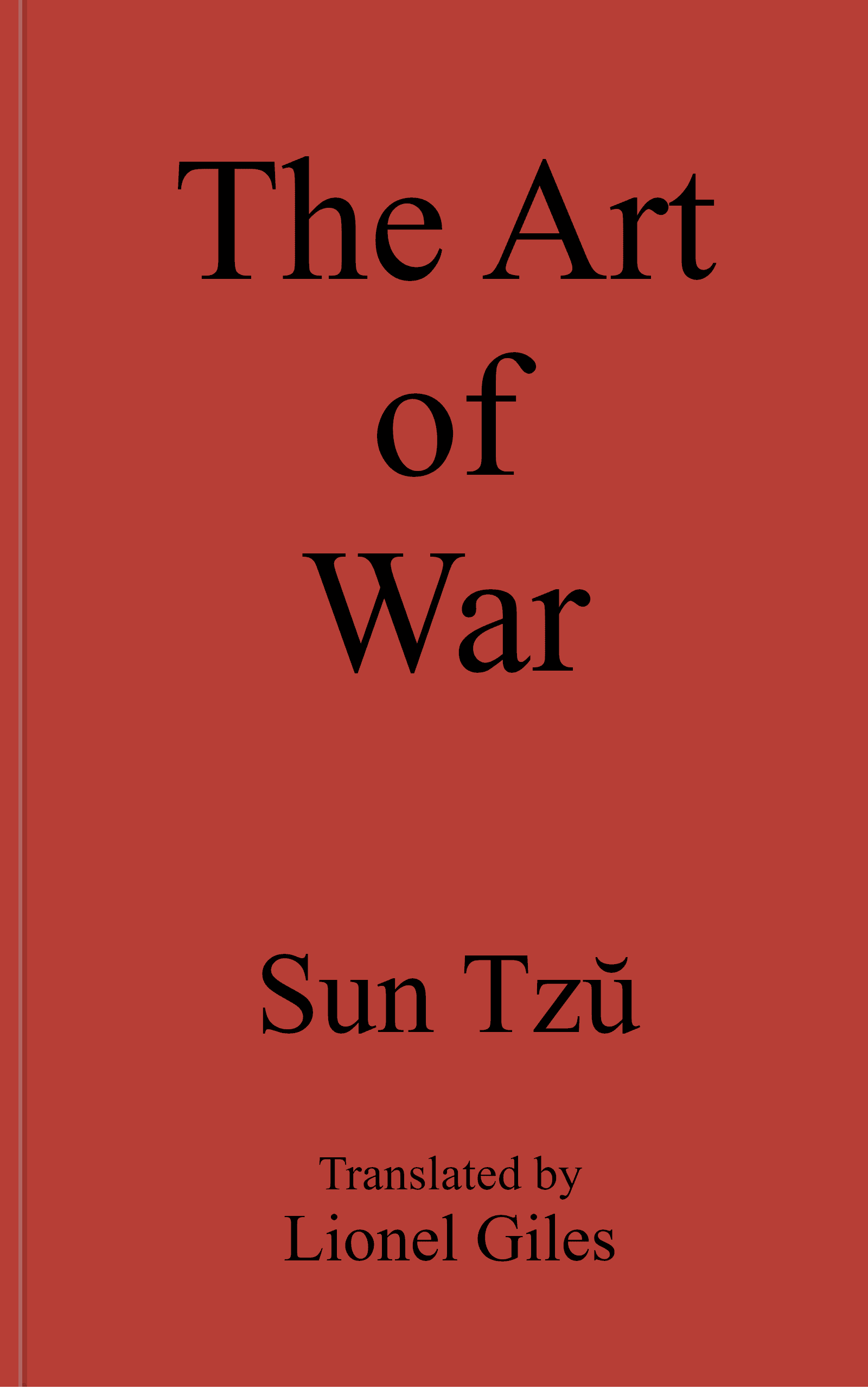
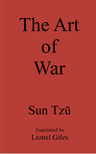
The Art of War
500 BC
Twenty-five centuries ago, a Chinese general sat down to distil the fundamental truths of conflict. What emerged was not a manual of weapons or formations, but a philosophy of victory. The Art of War argues that the supreme act of generalship is winning without fighting at all, that the general who understands the terrain, the opponent, and himself will always triumph over one who relies merely on superior force. Sunzi's thirteen chapters move from initial assessments of terrain and espionage to the final calculus of pursuit, each one stripping away illusion to reveal the cold logic beneath warfare. Yet what makes this text astonishing is not merely its military rigor, but its portability. Every strategist who came after, from Mao Zedong to modern CEOs, found in these pages a blueprint for any contest where power meets cunning, where outcomes depend not on brute strength but on perception, preparation, and timing. The prose is terse, almost aphoristic, each passage designed to be memorized and deployed. It is the shortest book on this list and perhaps the most ruthlessly efficient.
Editions

X-Ray
“Appear weak when you are strong, and strong when you are weak.””
— Sunzi
“The supreme art of war is to subdue the enemy without fighting.””
— Sunzi
“If you know the enemy and know yourself, you need not fear the result of a hundred battles. If you know yourself but not the enemy, for every victory gained you will also suffer a defeat. If you know neither the enemy nor yourself, you will succumb in every battle.””
— Sunzi
“Let your plans be dark and impenetrable as night, and when you move, fall like a thunderbolt.””
— Sunzi
“In the midst of chaos, there is also opportunity””
— Sunzi
“All warfare is based on deception. Hence, when we are able to attack, we must seem unable; when using our forces, we must appear inactive; when we are near, we must make the enemy believe we are far away; when far away, we must make him believe we are near.””
— Sunzi
“Supreme excellence consists of breaking the enemy's resistance without fighting.””
— Sunzi
“Victorious warriors win first and then go to war, while defeated warriors go to war first and then seek to win””
— Sunzi
“The greatest victory is that which requires no battle.””
— Sunzi
About The Art of War
Chapter Summaries
- I
- Sun Tzŭ introduces the five fundamental factors of warfare: Moral Law, Heaven, Earth, the Commander, and Method and discipline. He emphasizes the importance of careful planning and assessment before engaging in conflict, stating that victory can be predicted through proper analysis.
- II
- Focuses on the economic aspects of warfare, emphasizing speed and efficiency. Sun Tzŭ argues that prolonged campaigns drain resources and weaken the state, advocating for swift decisive action and living off enemy supplies when possible.
- III
- Presents the hierarchy of military objectives: disrupting enemy plans is best, preventing alliances is next, defeating armies in battle follows, and besieging cities is worst. Introduces the famous principle of knowing oneself and one's enemy.
Key Themes
- Deception and Intelligence
- Sun Tzŭ emphasizes that 'all warfare is based on deception' and that superior intelligence gathering and misdirection are fundamental to victory. The wise general conceals his true intentions while discovering the enemy's plans.
- Adaptability and Flexibility
- Military tactics must be fluid like water, adapting to circumstances and terrain. Sun Tzŭ warns against rigid adherence to fixed plans, advocating instead for responsive strategy that changes with conditions.
- Economy of Force
- The supreme excellence is to subdue the enemy without fighting. Sun Tzŭ consistently advocates for achieving maximum results with minimum expenditure of resources, time, and lives.
Characters
- Sun Tzŭ (Sun Wu)(protagonist)
- The legendary Chinese military strategist and philosopher who authored The Art of War. A master tactician who served the King of Wu and developed timeless principles of warfare and strategy.
- Ho Lu(major)
- King of Wu (514-496 B.C.) who employed Sun Tzŭ as his general. He tested Sun Tzŭ's military theories and appointed him to lead campaigns against neighboring states.
- Wu Yuan (Wu Tzŭ-hsu)(major)
- A prominent general and statesman who served alongside Sun Tzŭ in the Wu court. He was instrumental in Wu's military campaigns and political affairs.
- Ts'ao Ts'ao (Wei Wu Ti)(major)
- Great military genius and first commentator on The Art of War (A.D. 155-220). Known for his rapid marches and strategic brilliance, he provided the earliest scholarly commentary on Sun Tzŭ's work.
- Lionel Giles(major)
- British sinologist and translator who produced the definitive 1910 English translation of The Art of War. Assistant in the Department of Oriental Printed Books at the British Museum.
- Sun Pin(minor)
- Descendant of Sun Wu, born about a hundred years after his ancestor's death. Also a brilliant military strategist who continued the family tradition of warfare expertise.
Link to this book
Add a free, dofollow link to Lex on your blog, forum, syllabus, or reading list.

<a href="https://lex-books.com/book/the-art-of-war-5ad38f21-6d60-4ee9-a540-b428faea33fe"><img src="https://lex-books.com/badges/read-on-lex.svg" alt="Read The Art of War by Sunzi free on Lex" width="160" height="40"></a>[](https://lex-books.com/book/the-art-of-war-5ad38f21-6d60-4ee9-a540-b428faea33fe)[url=https://lex-books.com/book/the-art-of-war-5ad38f21-6d60-4ee9-a540-b428faea33fe][img]https://lex-books.com/badges/read-on-lex.svg[/img][/url]Read The Art of War by Sunzi free on Lex: https://lex-books.com/book/the-art-of-war-5ad38f21-6d60-4ee9-a540-b428faea33feCite this book
Reading this edition for a paper or guide? Copy a citation.
Sunzi. The Art of War. Lex, lex-books.com/book/the-art-of-war-5ad38f21-6d60-4ee9-a540-b428faea33fe.Sunzi (500 BC). The Art of War. Lex. https://lex-books.com/book/the-art-of-war-5ad38f21-6d60-4ee9-a540-b428faea33feSunzi. The Art of War. Lex. https://lex-books.com/book/the-art-of-war-5ad38f21-6d60-4ee9-a540-b428faea33fe.