The Astronomy of the Bible: An Elementary Commentary on the Astronomical References of Holy Scripture
The Astronomy of the Bible: An Elementary Commentary on the Astronomical References of Holy Scripture
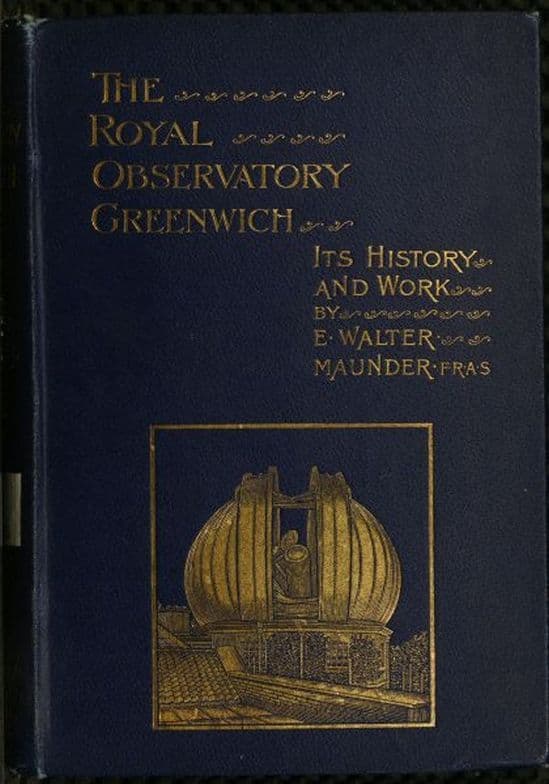
What happens when a professional astronomer, not a clergyman, turns his scientific gaze upon Scripture? E. Walter Maunder, who spent decades charting the sun from Greenwich Observatory, brings the same precision he applied to celestial mechanics to the stars and planets mentioned in the Bible. The result is neither theology nor astrophysics, but something rarer: a Victorian scientist's patient attempt to understand what the Psalmists and prophets actually saw when they looked upward. Maunder traces the astronomical knowledge embedded in ancient texts, from the "pillars of the firmament" to the Star of Bethlehem, revealing a world where the heavens declared God's glory not through modern science, but through the raw wonder of observation. Written in 1908, this book carries the gentle humility of an age that still believed faith and reason might walk together. For readers curious about how the history of science intersects with the history of faith, or anyone who has wondered what the biblical writers understood about the cosmos, Maunder offers a thoughtful, often surprising guide.
Editions
X-Ray
“6,000 years ago, the face of the earth was renewed and replenished for the habitation of man, the preceding geological ages being left entirely unnoticed.””
— E. Walter Maunder
“By no process of research, therefore, could man find out for himself the facts that are stated in the first chapter of Genesis. They must have been revealed. Science cannot inquire into them for the purpose of checking their accuracy; it must accept them, as it accepts the fundamental law that governs its own working, without the possibility of proof.””
— E. Walter Maunder
“Hear, O Israel: the Lord our God is one Lord." From these words the Hebrews not only learned a great spiritual truth, but derived intellectual freedom. For by these words they were taught that all the host of heaven and of earth were created things”
— E. Walter Maunder
“Law of Causality. It "cannot be proved, but must be believed; in the same way as we believe the fundamental assumptions of religion, with which it is closely and intimately connected. The law of causality forces itself upon our belief. It may be denied in theory, but not in practice. Any person who denies it, will, if he is watchful enough, catch himself constantly asking himself, if no one else, why this has happened, and not that. But in that very question he bears witness to the law of causality. If we are consistently to deny the law of causality, we must repudiate all observation, and particularly all prediction based on past experience, as useless and misleading.””
— E. Walter Maunder
“Professor Thiele, a leading Continental astronomer, states that”
— E. Walter Maunder
“But the necessary conditions for any great scientific development were lacking to Israel. A small nation, planted between powerful and aggressive empires, their history was for the most part the record of a struggle for bare existence; and after three or four centuries of the unequal conflict, first the one and then the other of the two sister kingdoms was overwhelmed.””
— E. Walter Maunder
“we should conclude that the Hebrews”
— E. Walter Maunder
“Italian astronomers, Prof. G. V. Schiaparelli, on this subject of "Astronomy in the Old Testament,””
— E. Walter Maunder
“Holy Scripture was not intended to give an account of the scientific achievements, if any, of the Hebrews of old. Its purpose was wholly different: it was religious, not scientific; it was meant to give spiritual, not intellectual enlightenment.””
— E. Walter Maunder
Link to this book
Add a free, dofollow link to Lex on your blog, forum, syllabus, or reading list.

<a href="https://lex-books.com/book/the-astronomy-of-the-bible-an-elementary-commentary-on-the-astronomical-referenc-c08e0457-8750-45a2-bfd8-04fa7b13b6a2"><img src="https://lex-books.com/badges/read-on-lex.svg" alt="Read The Astronomy of the Bible: An Elementary Commentary on the Astronomical References of Holy Scripture by E. Walter Maunder free on Lex" width="160" height="40"></a>[](https://lex-books.com/book/the-astronomy-of-the-bible-an-elementary-commentary-on-the-astronomical-referenc-c08e0457-8750-45a2-bfd8-04fa7b13b6a2)[url=https://lex-books.com/book/the-astronomy-of-the-bible-an-elementary-commentary-on-the-astronomical-referenc-c08e0457-8750-45a2-bfd8-04fa7b13b6a2][img]https://lex-books.com/badges/read-on-lex.svg[/img][/url]Read The Astronomy of the Bible: An Elementary Commentary on the Astronomical References of Holy Scripture by E. Walter Maunder free on Lex: https://lex-books.com/book/the-astronomy-of-the-bible-an-elementary-commentary-on-the-astronomical-referenc-c08e0457-8750-45a2-bfd8-04fa7b13b6a2Cite this book
Reading this edition for a paper or guide? Copy a citation.
Maunder, E. Walter. The Astronomy of the Bible: An Elementary Commentary on the Astronomical References of Holy Scripture. Lex, lex-books.com/book/the-astronomy-of-the-bible-an-elementary-commentary-on-the-astronomical-referenc-c08e0457-8750-45a2-bfd8-04fa7b13b6a2.Maunder, E. W. (n.d.). The Astronomy of the Bible: An Elementary Commentary on the Astronomical References of Holy Scripture. Lex. https://lex-books.com/book/the-astronomy-of-the-bible-an-elementary-commentary-on-the-astronomical-referenc-c08e0457-8750-45a2-bfd8-04fa7b13b6a2Maunder, E. Walter. The Astronomy of the Bible: An Elementary Commentary on the Astronomical References of Holy Scripture. Lex. https://lex-books.com/book/the-astronomy-of-the-bible-an-elementary-commentary-on-the-astronomical-referenc-c08e0457-8750-45a2-bfd8-04fa7b13b6a2.